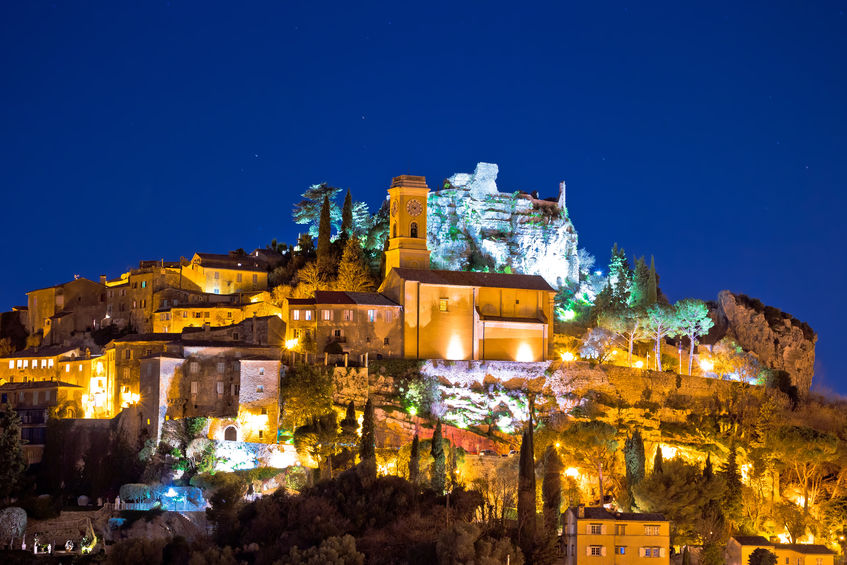
“You are the light of the world. A city that is set on a hill cannot be hidden. Nor do they light a lamp and put it under a basket, but on a lampstand, and it gives light to all who are in the house. Let your light so shine before men, that they may see your good works and glorify your Father in heaven.” (Matt 5: 14-16)
There is much in the New Testament about building. Jesus said He would build his church and the gates of hell will not prevail against it. The New Testament writers encourage us repeatedly to build. Jude wrote: “But you, dear friends, must build each other up in your most holy faith” (Jude 1:20), Peter says that we “as living stones, are built up a spiritual house, a holy priesthood, to offer up spiritual sacrifices, acceptable to God by Jesus Christ,” (1 Pe 2:5), and Paul picks up the same theme when he writes to the Ephesians “in whom (Jesus) the whole building, being fitted together, grows into a holy temple in the Lord, in whom you also are being built together for a dwelling place of God in the Spirit.” The Greek word used for building up and edifying are the same: oikodome. Speaking of our church gatherings, Paul writes “ Let all things be done for edification.” (1 Cor 14:26) but this doesn’t just apply to our church meetings: it applies to everything that we say to one another: “Let no corrupt word proceed out of your mouth, but what is good for necessary edification, that it may impart grace to the hearers.” (Eph 4:29) Every time we open our mouths, we are to release the Grace of God. In fact the whole of the Christian life has a single purpose, which is to “grow up in all things into Him who is the head—Christ— from whom the whole body, joined and knit together by what every joint supplies, according to the effective working by which every part does its share, causes growth of the body for the edifying of itself in love.”
So the Big Question is, how do we actually build this city set on a hill? What does it mean to actually be builders in God’s kingdom, to be a body that edifies itself (builds itself up) in love? I think the key is simple enough: we don’t build for ourselves, but for others. Jesus is clear about this: “Do not lay up for yourselves treasures on earth, where moth and rust destroy and where thieves break in and steal, but lay up for yourselves treasures in heaven, where neither moth nor rust destroys and where thieves do not break in and steal. For where your treasure is, there your heart will be also.” Whatever we build for someone else is never going to be lost or spoilt through our own carnal failings, but remains our treasure forever – whatever happens to it in the recipient’s hands. Agape love has no vested interest in what it has given. It’s building a house for someone else to live in and walking away without being paid.
When Paul exhorts us to us to “let no corrupt word proceed from our mouth, only what is the necessary edification“ – in other words, only speak words that build other people up – he continues with these words: “And do not grieve the Holy Spirit of God, by whom you were sealed for the day of redemption. Let all bitterness, wrath, anger, clamour, and evil speaking be put away from you, with all malice.” (Eph 4: 29-30). I think many of us read this and just take it that Paul has moved onto another subject. But I don’t think he has. I think what grieves the Holy Spirit is not our negative emotions in themselves, but the fact that their presence among us stops Him releasing the pure love of Jesus Christ that is expressed through the Holy Spirit’s ministry and which will build the City on the Hill. He is grieved because He loves us so much and yet we ourselves prevent Him from fully expressing His love within the very body whose purpose it is to reveal it. Nobody longs for revival more than Jesus.
So just as moth and rust corrupt any treasure that we lay up for ourselves on Earth, corrupt words will spoil God’s spiritual house and prevent it from being built through us. When Paul writes “let all bitterness and wrath and anger and clamour and evil speaking be put away from you, along with all malice” he pretty well covers the whole gamut of the rubbish that we can carry in our uncleansed hearts. But what is so encouraging here is the word that is often translated as “put away.” The Greek word literally means to be lifted up. He doesn’t say that we must somehow rid ourselves of everything that can corrupt our words. He isn’t standing over us with a pointing finger: he says that they have to be lifted off us, because we can’t just put them away by ourselves.
And this isn’t just in church meetings: it is all the time. If our words are corrupted by piqued egos, unsatisfied longings and unforgiven bitterness during the week, we will not speak words that will edify others on a Sunday morning or whenever we meet. We might even say all the right things, but we can’t really impart grace if we aren’t full of grace ourselves; if we are just putting on a show. But in the grace of God all this rubbish can be lifted off us. As I said, we may not be able to get rid of it ourselves, but Jesus can lift it off us. Indeed, unless we do take it to the cross the Holy Spirit will continue to be grieved, because we are preventing Him from letting His love flow among us as much as He would like.
The little church at Azuza street where the Pentecostal movement was birthed was characterised not so much by the amazing miracles and the gifts of the Holy Spirit that took place there, but by the selfless love that filled the church and struck everybody who came in. The place was, metaphorically, full of houses that had been built for others. It was the home of Psalm 133 vs 1; “Behold how good and how pleasant it is for brethren to dwell in unity,” and because of this, the anointing flowed “like precious oil poured on the head, running down on the beard.” (Ps 133: 1 cont.) Where the Holy Spirit isn’t grieved, He builds. It is this Love that builds the church, and that will shine the light out of the city on the Hill.
 Notes From The Winepress