Tag Archives: gentleness

The Call of the Dove

“Your gentleness has made me great.“ (Psalm 18:35)

The aspiration to greatness is probably hidden somewhere (and at times not so hidden) in every unredeemed heart, whereas personal greatness is no longer an attribute that a Christian disciple would want to appear in his spiritual CV. However, seated as we are in Christ with the unlimited power of His Spirit in our hearts, we are all have that greatness, however weak and foolish our actions in the flesh may be. His gentleness has made us great. But if I am great because of His gentleness, it is also true that I am only great in His gentleness, because gentleness is in His very character, as He describes it himself: “take my yoke upon you and learn from me, for I am gentle and humble of heart, my yoke is easy and my burden is light.”  (Matt 11:29) Gentleness is a characteristic of the fruit of the Spirit that Jesus is looking for in the life of every believer.

Ephesians 2:10 tells me that I was “created in Christ of Jesus for Works prepared beforehand , that I may walk in them,” so if I am not walking in His gentleness, I am not walking in Him, and I’m not fulfilling my destiny in the works that He has prepared for me to walk in. And if I am not walking in His works, I must be walking in my own, and therefore I am walking after the flesh and not after the Spirit.

Gentleness is not weakness, it is enabling power. Gentleness does not push; it leads, because it knows where to go. Gentleness does not argue, but speaks the truth in love or does not speak at all. It does not react to situations and people out of fear, but out of knowledge of the truth. There is no uncertainty in gentleness: Jesus knew where he had come from where he was going, and so do we. We have come from above and will be returning there.

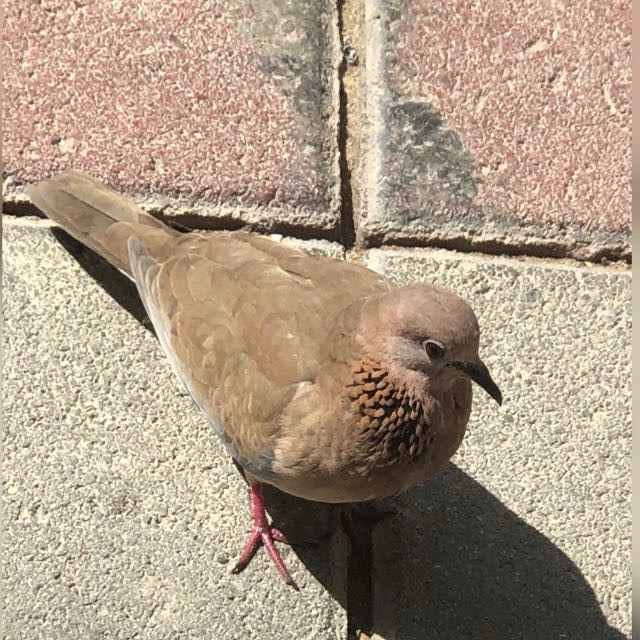
Gentleness is like the wavelets in a sheltered, cove: buoyant and supportive, never overwhelming and never crashing on the beach, yet moving with all the power of the tide.  Those wavelets are seasoned with salt: it’s the salt that is supportive, and so should it be with our speech. (Col 4:6) Gentleness is the dove who baptised Jesus in the power of the Holy Spirit, and characterises the advance of the kingdom of God. Gentleness is the dove who brought the olive branch to Noah, and is a species of bird that can be seen and whose call can be recognised everywhere in the world. 

Whatever may flood our circumstances and our emotions, it is gentleness who brings the promise of landfall in the kingdom of God. It is always at hand. Let us always be ready to hear and respond to the call of the dove.

(A note on the image: I took the picture of the dove in the Middle East. Traditionally we portray the biblical dove as white, but it’s quite likely to have looked more like this one.)
Follow the ancient paths


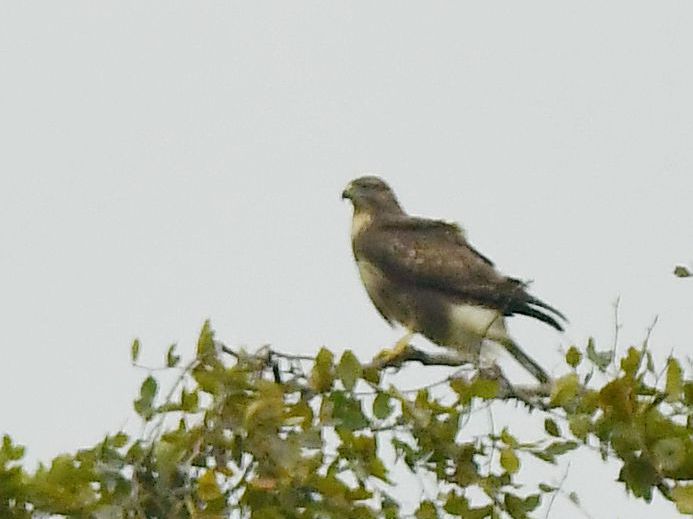
I was driving along a country road the other day when I saw a buzzard perched in a tree top. It was the classic image of the bird on a dead branch high in a treetop surveying its surroundings. I decided to turn the car around and drive towards it again to take a photograph, if there was somewhere suitable where I could pull the car in. Two minutes later I was approaching the tree again and the bird was still there; what’s more there was a little place at the side of the road where I could park the car close enough for a decent shot. So far so good. And then came the stupid moment: instead of just pointing my camera through the windscreen, I decided to open the door and step outside. It won’t notice me, I thought.

Wrong! As soon as the door moved, the bird opened its beautiful huge wings and flapped slowly away. And away with it glided my classic close-up (with my zoom lens) photo of the buzzard on the high dead branch.

But I felt God spoke to me as I dove away in disappointment and anger at my stupidity, and spent much of the morning reflecting on the lesson I felt that the Lord was teaching me. It was this: when I looked at the buzzard I only saw the photograph I want to take and the actions that I could carry out in order to take that photo. I did not look at the buzzard and see what it was and what it was doing. The buzzard wasn’t a photo for my collection , it was a wild bird with far keener eyes than my own, perched on a vantage point where it had sight of all that moved within its range of vision. That included me and my car door. I gave no thought to the impact that I would have on the buzzard; only the impact the buzzard would have on my collection of photos.


We cannot love others unless we consider the impact that we have on them, and we can only do this when we understand who they are, what they are doing and why they are doing it; what is going on in the world that they were in before we turned up. We achieve this is by approaching gently, with consideration and understanding. If I am approaching a bush where a warbler is singing I will approach as gently as I can because I don’t want to scare it away: why do I barge into the “bushes” where other people are and expect them to welcome my disturbance of their world? “Let your gentleness be known to all,” wrote Paul (Philippians 4:5). Jesus told us to learn gentleness from Him when we take His yoke (Matt 11:29). Gentleness is an essential characteristic of love and part of the fruit of the Spirit. If I had included gentleness in my approach to that buzzard I would have taken a picture through the car windscreen instead of scaring it off by opening the door. Instead, without love, I ended up with nothing (1 . Cor 13…)

Jeremiah 6:16 says: “This is what the LORD says: “Stand at the crossroads and look; ask for the ancient paths, ask where the good way is, and walk in it, and you will find rest for your souls.”

Jesus Himself is the ancient path: He is the Way, the “good way.” And when He speaks to us about taking His yoke and following Him, He quotes the very words that the Holy Spirit speaks through Jeremiah: “Take my yoke upon you and learn from me, for I am gentle and humble in heart, and you will find rest for your souls, For my yoke is easy and my burden is light.” (Matt 11: 29-30)

Every moment in any relationship is a crossroads. We have a choice. We either charge across in the direction that we have in our minds, open the car door and scare away the bird; or we can stand, which means we have first have to stop. And having stopped, we look, which means we consider the other person, who they are and the circumstances they are in. And having looked, we seek Jesus, the good way, and look for those ancient paths of His that He wants us to walk in. If we don’t have an immediate revelation, we can’t go far wrong with following the guidance of 2 Tim 2:22, which is to “pursue righteousness, faith, love, peace.”  If we do that, not only will we proceed with gentleness and find rest for our own souls, but we will bring Jesus into the other person’s situation and we might help their soul to find rest as well.

Don’t rush to open the car door… (this one was much further away, and is much enlarged.)

(Note for readers in the USA: the bird in this story is a european common buzzard; not a turkey vulture, which is often called a buzzard in the USA).