Tag Archives: My peace I give unto you

Understanding the Sabbath: Peace in Christ

“He Himself is our peace.” (Eph 2:14)

“For this reason the Jews persecuted Jesus, and sought to kill Him, because He had done these things on the Sabbath.” (John 5:16)

There is a lot more to the Sabbath law than observance of the fourth commandment, which instructed the Jews to “Remember the Sabbath Day, and keep it holy.” Just as Jesus’s “work” on the Sabbath was emblematic to the Jews of His disrespect for the whole of the Old Covenant law, the sabbath itself looks forward to the New Covenant in His blood that sets us free from condemnation under the Law and into the peace of His Sabbath rest.

The Bible tells us: “And on the seventh day God ended His work which He had done, and He rested on the seventh day from all His work which He had done. Then God blessed the seventh day and sanctified it, because in it He rested from all His work which God had created and made.” (Genesis 2:2-3) The new testament adds another layer to the Creation account: the specific involvement of Jesus in the work of creation.

“For by Him all things were created that are in heaven and that are on earth, visible and invisible, whether thrones or dominions or principalities or powers. All things were created through Him and for Him.” (Col 1:16) “All things were made through Him, and without Him nothing was made that was made.” (John 1:3) God rested from his work on the Sabbath, or the seventh day, so the Sabbath was instituted. But it wasn’t only the Father who rested: the Son rested too.

A way of life, not just an observance
God rested when the work of creation was finished. And He rested again when the work of the new creation was finished on the cross. When God blessed the sabbath day and sanctified it under the old covenant, He was looking forward to the time when, in Jesus, His rest would be a way of life, not just an observance. But in the era of the Old Covenant also, God’s rest extended beyond the seventh day. The writer to the Hebrews says:  “To whom did He swear that they would not enter His rest, but to those who did not obey?” (Heb 3:18) For the rebellious Hebrews, who “did not enter because of unbelief,” (Heb. 3:19) entering God’s rest equated to entering the Promised Land, where they would find rest from the toil of slavery.

Just as Canaan represented God’s rest for the Israelites, we enter our rest in Christ when we believe in His promises to us, or as Hebrews 3:14 puts it, “if we hold the beginning of our confidence steadfast to the end.” The Greek word used for God’s rest is “katapausis,” which means “a calming of the winds.” Katapausis Is the spiritual atmosphere of Heaven. Jesus tells us “My peace I give to you; not as the world gives do I give to you” (John 14:7), and when we walk in His peace we walk in the atmosphere of Heaven and find “rest for our souls.” (Matt. 11:29). All the winds are calm, because – as Jesus physically demonstrated – it is He who calms the storm.  As every Christian knows, He famously said, “The Sabbath was made for man, not man for the Sabbath.” (Mark 2:27). God gave us the Sabbath to enshrine in His Law that we need to enter His rest, not that we need to stop working every seven days.

Finished – but still working
Two notions that seem to be at odds with each other are that “God finished His work” on the seventh day, and the words of Jesus to the Pharisees when they confronted Him over healing the man at the pool: “My Father has been working until now, and I have been working.” (John 4:17) What is the difference between the work that the Father and the Son finished on the seventh day, and the work that they were – and still are – continuing to do?

I think the answer lies in the fact that creation was perfected on the seventh day, so all of God’s dealings with Man – Father, Son, and Holy Spirit – from then on were from His place of rest. Whether it was Christ’s miracles of healing and deliverance, God’s victories in the reign of David and many other heroes, or His repeated call to His errant people through His prophets to return to Him, the focus of God’s work has always been to restore His people to their Sabbath state of wholeness and relationship with Him. The lame man was healed on the Sabbath so the he could walk in the wholeness that the Sabbath represents. Just as the first creation was finished on the Sabbath day, so the new creation was perfected when Jesus cried out from the cross “It is finished!” And so the writer to the Hebrews says: “We who have believed into that rest.” (Hebrews 4:3) Through faith in the redeeming blood of Jesus that was shed on the Cross, we become “the righteousness of God in Him,” (2 Cor 5:21) and enter into the perfection of God’s rest.

“True righteousness and holiness.”
This perfect state is the condition of the new man, “which was created according to God, in true righteousness and holiness.”  (Eph 4:24) Peter exhorts us to  “be diligent to be found by Him in peace, without spot and blameless,” (2 Pe 3: 13) while Hebrews 4:9-11 says “There remains therefore a rest for the people of God. For he who has entered His rest has himself also ceased from his works as God did from His. Let us therefore be diligent to enter that rest, lest anyone fall according to the same example of disobedience.” The peace of His sabbath rest is the gift of God’s grace through Jesus, yet two new testament writers exhort us to be diligent to “enter” that gift. So while we cannot earn God’s peace by our religious works, we need to “work” at keeping a short account of sin in our lives (“without spot and blameless”) and “work” at remembering who we are in Christ, what He has purchased for us, and that “The Spirit of God, who raised Jesus from the dead, lives in you.” So rest does not come without some effort (Romans 8:11), but if we are diligent to keep these truths foremost in our thinking we will walk away from the paralysis of religion and into God’s rest.

Only in that place we can really access everything that is our promised inheritance in Christ.

(The topic of “entering into God’s rest” is also explored in “Walking in Newness of Life.”)
Walking in Newness of Life

The God  who is Love created man in His image, so we were made in the image of Love. Satan marred that image with sin, so the foundation of God’s design for society was ruined, and love was replaced by the Law. God’s perfection and beauty could be found in His Law (See all of Psalm 119), but for men, even the priesthood and the Levites, the dedicated servants of God, it was impossible for that Godliness to be reflected in their behaviour. As we learn from Romans 7, “The Law is holy, and the commandment holy and just and good … but sin, that it might appear sin, was producing death in me through what is good.” (Romans 7:12) Instead of living in the freedom and safety of Love – the fulfilment of the Law – human beings outside of Christ are now only free and safe to the extent that sinful behaviour is held in check by law. The law is like the sign that says “don’t step on the grass:” Since by its nature sin always looks for ways to bypass the law and step on the grass, law is always multiplying to keep pace with sin.

Recently I saw a village primary school with a tree in the grounds. It was the beginning of the school day. Children were climbing the tree and swinging on the branches. There was no visible supervision, although various parents were around, dropping their children off. It was a happy, joyful scene. I thought: “Goodness, this is wonderful. Children climbing the tree, doing what God designed them to do, with no health and safety police wagging their fingers? I must take a photo!” Then a second thought came hard on its heels. “No, you can’t take a picture. The safeguarding police say No.”

In the world, the law of sin and death proliferates, both in fact driven by fear: fear of death (in this case, health and safety) and fear of sin (safeguarding.) But in the Kingdom of God there is a different order, because peace has come to Earth:

“For He himself is our Peace, who has made both one, having broken down the middle wall of separation, having abolished in his flesh the enmity, that is the law of Commandments contained in ordinances, so as to create in himself one new man from the two, thus making peace, and that he might reconcile them both to himself in one body through the cross, thereby putting to death the enmity.”  (Ephesians 2:14–16).

On one level, Paul is writing in this scripture about the enmity between “those who are near and those who are afar off,“ (Eph 2:17) that is the Jews and the Gentiles. The Jews are “near“ because they were chosen by God to manifest Him to the world through their obedience to his law; the Gentiles are “far off“ because they are lost in carnality and enslaved to the world’s thinking. But there is a deeper level, another war, a level of reality in the spirit that is represented by the two people groups. The enmity between Jew and Gentile represents the war between flesh and spirit that Paul refers to in the epistles to the Galatians and the Romans:

“The flesh lusts against the spirit and the spirit against the flesh, and these are contrary to one another, so that you do not do the things that you wish.“ (Galatians 5:17) 

When Paul writes to the Romans he says: “I delight in the law of God according to the inward man.” (Romans 7:22), and in verse 23 he calls it “the law of my mind:” “But,” he says, “I see another law in my members, warring against the law of my mind, and bringing me into captivity to the law of sin which is in my members.” (Romans 7:23) The “war” between the law of God and the law of sin that Paul describes here is the same as the battle between flesh and Spirit that he writes about to the Galatians. His terminology has evolved (His epistle to the Galatians was the first one written) but the conflict is the same – whether it’s called flesh against Spirit; the law of sin against the law of God, Gentile against Jew.

We (or at least I) tend to polarise our thinking, with the result that our drive is to be “more spiritual” at the expense of the flesh which, as we know, has to die. But the key is not to strive to crucify the flesh, but to recognise that Jesus Himself is our peace because, as Ephesians 2:14 makes clear, “He has broken down the middle wall of separation.” He has put to death the enmity by creating in himself “one new man from the two.” When we step back into Jesus, the Word made flesh, we step into the peace that He has created, where the flesh is no longer captive to sin but merges with the spirit in one new creation, and we are no longer striving against the law of God, but seeking to fulfil it in faith and love.

I was in the Spirit one day; it was sunny outside, and the thought came to me: “I fancy going birdwatching this morning, instead of sitting here having a quiet time.” I said: “Lord, I fancy going birding now. What should I do” He said, “Do what you like.” So I thought about that, and decided that what I liked doing just then, rather than going out looking for birds to photograph, was sitting with Jesus and studying is word with Him. So that’s what I did, and in the few minutes that followed received a revelation that I will share in another post. And I learnt an important truth: whatever we do when we walk in newness of live is going to be in His will.

Paul first explores the idea of the wall of separation in the letter to the Galatians, when he says “In Christ Jesus neither circumcision nor uncircumcision avail anything, but a new creation.” (Gal 6:15). We often say/hear/read statements like this; “I keep putting my flesh on the altar, but it keeps climbing off again!” I wonder if this is because we haven’t grasped the reality of who we are as new creations in Christ, where flesh and Spirit have become one in Him? In His Kingdom, religion and carnality are both equally irrelevant, as they play no part in the new creation. If we overlay Galatians 6: 15 with Galatians 5:6, which is “in Christ Jesus neither circumcision nor uncircumcision avail anything, but faith working through love,” we find an equation that states “a new creation is faith working through love.”

If this is true, and scripture confirms it is – because “without faith it is impossible to please God,” and “unless one is born again, he cannot see the kingdom of God,” – our actions must always be not only carried out in a spirit of love, but in a place of faith, if we are to be walking “in newness of life”, living as new creations. Does this mean our actions “avail nothing” in the Kingdom of God unless we are in some way walking on the water and trusting God for the miraculous? I don’t think so. Since “faith comes from hearing,” I think we are walking in faith whenever we hear God directing our steps and do – or don’t do – whatever it is He says. We are in faith whenever we allow Him to guide us with His eye (Psalm 32:8). Our faith is in the person of Jesus: not just because the righteousness of God that is ours by faith is going to clothe us in white and give us a place at the wedding banquet, but because in Him, clothed in Him, we live our lives as new creations in a world that is passing away, “in the midst of a crooked and perverse generation.” (Phil 2:15) And when, by faith, we are in Christ, then our deeds will be directed by love, because God is Love.

One of the leaders at a recent Alpha that we ran at our church bought a little toy bus for a child who loved busses, and left it on the table at the Alpha meeting. A young man on the course noticed the bus, and asked about it. “There’s a kid I often see at work who has got a thing about busses. I saw this and bought it for him.” The young man was so touched that someone would go out of their way to buy a toy bus for a child that he had no real relationship with, just because “the kid loves busses,” that he realised in that moment that the love of Jesus was actually a reality that directed people’s lives, and gave his life to Christ. Buying the bus didn’t require miraculous provision; it just required responding to a prompting from the Lord and doing a small act of kindness. Faith working through love, at the heart of the new creation, availing much for the Kingdom of God.

The scriptures give us many analogies for living out our lives as new creations, as children of the Kingdom and not of the world. Paul likes the image of putting on clothes: “clothe yourselves with the Lord Jesus Christ, and do not think about how to gratify the desires of the flesh.” (Romans 13:14), or “put on the new man which was created according to God, in true righteousness and holiness.” (Eph 4:24) We “put on the armour of God,” and we “put on” Christ’s own character (Col 3:12-17). But to put on clothes we need to go to the wardrobe, and this wardrobe only exists in one place, and that is heaven. We may call it spiritual realms, or heavenly places, or, as both Jesus and Paul do, just “above;” but it’s the place where Christ is seated. “Seek the things that are above, where Christ is, seated at the right hand of God. Set your minds on things above, not on earthly things.” (Col 3:1-2) And just like the atmosphere of places on earth are unmistakeable and tell us clearly where we are – be it beach, forest, desert, mountain or city – heaven too has its own atmosphere. It’s the atmosphere of rest.

Rest (katapausis) is a state of the environment. When the Father finished the work of creation He rested. “Rest“ refers to the state of Tranquility, literally a “calming of the winds.” It is the atmosphere of heaven, the atmosphere of the Spirit. God instituted the Sabbath day for men to keep holy, so that His creation could share something of the atmosphere of rest in which He dwells. Peace (eirēnē), however, is a state of the soul. It’s an experience. Jesus gives us His peace. He’s the prince of peace, He made peace when He broke the wall of division between Jew and Gentile, and all they represent, at the cross. Peace is what we experience when we are at rest, when the winds have stopped.

The Prince of Peace is also Lord of the Sabbath. Jesus is lord of our circumstances and Lord of our souls. The writer to the Hebrews exhorts us to “diligently enter into that rest,” (Hebrews 4:11), and affirms that “we who have believed“ have done so (Hebrews 4:3); while Peter, quoting the psalmist, exhorts us to “seek peace and pursue it.” The peace that Jesus gives us, “not as the world gives,“ is our experience of the spiritual atmosphere of heaven.

And here’s the thing: we cannot put on Christ unless we go to the wardrobe, the place of God’s rest, and if we’re not experiencing peace we haven’t entered it, and so we’re in the wrong place. We will either be operating out of our carnality or out of the religion that tries to control it (and religion has many spiritual disguises), but we won’t be where the wall of division has been broken down. To “seek peace and pursue it” is more than just trying to calm down, and more even than trying to seek the face of Jesus: it is to ensure that we are walking in newness of life, because nothing else avails anything for the Kingdom of God.

He that is in us is Greater than he who is in the World

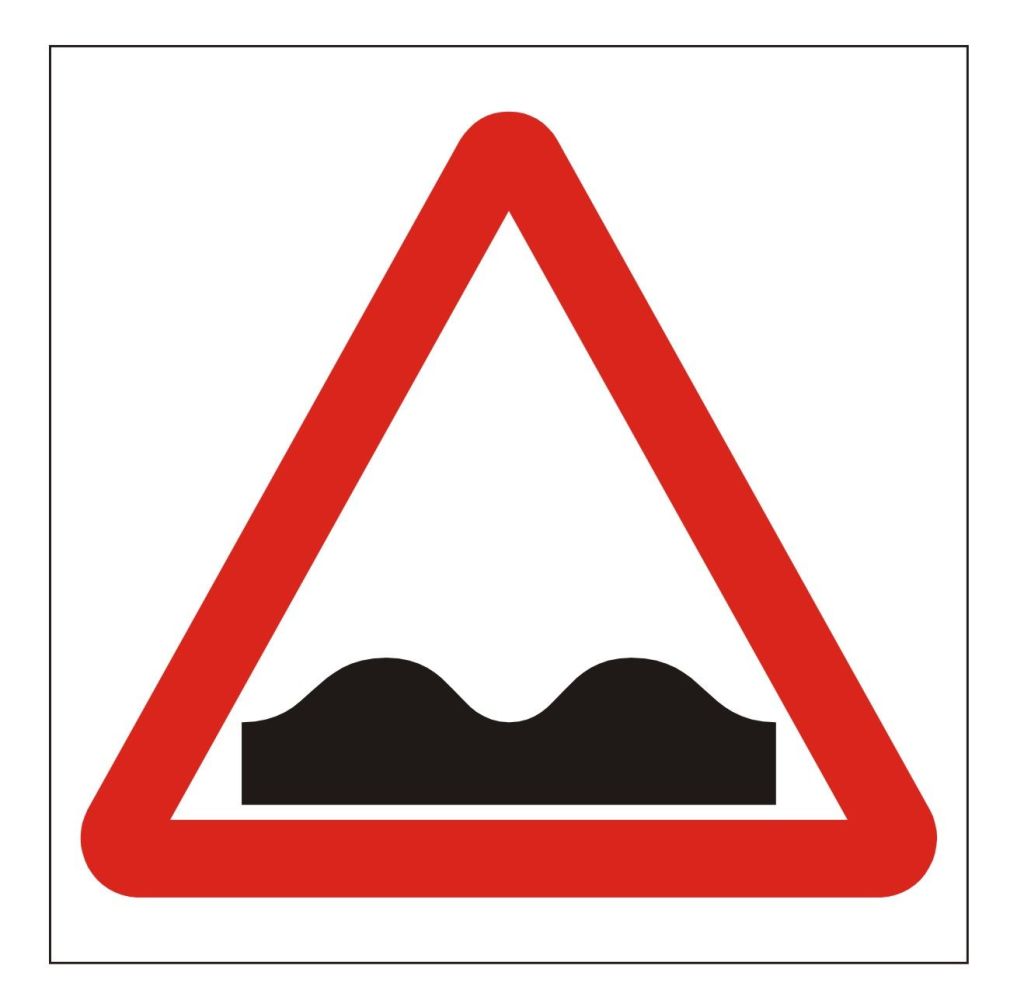
We’ve all seen this sign: there is a bumpy road ahead. There are bumps ahead for all of us: political and economic bumps as systems weaken and collapse in the face of “the beginning of sorrows” that Jesus prophesied in Matt 24:7, and emotional bumps as we navigate our paths over them. Some will be minor disturbances; some will be catastrophic upheavals. Some we will face as individuals; some as churches, and some as nations. But whatever goes on in the world, the truth is this: “He that is in us is greater than he who is in the world.” (1 John 4:4)

Is this truth something that is alive for us, burning in our hearts like a bright fire against the cold and the dark, or is it just another Bible verse – albeit a powerful one, we acknowledge – that we know is true but that somehow we don’t experience the truth of? We know that He has given us His peace, “not as the world gives,” but do we walk in it? “Peace I leave with you, my peace I give unto you: not as the world giveth, give I unto you. Let not your heart be troubled, neither let it be afraid.” (John 14:27) As we hit the bumps  we need to know how we can receive the peace that the One who is in us is giving. The apostle John gives us some pointers:

No one has seen God at any time. If we love one another, God abides in us, and His love has been perfected in us. By this we know that we abide in Him, and He in us, because He has given us of His Spirit. And we have seen and testify that the Father has sent the Son as Saviour of the world. Whoever confesses that Jesus is the Son of God, God abides in him, and he in God. And we have known and believed the love that God has for us. God is love, and he who abides in love abides in God, and God in him.” (1 John 4: 12-16)

By this we know…

If we wanted to write down two of the central planks of New Testament theology it would be that we are in Christ and He is in us. In these five verses we find four references to God being in us, and three references to us abiding in God.

We know it’s true that we love one another. (verse 12) We might not express that love all the time, and we may not feel it consistently; but there are times in our lives when we know that the love that God has “poured into our hearts by the Holy Spirit whom He has given us” (Romans 5:5)  flows through us and reaches a brother or a sister. John tells us that this love that we carry in our hearts for one another is the proof that God “abides in us”, because it comes from Him, not from our own flesh. However this is still head knowledge, and to have the proof in our heads is not enough for it to become the experience of our hearts. John – and Jesus – wants more than that for us. He says “By this we know that we abide in Him, and He in us, because He has given us of His Spirit.”

More head knowledge, you may say. But I don’t think it is. To “know” – ginōskō – is to know fully and intimately, empirically as well as intellectually. We know fully and completely the reality of God dwelling in us when we experience the person of the Holy Spirit operating in our lives. “By this we know – have experiential knowledge – that we abide in Him, and He in us, because He has given us of His Spirit.”

So the proof that he abides in us is that we love one another, but the experience of that truth is the empirical knowledge of the Holy Spirit who has put that love into our hearts. What follows from those two statements is this: the more we express the love that we have for another, the better we know the one who is in us. And the better we know the One who is in us, the better we know that He is greater than the one who is in the world, and the more we are able to express the love that He has given us for one another.

Gently does it.

And so we come to the bumpy road and a practical application of these verses. How do we go over the bumps? By going slowly. Gently does it.  If we don’t go gently we are likely to crash. This is not just an application of material experience to spiritual ideas: it is a scriptural principle. Gentleness is an aspect of the fruit of the Spirit. Jesus tells us to learn from His gentleness in Matt 11:29. When we hit the bumps in life, our first recourse must be to behave gently and not be quick to react. The victory that has overcome the world is our faith (1 John 5:4), and we need faith to slow down instead of being driven headlong into the bumps by our flesh. It is only by trusting God and not our own abilities that we can be still enough to listen to Him and be led by the Spirit in gentleness. Those bumps might be out there in the world, or they might be right inside our own front doors. Wherever they are, trusting God enough to be gentle gives us time to love, and when we love we walk in the proof of His presence within us, the One who is so much greater than he who is in the world.

There is bumpy ground ahead: when we face it, we need to remember to walk slowly enough to love one another, because

When we love one another we can know His presence,

When we know His presence we can feel His power,

And when we feel His power we can receive His peace.