Tag Archives: faith is the substance

From Faith to Faith

“So Jesus came again to Cana of Galilee where He had made the water wine. And there was a certain nobleman whose son was sick at Capernaum. When he heard that Jesus had come out of Judea into Galilee, he went to Him and implored Him to come down and heal his son, for he was at the point of death. Then Jesus said to him, “Unless you people see signs and wonders, you will by no means believe.” The nobleman said to Him, “Sir, come down before my child dies!” Jesus said to him, “Go your way; your son lives.” So the man believed the word that Jesus spoke to him, and he went his way. And as he was now going down, his servants met him and told him, saying, “Your son lives!” Then he inquired of them the hour when he got better. And they said to him, “Yesterday at the seventh hour the fever left him.” So the father knew that it was at the same hour in which Jesus said to him, “Your son lives.” And he himself believed, and his whole household. This again is the second sign Jesus did when He had come out of Judea into Galilee.”

Signs and wonders: we all want to see them. Why was Jesus so disparaging about the miraculous here, particularly since he says later that “the works which the Father has given Me to finish—the very works that I do—bear witness of Me, that the Father has sent Me.” (John 5:36)? The importance of this second sign is that Jesus is looking for faith – “the evidence of things hoped for” (Heb 11:1) – that will draw people to the Father who sent Him, not just followers seeking the supernatural for their own benefits. To believe on the basis of a miracle that is seen is evidence-based, not faith-based, and does not generate the Hebrews 11:1 faith that reaches into the unseen. But faith that “believed the word that Jesus spoke” will continue to believe the words that Jesus speaks, and opens the door to eternal life: “He who hears My word and believes in Him who sent Me has everlasting life, and shall not come into judgment, but has passed from death into life.” (John 5:24)

When Jesus withstood the first temptation, he said, quoting Deuteronomy 8:3, “It is written, Man shall not live by bread alone, but by every word that comes from the mouth of God.” (Matt. 4:4) A few verses on in the discourse to the Pharisees quoted above, Jesus states: “I can of Myself do nothing. As I hear, I judge; and My judgment is righteous, because I do not seek My own will but the will of the Father who sent Me.” Although the word translated here as “judge” – krino –  is most commonly used in English with reference to judicial processes, the meaning of the Greek is much broader and relates primarily to mental judgement: having an opinion or making choices and decisions in any context, not just that of human behaviour. Jesus is basically saying, ”Whatever the situation, I do what the Father tells me; I don’t just do what I like. What the Father says is what I do. I live by every word that comes from His mouth.”

Paul writes: “For in it (“it” refers to the gospel) the righteousness of God is revealed from faith to faith; as it is written, “The just shall live by faith.” (Romans 1:17) Jesus says explicitly here that the righteousness of His decisions comes from the fact that He always does what the Father says, and by implication His human flesh has no say in anything. When we believe in Jesus and are born again His righteousness becomes ours, but to reveal His righteousness on a daily basis we have to live by His words, “from faith to faith.”  If we want to witness to Christ, His righteousness must be revealed in us. There is only one way to achieve this: just as Jesus said to his disciples after the meeting with the Samaritan woman, (John 4) our food must be to do the will of the one who sent Him.

The Prayer of Faith

“The effective fervent prayer of a righteous man avails much.” (James 5:16)

When the heavens are made of brass

I often wonder, as I’m sure you do, why so many prayers just don’t seem to be answered. We can, and do, find all sorts of ways to justify the lack of change in our circumstances, or in the circumstances of those we prayed for even when we spent a long time on our knees (or however, you pray – I hardly ever actually get onto my knees . Perhaps I should do more often…) But the fact is it often doesn’t appear that heaven is manifesting on earth, or the Kingdom of God is coming  as a result of our prayers. Sometimes it is a matter of timing, and there are many powerful testimonies of long period of time elapsing before the prayer and the answer: years, and even decades. God dwells outside of time, and we know that His timing is always perfect, and our timing very often leads to disappointment and frustration. And sometimes there’s a battle to be fought in the heavenlies, such as we see at work in the book of Daniel and the opposition of the “Prince of Persia“ to Daniel’s prayers being answered. These are not the situations I am talking about. And I’m not talking about the times when we console ourselves with the thought that the answer is “No,” or that it comes gradually. I am referring to those specific needs that arise within a specified timeframe, outside of which they cease to exist, and yet where God does not appear to do anything. I’m talking about the times when the heavens seem to be “made of brass.“

Yet we know they aren’t, we know our God of Love does not ignore his children, and we know that He is faithful. As Smith Wigglesworth famously put it, our God loves to answer our prayers more than we love to ask. James 5: 16 tells us “the effective fervent prayer of a righteous man avails much.“ If this is what the Bible says, it must be true. So if our prayers don’t seem to avail anything (let alone much) it must be either because they aren’t effective and fervent, or because we aren’t righteous. And since we are “the righteousness of God in Christ,” (2 Cor 5:21) that can’t be the issue; so it has to be to do with whether or not our prayers are effective and fervent.

The Electric Current

Actually it all comes down to one word, because the phrase “effective fervent” (This is the new King James translation: NIV says “powerful and effective.”) is only one word in Greek, which is energeo, meaning operative, putting forth power. Our word energy – think of an electric current – obviously comes from it. If we want to know why some of our prayers don’t “avail much,“ I think we need to ask ourselves what it means for a prayer to have energeo.

We can get some light on this by seeing where else it’s used. In Ephesians 4:16, Paul says that the body (the Church) grows in Christ according to the “effective working“ by which every part does it share. It’s the same word: “effective working” is what enables all the joints in the body to work together and grow in love.  And here’s what struck me: energeo is what enables every part – that is each member of the body – to do its share. The word for share  is metros. Effective working is something that is meted out to each one of us, so that we can function in the power of the Spirit and the life of Christ can flow in His body. What do we all have a share (metros) of?  

 Paul writes: “For I say, through the grace given to me, to everyone who is among you, not to think of himself more highly than he ought to think, but to think soberly, as God has dealt to each one a measure of faith.” (Romans 12:3. My underlining.)

What God measures out to us is faith. I think that this is the key to energeo. A prayer isn’t “fervent and effective” because we have spent hours in crying out to God fervently, or because we have used words that we think are effective because other people have used them effectively: a prayer has energeo when we know that we know that God has given us the answer. Not because of our theology, and not even because it’s written in the Bible, but because He has told us personally. We might still have to cry out for hours to see that answer manifest, but we cry out in faith because the powers of darkness may need to be cleared out of the way, not in desperation because we think we need to get God’s attention. The full context of  James 5:16 is this:

“Is anyone among you sick? Let him call for the elders of the church, and let them pray over him, anointing him with oil in the name of the Lord. And the prayer of faith will save the sick, and the Lord will raise him up. And if he has committed sins, he will be forgiven. Confess your trespasses to one another, and pray for one another, that you may be healed. The effective, fervent prayer of a righteous man avails much.” (James 5: 14-16)

The effective fervent prayer is the prayer of faith. Churches that apply James 5: 14-16 to prayer for healing tend to focus on the oil and the eldership, and hope that these two will carry the faith. But 2 out of 3 won’t work. In the time of James, the elders of a church will have been people who knew what it was to pray with energeo, and so it was safe to assume that their prayers would be answered, and the body of Christ built up in love (Ephesians 4:16) as a result. Unfortunately that is not necessarily the case today. Without energeo, the elders and the oil avail nothing.

Seeing and Hearing

We all know Hebrews 11:1 “ Now faith is the substance of things hoped for, the evidence of things not seen.” The evidence of things that are seen is what our eyes have witnessed. When we say “I saw it with my own eyes,” it is not my eyes or the thing that I saw which are the evidence, but the fact that I saw it. My sense of that reality tells me and tells others that it exists. In the same way, faith is the sense by which our spirit experiences the unseen dimension. We also know that “Faith comes from hearing, and hearing from the word of God.”  (Rom 10:17) How do we hear the word of God? From the Good Shepherd, whose voice we hear, and whom we have decided to follow. (John 10:27) We can’t follow Him, unless we’re close to Him, so being close to Him must be our first priority. And when we are close to Him our sense of faith is sharpened, and it is in His proximity that we can hear His voice, sometimes through and always agreeing with the word of God.  Biblical hope is not a wish; it’s a destination. When we hear Him speak and our spiritual sense of faith perceives the substance of the answered prayer that we are hoping for, we have that Mark 11:22  mover of  mountains; the faith of God.

So Jesus answered and said to them, “Have faith in God. “For assuredly, I say to you, whoever says to this mountain, ‘Be removed and be cast into the sea,’ and does not doubt in his heart, but believes that those things he says will be done, he will have whatever he says.” (Mark 11:22-23. The Greek translated “in God” is actually the genitive case “of God.”)

Faith is always a gift of God: we can’t draw it out of our own thinking, our own understanding. Jesus tells us that faith as a grain of mustard seed is enough to uproot and move a tree. The Bible is a whole sack full of seeds in lots of different packets – seeds for healing, seeds for provision, for victory and so on. I believe we can only see which seeds to sow when the Holy Spirit shows us the life that they contain. We need to see the mustard tree in the Spirit and not just read about it on the packet, and that can only come from God, and not by leaning on our understanding – even if it’s our understanding of the Bible. When God has shown us the tree inside the seed and we have evidence of it with our spiritual sense of faith, that is the faith of God that Jesus tells us will move mountains.

So it is in that place of mustard seed faith, granted by the Holy Spirit through a word from the Shepherd, that we can pray the effective fervent prayers that avail much. We are so often like people going into a dark room and groping around to we find the light switch. There can be a lot of hidden wires carrying electricity (energeo) in the cavity of a wall, but there is only one switch that activates their power. The power is there: it’s been given to us. The entire circuit is the gift of God’s grace, and Jesus flipped the mains to a permanent “ON” at Calvary. But in the dark rooms where we can find ourselves we need to learn to seek and find the switches, instead of just tapping at the blank wall blindly and wondering why the light doesn’t come on.

The Economy of Heaven

The banking system is falling through thin ice

We are currently hearing a lot about the collapse of the Silicon Valley Bank and its potential effect on the world economy: another sheet of the thin ice of debt upon which our financial systems are built has cracked, and it won’t be the last. I’m about to go away for a few days and was glancing through my book “Two Seconds to Midnight” this morning (thinking ‘Should I read through this again and make sure I am practising what I preach??’) and landed on this passage in the section on God’s Provision. The wider context in the book is our priestly calling, but I am sharing it here as a signpost to all of us, in these times of financial shaking, of the certainties of God’s economy.

Ho! Everyone who thirsts,
Come to the waters;
And you who have no money,
Come, buy and eat.
Yes, come, buy wine and milk
Without money and without price.
Why do you spend money for what is not bread,
And your wages for what does not satisfy?
Listen carefully to Me, and eat what is good,
And let your soul delight itself in abundance.”
(Isaiah 55:1-2)

So we find our provision in the presence of God, and we receive His abundance when we take our priestly calling seriously and allow the Holy Spirit to do His work of holiness within us. Indeed, unless we do “come to the waters” I don’t believe we can fully appreciate what it means to “buy and eat” without money. Before the Holy Spirit was sent, the twelve had given up everything to follow Jesus and spent every day in His company, yet they certainly had not grasped that He was Jehovah Jireh and that they could trust Him entirely for their needs. We see this clearly in Mark 8:14-21:

“Now the disciples had forgotten to take bread, and they did not have more than one loaf with them in the boat. Then He charged them, saying, ‘Take heed, beware of the leaven of the Pharisees and the leaven of Herod.’ And they reasoned among themselves, saying, ‘It is because we have no bread.’ But Jesus, being aware of it, said to them, ‘Why do you reason because you have no bread? Do you not yet perceive nor understand? Is your heart still hardened? Having eyes, do you not see? And having ears, do you not hear? And do you not remember? When I broke the five loaves for the five thousand, how many baskets full of fragments did you take up?’ They said to Him, ‘Twelve.’ ‘Also, when I broke the seven for the four thousand, how many large baskets full of fragments did you take up?’ And they said, ‘Seven.’ So He said to them, ‘How is it you do not understand?’”

We are not given any discussion of what they hadn’t understood, because the account moves straight onto the healing of a blind man. But we can read the context clearly enough. Jesus wanted to feed the spirits of His disciples, but they were too worried about their stomachs to receive what He was saying. Yet they had just witnessed Him miraculously providing a good couple of tons of bread (enough for 9,000 men, plus women and children), maybe more, for the needy crowds, with enough left over to feed the disciples for weeks. “Don’t you get it?” He was saying. “You’re sitting in the boat with Jehovah Jireh and you’re worried about food? Why do you think I told you back on the Mount of Olives not to worry about what to eat, or what to wear? You should know by now that I’ve got all that under control, so you can pay attention to the important stuff! ‘Listen carefully to Me, and eat what is good, and let your soul delight itself in abundance.’”

The Baskets Full

There is yet another layer to this story that concerns God’s supply for us. Take either of these two miracles: the sequence is exactly the same. Someone gives a tiny amount to the Lord; He multiplies it and involves His disciples in the miraculous distribution of the food, then there is an abundance left over for the disciples to enjoy. The first priority for the disciples was to give out what God had provided, and after the distribution they received their baskets full. In the world’s economy we receive first – income, wages, salary, etc. – then we give out of whatever spare is left in the baskets at the end. If we’re feeling generous there might be as much as half a loaf left out of our original five. In the economy of heaven there is a different dynamic: first we give what God tells us to give (if He is telling us, of course), then what is left in the basket afterwards is ours. But there is an additional element in the heavenly model: the loaves and fishes have passed through the hands of the Saviour, so what had been earth’s ration becomes heaven’s abundance. God wants us to give out of heaven’s abundance so He can multiply our portion accordingly: “Give, and it will be given to you: good measure, pressed down, shaken together, and running over will be put into your bosom. For with the same measure that you use, it will be measured back to you” (Luke 6:38).

God’s provision is in His presence

The important lesson for us is that God’s provision is in His very presence. What He wants from us is our hearts: a willingness to trust Him with what is ours, and to place it in His hands. We catch a glimpse, literally, of God’s perspective on our economy when we see Jesus sitting outside the Temple watching people putting their gifts into the treasury. We know the story: the poor widow, whose two mites represented all she had, had put in far more than the wealthy who gave leftovers from their abundance. We don’t see that widow again, but we can be sure that God gave back to her in the same measure that she had given to the Temple. Wealth and poverty have traded places. Our God is a creator, and loves to create, and we can so easily forget that when we look at our bank statements. But if our hearts are rich towards Him, we will see Him create in our material circumstances and fill our baskets, whereas if our hearts are bound by our bank accounts we remain in poverty, and will only ever see the loaves and fishes that we can provide for ourselves.

(From “Two Seconds to Midnight,” pp 130-133. MD Publishing 2021)

More than Conquerors

Who shall separate us from the love of Christ? Shall tribulation, or distress, or persecution, or famine, or nakedness, or peril, or sword?
As it is written:
“For Your sake we are killed all day long;
We are accounted as sheep for the slaughter.”
 
Yet in all these things we are more than conquerors through Him who loved us.
(Rom 8: 33-35)

Do you know what it is to be a hypernikao?

Hypernikao is the Greek word translated as “more than a conqueror.” This passage from Romans is familiar to all of us, so much so that, if you’re like me, you pass over the full significance of the term “more than a conqueror” when you read it now. I would say that I read the words with my human mind and think ”Yes, Jesus has the victory, there’s nothing to worry about, God will look after me if things go pear-shaped…” etc. It’s all true, but I would say that they are my thoughts, not God’s. And if they are my thoughts, they won’t stir real faith,  “the faith of God.” (Mark 11:22) They are no more than intellectual assent to my Christian set of beliefs, as opposed to the “substance of things hoped for” that is the definition of true faith (Hebrews 11:1). In fact they are quite likely to melt away in the face of tribulation, or distress, or persecution, or famine, or nakedness, or peril, or sword. Although God in His mercy will bring deliverance, because He is our loving Father and He is our shield, is that His best for us? Wouldn’t we rather have the faith that sees mountains move, that will “run  against a troop,” (Psalm 18:19) or “put a thousand to flight” (Joshua 23:10)? Because this is the purpose that we are called to.

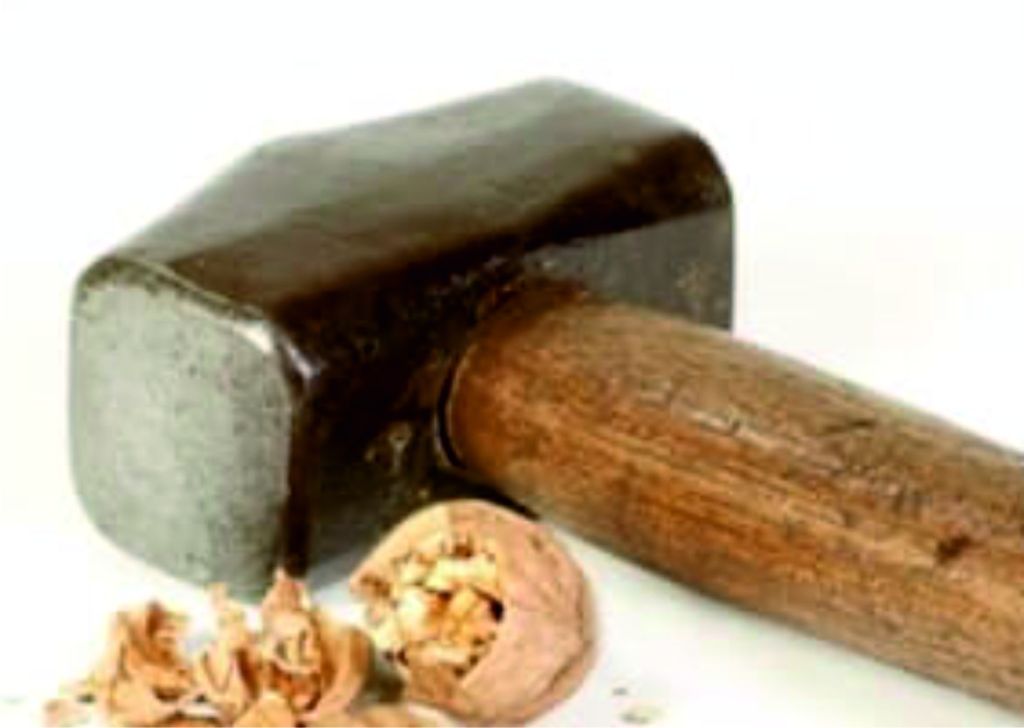
The sense of hypernikao is not just more than a conqueror in the human sense of, say, twenty being more than ten, or even an Olympic athlete being more of a sprinter than me. The impact of a sledgehammer cracking a nut is nearer the truth. A different order of reality is coming into play. “The Spirit of God, who raised Jesus from the dead, lives in you. And just as God raised Christ Jesus from the dead, he will give life to your mortal bodies by this same Spirit living within you.” (Rom 8:11). Hypernikao is a whole lot “more. ” Death was the nut; the Holy Spirit was the sledgehammer, and He is the One giving life to our mortal bodies. These are God’s thoughts on our status as more than conquerors.

The world is already moving into the time of separation. Deep darkness is moving across the nations, and our light has come. It is time to arise. (Isaiah 60) If we are going to arise as opposed to just being rescued we will need our light to push back the darkness, so that those in the darkness can see hypernikao in action. That is when “The Gentiles shall come to (our) light, and kings to the brightness of (our) rising.” (Isaiah 60:3). We need to wake up, trim our wicks, and fill our lamps with oil, looking forward to the return of the King instead of looking back to the relative stability of the Western world as it was before Covid broke us free from the security of our moorings and sent us rocking into the waves of an uncharted sea. Those moorings have gone; we won’t be going back there. To use the words God spoke to Jeremiah, we’ve reached the floodplains of the Jordan; it’s time to start running against the horses. (Jeremiah 12:5)

Persecution, famine, sword and the rest  are actually what is coming. They may be tough nuts to crack, but we have the sledgehammer.

Signs of the Times

This is the victory that has overcome the world, even our faith…

As we look at the USA, Covid, and the rest of it, we can easily take our eyes off things above and dwell on what we see in the world. But what is happening in the world is only a reflection of what is taking place in the Spirit, and some of the scenario of the spiritual battle is given to us – cryptically, I know – in the book of Revelation. When tears come to our eyes – as they do to mine, when I miss my grandchildren – we need to remember that the day is coming when He will wipe all those tears away. But before then, we are called to watch and pray. And if we watch, there are some things that are visible, but which point to the bigger picture. Here is a little snapshot of a bit of it:

A lady (in the USA) with a small Ebay business sold patriotic items, which she advertised on facebook. Facebook (and possibly Ebay as well, but I’m not sure about that detail) closed her down, because use of the terms “patriot” and “patriotic” are now “contrary to their policies.” She now no longer trades. Because of Facebook’s perceived anti-republican stance, many Christians and other republicans turned to a small rival to FB called “Parler” which some of you may have heard of. Parler is French for “to speak”, and it’s a platform that champions freedom of expression – in particular, but of course not exclusively, freedom to speak what God speaks. Parler used Amazon’s online web services platform. Amazon has now closed down Parler.

Following the Capitol Hill demonstration, the Facebook mouthpieces have justified their policy by saying that encouraging patriotism can incite violence. Yet FB has kept complete silence over all the Black Lives Matter rampages throughout 2020, so their policy has nothing to do with violence and everything to do with who they want to silence.  What is actually happening is that the online giants are closing ranks against those who do not agree with their liberal policies. I only know of that one lady who has lost her business so far, but I’m sure there will be more, and we can only see the “you can only use our platform if we agree with you” trend continuing.

Perhaps you can see where this is going? It’s Revelation chapter 13, verse 17 in particular: “No one may buy or sell except one who has the mark or the name of the beast, or the number of his name.” If this seems far off, we need to look again, because that lady who loves her country and what it stands for would say that it’s already beginning to happen.

Meanwhile COVID continues to stalk the globe, and the thin ice of the world economy gets thinner by the day as it trades its mountain of make-believe printed money. By now we’ve all heard of bitcoin and blockchain, and some of us may have used it. The solution to a worldwide economic collapse would be a complete reset to a digital currency. China has already successfully trialled one – the E Rmb – in several cities, including Chengdu and Shenzhen. And in the Covid arena again, a comprehensive and international “track and trace” programme would seem to be an obvious development to combat the virus. It would also be very useful to governments trying to close down the Church. The digital cloud covers the whole of the world.

This of course is speculative. But what could we have, if we put these threads together – and it may not be as far away as we would like to think –  may be something like this:

We are the digital state. We do not have national boundaries. The nations belong to us, and we belong to the Prince of the Power of the Air, because we are the Cloud. We know who you are and where you come in and go out. You cannot trade unless you sign up to our policies, and our policies exclude the Church of Jesus Christ. You cannot trade unless you use our currency. If you do not belong to us you will be cut off from society, and you will die.”

We need to look beyond the cloud, and look to the things above, where the Sun of Righteousness is shining. Because He will break through. The currency of the World may well end up as bitcoin, but the currency of the Kingdom is faith, and “This is the victory that has overcome the world, even our faith.” (1 John 5:4) And amongst Kingdom businesses and financial organisations, God is already raising up an Ark of resources where this currency is in operation and where God’s people will be able to find shelter from the coming flood. So hen we see the news and read the papers, let us also be sure to read the signs of the times. Let us watch and pray, because we do not know the day or the hour…

Faith: the Frame.

By faith we understand that the worlds were framed by the word of God, so that the things which are seen were not made of things which are visible. (Heb 11:3)

This morning I saw a hearse coming towards me on the road with a long queue of cars behind it. I was glad I was driving in the opposite direction. Then, very briefly, I saw the number-pate: on it were my initials. My first thought – because the flesh tends to butt in before the spirit – was: “That’s you, Bob! Could that be an omen?” But then the Spirit spoke to me with the truth: “You are already dead, Bob. You were crucified with Christ. It is not you who live, but Christ who lives in you!” So by the time the line of cars had passed, I was thinking: “Halleluia! I’m dead to my flesh, and alive in Christ!” This is what the Word of God says; it’s what my experience of the Holy Spirit confirms every day; and it’s what my heart believes even if my head is assailed by doubts. It is the confession of my faith. Faith is the frame that holds the entire bicycle together.

By faith we understand… that the things which are seen were not made of things which are visible. Hebrews 11:1 tell us “Now faith is the substance of things hoped for, the evidence of things not seen.” Faith is a substance. Whether we believe this or not is our choice. But if we can allow the substance of faith to become a reality in our hearts we can look into it and see that which our brains cannot fathom. “The Just shall live by faith” was the revelation given to Martin Luther and is the central plank of the Protestant reformation. The scripture occurs three times in the New Testament (Romans 1:17,Galatians 3:11,Hebrews 10:38), and these in turn refer back to Habakkuk 2: 4: “Behold the proud, His soul is not upright in him; But the just shall live by his faith.” So what do we see when we look into the substance of faith?

Faith is so much an idea that our minds can grasp, as the very substance of a dimension that our spirits walk in. If I go out into my garden I walk on grass. If my spirit enters the Heavenlies I walk in faith.  It is where Truth is defined by the Word of God and not by the word of science, and where Life is defined not by the ageing and wearing out of the body, but by its resurrection. In this dimension, we see the rule of Heaven established on Earth:

“Behold, a king will reign in righteousness,
And princes will rule with justice.
A man will be as a hiding place from the wind,
And a cover from the tempest,
As rivers of water in a dry place,
As the shadow of a great rock in a weary land.
The eyes of those who see will not be dim,
And the ears of those who hear will listen.
Also the heart of the rash will understand knowledge,
And the tongue of the stammerers will be ready to speak plainly.

(Isaiah 32: 1-4)

We see the King of righteousness Himself

The Spirit of the LORD shall rest upon Him,
The Spirit of wisdom and understanding,
The Spirit of counsel and might,
The Spirit of knowledge and of the fear of the LORD.
His delight is in the fear of the LORD,
And He shall not judge by the sight of His eyes,
Nor decide by the hearing of His ears;
But with righteousness He shall judge the poor,
And decide with equity for the meek of the earth;
He shall strike the earth with the rod of His mouth,
And with the breath of His lips He shall slay the wicked.
Righteousness shall be the belt of His loins,
And faithfulness the belt of His waist.
(Isaiah 11: 2-5)

And in this dimension of faith, as “the earnest expectation of the creation eagerly waits for the revealing of the sons of God.” (Romans 8:19), we see the redeemed, sin-free world that creation is earnestly expecting:

The wolf also shall dwell with the lamb,
The leopard shall lie down with the young goat,
The calf and the young lion and the fatling together;
And a little child shall lead them.

The cow and the bear shall graze;
Their young ones shall lie down together;
And the lion shall eat straw like the ox.

The nursing child shall play by the cobra’s hole,
And the weaned child shall put his hand in the viper’s den.

They shall not hurt nor destroy in all My holy mountain,
For the earth shall be full of the knowledge of the LORD
As the waters cover the sea.
  (Isaiah 11: 6-9)

I make no apology for quoting these scriptures at length, as I believe they are among the most beautiful verses in the entire Bible. They describe the society and the landscape of the Mountain of God where our bike ride is taking us. And this place is real: its substance is faith. If we can allow our spirits to walk there we will find that our own judgements won’t be “by the sight of our eyes or by the hearing of our ears” either, but they will come to us by the spirit of the King of the Mountain who dwells within us.

Free of the curse of sin, beyond the reach of the devil, and untrammelled by the limitations of the world and the flesh, the substance of faith determines the abundance of God’s supply, whether this is of provision, healing, spiritual gifts or any other blessing. Ephesians 1:3 says “Blessed be the God and Father of our Lord Jesus Christ, who has blessed us with every spiritual blessing in the heavenly places in Christ.” Every spiritual blessing has already been given to us in heavenly places. They are a reality. Their substance is faith. When we read about them in the Word of God we are reading the Maker’s handbook on all the resources that we have in our personal cupboards of His provision in Heavenly Places.

Jesus tells us “ whatever things you ask when you pray, believe that you receive them, and you will have them.(Mark 11:24) Our English word “receive” has a fairly passive connotation: there is a sense of holding out one’s hands for something to be placed into them. The Greek word, lambanō, that is used here, is far more active. Here are the primary definitions. They are all involve actively taking hold of rather than passively receiving:

  1. to take with the hand, lay hold of, any person or thing in order to use it
    1. to take up a thing to be carried
    1. to take upon one’s self
  2. to take in order to carry away
    1. without the notion of violence, i,e to remove, take away
  3. to take what is one’s own, to take to one’s self, to make one’s own
    1. to claim, procure, for one’s self

Jesus is telling us to take hold of those things that we ask for, believing that they already exist – which they do, made of the substance of faith. He is telling us to reach into our heavenly “provisions cupboard” and take hold of that spiritual blessing which the Father has provided. I remember a healing meeting with Ian Andrews in the late 1980s. If I remember correctly, he said that God had showed him a warehouse full of all the body parts that exist, and when he prayed for healing he just reached into the warehouse and took hold of a new part to replace the one that was malfunctioning. He believed he received, and he had what he prayed for. On Earth as it is in Heaven: what was made of the substance of faith in the heavenly realms became flesh and blood on Earth.

Of course, that is easier to write than to do. If you’re anything like me, most of us blunder around and get hold of something occasionally; but as John Wimber discovered the more we blunder the more chance we have of actually taking hold of what God has provided. I’m sure Ian Andrews did  a lot of blundering, and probably still does some! And of course we are always in a battle: God may have provided; we might be reaching out into the right place, but the devil is standing in front of the cupboard. Sometimes we have to fight for what we’re reaching for, and keep praying until we know in the Spirit that the battle is won.  Proverbs 23: 12 says “Apply your heart to instruction, And your ears to words of knowledge.”  The word of knowledge is really helpful in enabling us to take hold of the substance of faith, so if you are praying for people ask the Holy Spirit for that gift – and take hold of it! I have seen a small number of miraculous healings when I have prayed for people, including a broken toe being instantly mended and a deaf ear being opened; and they have always followed a word of knowledge.

This is one of my pet topics, and I could keep writing – but you might not keep reading. The frame of faith touches every part of the bike – the wheels, the handlebars, the brakes, the saddle, the pedals. If we can understand that faith is a substance and that we do not have to ask God for what He has already given but learn to take hold of it instead of just holding out our hands; and if we can really believe in our hearts that the Word of God is all true and is describing a dimension that our spirits have access to, then I believe we will progress further and faster in our discipleship as we walk – or cycle – after the spirit and not after the flesh.

Bob Hext Sept 2020