Category Archives: Be prepared; hold on.

As we approach the last days, sound doctrine will be diluted in many churches to appease the spirits of liberalism as large in the world, and persecution of those believers who hold on to the fullness of the gospel message will intensify. We need to “build ourselves up in our most holy faith” so that we can be prepared for whatever the enemy might throw at us, and be ready at the last, a spotless bride, to receive our Lord into the Kingdom of our God and His Christ.

The Washing of Water by the Word (www.)

“And for their sakes I sanctify Myself, that they also may be sanctified by the truth.”  (John, 17:19).

There is so much in His verse that one could write a whole book on it, let alone just a blog post. We think of sanctification in terms of the gradual process of the Holy Spirit working in our lives and purifying our characters, so that we become more like Jesus, more “saintly.” But that isn’t the way our Lord uses the term here: he couldn’t become more saintly than He was, or more like Jesus than he already was. The word used in the Greek is hagiazō, which is also translated as “consecrate.” What Jesus did here, as He did throughout His ministry, was to consecrate Himself to the Father’s will. Although most translations use “sanctify” here, the RSV uses the word “consecrate,”

“And for their sake I consecrate myself, that they also may be consecrated in truth.”

God‘s word is truth, and the Father’s will for Jesus was already expressed in the prophetic words of the Messianic scriptures. As He faced the cross, Jesus consecrated himself to the truth. The desires and impulses of His flesh were completely eradicated by His commitment to the Father.

Sanctified by the truth
Jesus sanctified himself for our sakes “that they also may be sanctified by the truth.” It’s easy to miss the word “also” here. But what it tells us is clear: His desire for His disciples was that we would have the same commitment as Him, and He committed Himself to the cross to make it possible (“that they also…”). He never intended discipleship to be a part-time post.

When Jesus faced Pilate a short while later, He said “Everyone who is of the truth hears My voice.” (John 18: 37), and Pilate famously asked “What is truth?” and turned away, assuming that the question had no answer. And as we know all too well, in the world system where Pilate had authority, truth is considered to be relative. But absolute truth does exist: Jesus Christ is Lord, His blood cleanses us from all our sin, God is our Father, He is Love, Love never fails. The doors to the Kingdom of Heaven, where Love rules and everlasting life awaits, are open to us through Jesus, its king. When the truth of the Kingdom of God reigns in our hearts we can die to self as Jesus did, knowing that self will always fail. We can consecrate ourselves to the truth in full assurance of faith, turning away from lusts and the lies of doubt, fear and pride that bring corruption. We will know the truth, and the truth will set us free.

The washing of water
Under the law, consecration was to be set apart from all impurities. As disciples of Jesus, we have been taken out of the world (John 17:16); we have already been consecrated. Jesus said to Peter, “He who is bathed needs only to wash his feet, but is completely clean; and you are clean, but not all of you.” (John 13:10) This is picked up later by Paul: when he is drawing the parallel between the love of a husband for His wife and the love of Christ for the church, he says this:

“Husbands, love your wives, just as Christ also loved the church and gave Himself for her, that He might sanctify and cleanse her with the washing of water by the word, that He might present her to Himself a glorious church, not having spot or wrinkle or any such thing, but that she should be holy and without blemish.” (Eph 5: 25-27)

When the disciples believed in Jesus, they were taken out of the world, and made clean by the perfect word that they had accepted. They weren’t clean because they had been marinating in the Holy Spirit for three years, but because they believed what Jesus had told them. When Paul writes “to the saints who are in Ephesus” (Eph 1:1), he was writing to all the believers there – all the consecrated ones – not just those who might be considered saintly. By washing their feet and commanding them to follow His example, Jesus was demonstrating to His disciples that their task now was to remain clean by continuing to believe His words, and by holding each other accountable for doing so. Paul’s revelation was not a new teaching, but a reminder of the lesson that Jesus gave in John 13.  “But the Advocate, the Holy Spirit, whom the Father will send in My name, He will teach you all things, and bring to your remembrance all that I said to you.” (John 14:26)

No less than those first disciples, we, the bride of Christ, were already made clean when we were taken out of the world by the word that we believed. To remain clean is a question of decision and determination to be bound to the word and the will of God. As we stay in tune with the Holy Spirit, the Spirit of Truth, He will keep reminding us of the Truth. We don’t have to wait for sanctification to happen: we can sanctify ourselves as Jesus did every day of our lives, and the truth will set us free.

Jacob and the Cube

And He said, “Your name shall no longer be called Jacob, but Israel;  for you have struggled with God and with men, and have prevailed. Then Jacob asked, saying, “Tell me Your name, I pray.” And He said, “Why is it that you ask about My name?” And He blessed him there. So Jacob called the name of the place Peniel:  “For I have seen God face to face, and my life is preserved.” (Gen 32: 28-30)

Jacob had a problem. His brother, Esau, whom he had tricked out of his inheritance, was advancing in his direction with 400 men: threats to him, his family, his flocks, and his possessions. True to his nature, Jacob devised a cunning plan to appease his brother by sending delegations ahead of him with gifts, until eventually he was left alone with his family. Finally, he sent his family ahead, and was left alone for the night.

That night, the story tells of how a “man“ – whom we take to be God – came and wrestled with him until the morning, when Jacob famously says “I will not let you go until you bless me!” Bless Jacob He did, giving him a limp in the process that would always remind him of the encounter..

For many of us, it often seems as if the night is dark, and Esau is approaching. We might feel that we have prayed many prayers, just like Jacob sending his gift ahead, but we don’t know if they are making any difference. We are left on our own with God, which of course is exactly where He wants us. Jacob knew the promises that God had made, but now it wasn’t enough for them just to be in his head: he needed them to become a reality; he needed to get hold of God until the words became flesh for him personally.

This is where the Rubik’s cube comes in. Sometimes the things we are desperate for just don’t seem to happen, and no matter how hard we try, how much we pray, how many gifts we have sent in advance, Esau keeps coming and the cube just doesn’t line up. God wants us to know that He can see what we can’t see, and that only He has the solution to the cube. The promises that He’s made us are real but only He can bring them about. It is He who hold the cube, not us: all things really do work together for the good of those who love the Lord, and are called according to His purpose (Romans 8:28), but we need to hold onto God until He blesses us, not try to grab the cube to make it line up.

Whether it’s the nations or our own lives, God has got the cube in His hands. Jacob wrestled until he prevailed: not only did he remember God’s promises, but he held onto the promise keeper until they became part of his life. And here is the great encouragement for us: Jacob named the place of this encounter Peniel, “For I have seen God face to face, and my life is preserved.” (Gen 32:30) Peniel means “Facing God.” God wants us to hold onto Him because He wants us to seek His face, and when we do we know His life and we see His promise fulfilled in the outpouring of that life. The eventual meeting with Esau was a time of reconciliation, not enmity. Jacob was born in the flesh as a human baby, but spiritual Israel was born when he clung to God and would not let him go until he received the blessing of fruitfulness.  When we meet with Esau as Israel, we find that the victory has been won, and the Rubik’s cube has lined up.

Spirit of Truth

I took some photographs recently of a bird flying over a lake. It was a long way off, but I could see that it was a tern, as occasionally it hovered over the water then dived in to catch a fish. When I got home and looked at the pictures on my computer, I got very excited, because I saw that it had mostly black plumage. A black tern! We don’t see many of these in the UK, and they are a species to get excited about if you are a birder over here. But when I looked at it more closely, I realised that the colouring wasn’t quite right: there was too much white underneath even though the rest of it looked right. So I boosted up the brightness and reduced the shadows on my computer, and this is what I found: it wasn’t a black tern at all that I had seen fishing by the lake, but one of the more widespread species, a common tern. My “black tern” just been created by the shadows on its plumage  cast by the morning sun.

Thinking about that, it made me realise how easily shadows can occur in what we look at, so that what we see is not the truth, but just a creation of our own self. In the afternoon Anne and I went to a local nature reserve with a friend. There are three ways of getting there that are roughly equidistant: it’s about 25 minutes away. In the car we took the route I usually take, down a country lane, and I said to Anne that I found this way slightly quicker. Michael agreed, adding that it could depend on the traffic as well. On the way back we found ourselves behind a tractor, so at the roundabout I chose the motorway route instead because I didn’t want to be behind a tractor – even though I would have quickly overtaken it on the dual carriageway. I said: “actually this way is probably just as quick.” Anne said: “That’s interesting, because on the way here, you said the lane was the quickest, and now this way is just as quick. They can’t both be true!“ She was right. They couldn’t both be true. My words were not about the truth, but about what I was trying to prove. This wasn’t even an emotionally charged situation: they were both just throwaway comments about driving choices. But that’s the point: I was justifying my choices, not expressing truth. My focus wasn’t the driving distance at all, but my decisions. In other words, my shadows were colouring what I was looking at. I was seeing a black tern.

As even many atheists know, Jesus said: “I am the way, the truth, and the life.” Truth is found in Jesus. When He first introduced the notion of the coming Holy Spirit to His disciples,  Jesus said this: “And I will pray the Father, and He will give you another Helper, that He may abide with you forever— the Spirit of truth, whom the world cannot receive, because it neither sees Him nor knows Him; but you know Him, for He dwells with you and will be in you.” (John 14: 16-17) The Holy Spirit is the Spirit of Truth. We call Him Holy Spirit; Jesus calls Him, emphatically, “Spirit of Truth.” (John 14:17, John 15:26, John 16:23.) Without the Holy Spirit, whom the world doesn’t know, reality will always be obscured. Just like I had to boost the brightness on my computer to see the real bird, it is only when the brightness of the Light of the world is turned up that we see the reality of life.  “Whoever lives by the truth comes into the light, so that it may be seen plainly that what they have done has been done in the sight of God.” (John 3:19)

James said: “All good and perfect gifts come down from above from the Father of lights, in whom there is no shadow of turning.” (James 1:17) God doesn’t change. He is the Father of lights: He created the lights in the universe, and by His word – “Let there be light” – He created material light itself. In His light, we can see the truth; without His light, we only see our own shadows. The Light of the world never changes: He is totally faithful to His word, He is always love, He is always truth. Every turn in our emotions and our agendas casts a shadow: only in Jesus, by the light of the Holy Spirit, are there no black terns, no shadow of terning.

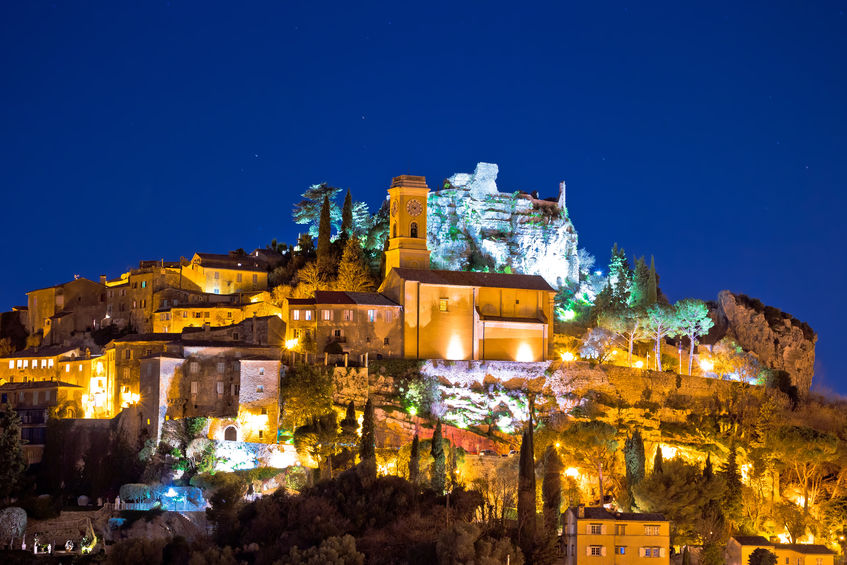
The City on a Hill

“You are the light of the world. A city that is set on a hill cannot be hidden. Nor do they light a lamp and put it under a basket, but on a lampstand, and it gives light to all who are in the house. Let your light so shine before men, that they may see your good works and glorify your Father in heaven.” (Matt 5: 14-16)

There is much in the New Testament about building. Jesus said He would build his church and the gates of hell will not prevail against it. The New Testament writers encourage us repeatedly to build. Jude wrote: “But you, dear friends, must build each other up in your most holy faith” (Jude 1:20), Peter says that we “as living stones, are built up a spiritual house, a holy priesthood, to offer up spiritual sacrifices, acceptable to God by Jesus Christ,” (1 Pe 2:5), and Paul picks up the same theme when he writes to the Ephesians  “in whom (Jesus)  the whole building, being fitted together, grows into a holy temple in the Lord, in whom you also are being built together for a dwelling place of God in the Spirit.” The Greek word used for building up and edifying are the same: oikodome. Speaking of our church gatherings, Paul writes Let all things be done for edification. (1 Cor 14:26) but this doesn’t just apply to our church meetings: it applies to everything that we say to one another: “Let no corrupt word proceed out of your mouth, but what is good for necessary edification, that it may impart grace to the hearers.” (Eph 4:29) Every time we open our mouths, we are to release the Grace of God. In fact the whole of the Christian life has a single purpose, which is to “grow up in all things into Him who is the head—Christ— from whom the whole body, joined and knit together by what every joint supplies, according to the effective working by which every part does its share, causes growth of the body for the edifying of itself in love.”

So the Big Question is, how do we actually build this city set on a hill? What does it mean to actually be builders in God’s kingdom, to be a body that edifies itself (builds itself up) in love? I think the key is simple enough: we don’t build for ourselves, but for others. Jesus is clear about this: “Do not lay up for yourselves treasures on earth, where moth and rust destroy and where thieves break in and steal, but lay up for yourselves treasures in heaven, where neither moth nor rust destroys and where thieves do not break in and steal. For where your treasure is, there your heart will be also.” Whatever we build for someone else is never going to be lost or spoilt through our own carnal failings, but remains our treasure forever – whatever happens to it in the recipient’s hands. Agape love has no vested interest in what it has given. It’s building a house for someone else to live in and walking away without being paid.

When Paul exhorts us to us to “let no corrupt word proceed from our mouth, only what is the necessary edification“ – in other words, only speak words that build other people up – he continues with these words: “And do not grieve the Holy Spirit of God, by whom you were sealed for the day of redemption. Let all bitterness, wrath, anger, clamour, and evil speaking be put away from you, with all malice.” (Eph 4: 29-30). I think many of us read this and just take it that Paul has moved onto another subject. But I don’t think he has. I think what grieves the Holy Spirit is not our negative emotions in themselves, but the fact that their presence among us stops Him releasing the pure love of Jesus Christ that is expressed through the Holy Spirit’s ministry and which will build the City on the Hill. He is grieved because He loves us so much and yet we ourselves prevent Him from fully expressing His love within the very body whose purpose it is to reveal it. Nobody longs for revival more than Jesus.

So just as moth and rust corrupt any treasure that we lay up for ourselves on Earth, corrupt words will spoil God’s spiritual house and prevent it from being built through us.  When Paul writes “let all bitterness and wrath and anger and clamour and evil speaking be put away from you, along with all malice” he pretty well covers the whole gamut of the rubbish that we can carry in our uncleansed hearts. But what is so encouraging here is the word that is often translated as “put away.” The Greek word literally means to be lifted up. He doesn’t say that we must somehow rid ourselves of everything that can corrupt our words. He isn’t standing over us with a pointing finger: he says that they have to be lifted off us, because we can’t just put them away by ourselves.

And this isn’t just in church meetings: it is all the time. If our words are corrupted by piqued egos, unsatisfied longings and  unforgiven bitterness during the week, we will not speak words that will edify others on a Sunday morning or whenever we meet. We might even say all the right things, but we can’t really impart grace if we aren’t full of grace ourselves; if we are just putting on a show. But in the grace of God all this rubbish can be lifted off us. As I said, we may not be able to get rid of it ourselves, but Jesus can lift it off us. Indeed, unless we do take it to the cross the Holy Spirit will continue to be grieved, because we are preventing Him from letting His love flow among us as much as He would like.  

The little church  at Azuza street where the Pentecostal movement was birthed  was characterised not so much by the amazing miracles and the gifts of the Holy Spirit that took place there, but by the selfless love that filled the church and struck everybody who came in. The place was, metaphorically, full of houses that had been built for others. It was the home of Psalm 133 vs 1; “Behold how good and how pleasant it is for brethren to dwell in unity,” and because of this, the anointing flowed “like precious oil poured on the head, running down on the beard.” (Ps 133: 1 cont.) Where the Holy Spirit isn’t grieved, He builds. It is this Love that builds the church, and  that will shine the light out of the city on the Hill.

A Royal Priesthood: 1) The Hill of the Lord

“Who may ascend into the hill of the Lord?
Or who may stand in His holy place?

I am currently re- reading my own book, Two Seconds to Midnight – not out of vanity, but because I felt God gave me that message and I want to be sure I am practising what I have preached. I have just finished the Chapter on our calling as a royal priesthood, and since it follows on well from the picture of the Narrow Way I am posting it here. It’s in two parts: this is the longer section.

Fire from the Lord

I think that one of the most shocking stories in the Bible is in Leviticus 10, when “fire went out from the Lord” and consumed Aaron’s two sons Nadab and Abihu because they offered the wrong type of fire to burn incense on His altar. Later, Moses told his dumbstruck brother that this was what the Lord meant when He said He would have the people recognise His holiness. Any reading of the Law pertaining to the priestly ministry in Leviticus yields a recurring theme, which can be summarised something like this: “I am the Lord who brought you out of Egypt to be My own possession among all the nations on earth. You must be Holy because I am holy. If you obey My laws and don’t defile yourselves or My sanctuary, My presence among you will make you Holy. You must distinguish between the sacred and the profane and keep yourselves holy, because I am the Lord, the Holy One who is in your midst.”

Be holy, because I am holy

We don’t have to drill far down into the detail before we agree that the flesh cannot adhere to the external requirements of holiness that the Law demands; that the Day of Atonement and the release of the scapegoat is no substitute for the blood of the Lamb, and therefore we cannot know God’s presence in our midst without Jesus. But I think that we would be wise to remember our calling as disciples of Jesus, which is to be “a royal priesthood, a holy nation” (1 Peter 2:9), “kings and priests unto God” (Revelation 1:6 KJV). We have a high calling, and the church will be recognised in these last days as a people “set apart unto God” among those of us who rise up to it. Although Jesus has fulfilled all the Law pertaining to Temple sacrifice on our behalf, God’s requirement of holiness hasn’t changed. God said to the Israelites, “Be holy, because I am holy” (see Leviticus 19:1-2), and Jesus repeated it under the New Covenant. The worldwide Pentecost that arose out of Azusa Street was rooted in the Holiness movement. Under the Law, nothing and nobody unclean could come near the Holy Place, but whoever and whatever was acceptable to God was made holy through contact with the altar and the sacred objects around it (Exodus 23 – 31). The priestly garments also had the power to transmit holiness (see Ezekiel 44:19).

Cut Flowers

So we come to the question: why was the Holy Spirit sent – whether at the first Pentecost, or any subsequent move of God, be it the Moravians, Azusa Street, the Hebrides Revival, or Toronto 1994? Yes, He comes to equip the church so that we receive the promised “power from on high” (Luke 24:49), without which we can accomplish nothing lasting. But the Holy Spirit also comes to make us holy, and to enable us to walk in holiness. Power from on high is not just power to work miracles in the world; it is power to walk in the holiness of the Spirit. To follow after a move of God without understanding that He requires His Temple to be a holy place is like cutting flowers off from their roots and placing them in a vase of water to be admired. They will last a few days, but they will surely die. While they remain rooted, they will produce seeds and multiply.

The Promise of Blessing

Our primary calling as priests is to serve the Lord in His holy Temple; and as kings it is to exercise His authority in whatever domain He has given us. There is an overlap here with the theme of provision: Just as the Aaronic priests received their portion from the offerings made by the people at the altar, so we too can expect God to provide for us as we minister to Him. But for our ministry to be acceptable, the requirement for holiness is no different from what it was in the days of the Tabernacle, for “I am the Lord, I do not change” (Malachi 3:6). Because we now live under grace we no longer die if we ignore the rules, and we can still be certain of our heavenly inheritance whatever mess we make of our earthly ministry. But Psalm 24:3-5 says:

“Who may ascend into the hill of the Lord?
Or who may stand in His holy place?
He who has clean hands and a pure heart,
Who has not lifted up his soul to an idol,
Nor sworn deceitfully.
He shall receive blessing from the Lord,
And righteousness from the God of his salvation.”

God’s word wraps up a promise of material blessing (bread and fish*) in the assurance that our heavenly Father will always “give the Holy Spirit to those who ask Him” (Luke 11:13). We cannot clean our own hands or purify our own hearts: the blood of Jesus is the only cleansing agent that will wash away our sin, and only the Holy Spirit can lift us into this holy place. He longs to bless us, and He wants to see us walk in His provision because we are His children. Therefore He will always give us the Holy Spirit when we ask, so that, transformed by His holiness, we can ascend the hill of the Lord, we can stand in His holy place, and we can receive the blessing of our portion as priests.

(*This refers back to the previous chapter in the book)

The vine and the brambles

“I am the true vine, and My Father is the vinedresser. Every branch in Me that does not bear fruit He takes away;  and every branch that bears fruit He prunes, that it may bear more fruit” (John 15: 1-2)

How easy it is, when things don’t seem to be happening, to be discouraged. We say, “Lord, should I be doing this? Should I be doing that? It doesn’t seem to be going anywhere.“ And the Lord answers: “Do not be discouraged. Look at the vine, and look at the brambles.“

There is the vine, the true vine, which is Jesus; and there are brambles, which are the things of the world. If we love Jesus, we are in the vine. Brambles grow quickly and spread everywhere; but the vine is tended by the vinedresser and only grows according to the vinedresser’s plan, which is to maximise its fruitfulness. Fruitfulness comes from nurturing selected shoots and pruning others.

And alongside the pruning comes the clearing. In 2 Cor 16-18 Paul writes:

And what agreement has the temple of God with idols? For you are the temple of the living God. As God has said:
I will dwell in them
And walk among them.
I will be their God,
And they shall be My people.”
Therefore “Come out from among them
And be separate, says the Lord.
Do not touch what is unclean,
And I will receive you.”
I will be a Father to you,
And you shall be My sons and daughters,
Says the Lord Almighty.’”

As well as the fact that our Vinedresser is always watching over us with his pruning shears in His hand, some of us in the vine have got brambles filling up the space in our lives: we need to come out from among them. They scratch and tear, we cannot move freely because of their thorns, and they choke our growth, as Jesus reminds us in the parable of the sower. God is looking for holiness, and it’s only in the separated vine, tended in its own uncluttered patch, where the Life of Jesus can flow freely and bring His growth.  Brambles maximise the berries they bear by spreading opportunistically wherever they can. It is not so with the vine: the vine bears clusters of grapes under the vinedressers hand, maximising every branch in the vineyard. When we are being pruned we need to feel the Father’s loving hand in our lives, and not just the sharpness of the blade.

It is so easy to look to the world’s model of growth – the bramble – and to be discouraged because we don’t see that rampant growth in our own lives and ministries. But Father says this: “Don’t be discouraged. Look to where I am pruning. Has there been a little growth there? Yes there has. I am pruning It so that there will be more. And see that branch, that I have just cut away? You won’t miss it, even though you think you will. It was using up your life no purpose.”

Wherever I turn at the moment, it seems that God is clearing and pruning: in my own life, in my business, in church (mine and others), in people I meet. The devil wants us to look at the brambles and feel dissatisfied. But we are not unaware of his schemes (2 Cor 2:11), so but let’s be prepared and let’s be encouraged: if God is pruning, it’s because fruitfulness is coming.

The Economy of Heaven

The banking system is falling through thin ice

We are currently hearing a lot about the collapse of the Silicon Valley Bank and its potential effect on the world economy: another sheet of the thin ice of debt upon which our financial systems are built has cracked, and it won’t be the last. I’m about to go away for a few days and was glancing through my book “Two Seconds to Midnight” this morning (thinking ‘Should I read through this again and make sure I am practising what I preach??’) and landed on this passage in the section on God’s Provision. The wider context in the book is our priestly calling, but I am sharing it here as a signpost to all of us, in these times of financial shaking, of the certainties of God’s economy.

Ho! Everyone who thirsts,
Come to the waters;
And you who have no money,
Come, buy and eat.
Yes, come, buy wine and milk
Without money and without price.
Why do you spend money for what is not bread,
And your wages for what does not satisfy?
Listen carefully to Me, and eat what is good,
And let your soul delight itself in abundance.”
(Isaiah 55:1-2)

So we find our provision in the presence of God, and we receive His abundance when we take our priestly calling seriously and allow the Holy Spirit to do His work of holiness within us. Indeed, unless we do “come to the waters” I don’t believe we can fully appreciate what it means to “buy and eat” without money. Before the Holy Spirit was sent, the twelve had given up everything to follow Jesus and spent every day in His company, yet they certainly had not grasped that He was Jehovah Jireh and that they could trust Him entirely for their needs. We see this clearly in Mark 8:14-21:

“Now the disciples had forgotten to take bread, and they did not have more than one loaf with them in the boat. Then He charged them, saying, ‘Take heed, beware of the leaven of the Pharisees and the leaven of Herod.’ And they reasoned among themselves, saying, ‘It is because we have no bread.’ But Jesus, being aware of it, said to them, ‘Why do you reason because you have no bread? Do you not yet perceive nor understand? Is your heart still hardened? Having eyes, do you not see? And having ears, do you not hear? And do you not remember? When I broke the five loaves for the five thousand, how many baskets full of fragments did you take up?’ They said to Him, ‘Twelve.’ ‘Also, when I broke the seven for the four thousand, how many large baskets full of fragments did you take up?’ And they said, ‘Seven.’ So He said to them, ‘How is it you do not understand?’”

We are not given any discussion of what they hadn’t understood, because the account moves straight onto the healing of a blind man. But we can read the context clearly enough. Jesus wanted to feed the spirits of His disciples, but they were too worried about their stomachs to receive what He was saying. Yet they had just witnessed Him miraculously providing a good couple of tons of bread (enough for 9,000 men, plus women and children), maybe more, for the needy crowds, with enough left over to feed the disciples for weeks. “Don’t you get it?” He was saying. “You’re sitting in the boat with Jehovah Jireh and you’re worried about food? Why do you think I told you back on the Mount of Olives not to worry about what to eat, or what to wear? You should know by now that I’ve got all that under control, so you can pay attention to the important stuff! ‘Listen carefully to Me, and eat what is good, and let your soul delight itself in abundance.’”

The Baskets Full

There is yet another layer to this story that concerns God’s supply for us. Take either of these two miracles: the sequence is exactly the same. Someone gives a tiny amount to the Lord; He multiplies it and involves His disciples in the miraculous distribution of the food, then there is an abundance left over for the disciples to enjoy. The first priority for the disciples was to give out what God had provided, and after the distribution they received their baskets full. In the world’s economy we receive first – income, wages, salary, etc. – then we give out of whatever spare is left in the baskets at the end. If we’re feeling generous there might be as much as half a loaf left out of our original five. In the economy of heaven there is a different dynamic: first we give what God tells us to give (if He is telling us, of course), then what is left in the basket afterwards is ours. But there is an additional element in the heavenly model: the loaves and fishes have passed through the hands of the Saviour, so what had been earth’s ration becomes heaven’s abundance. God wants us to give out of heaven’s abundance so He can multiply our portion accordingly: “Give, and it will be given to you: good measure, pressed down, shaken together, and running over will be put into your bosom. For with the same measure that you use, it will be measured back to you” (Luke 6:38).

God’s provision is in His presence

The important lesson for us is that God’s provision is in His very presence. What He wants from us is our hearts: a willingness to trust Him with what is ours, and to place it in His hands. We catch a glimpse, literally, of God’s perspective on our economy when we see Jesus sitting outside the Temple watching people putting their gifts into the treasury. We know the story: the poor widow, whose two mites represented all she had, had put in far more than the wealthy who gave leftovers from their abundance. We don’t see that widow again, but we can be sure that God gave back to her in the same measure that she had given to the Temple. Wealth and poverty have traded places. Our God is a creator, and loves to create, and we can so easily forget that when we look at our bank statements. But if our hearts are rich towards Him, we will see Him create in our material circumstances and fill our baskets, whereas if our hearts are bound by our bank accounts we remain in poverty, and will only ever see the loaves and fishes that we can provide for ourselves.

(From “Two Seconds to Midnight,” pp 130-133. MD Publishing 2021)

The School of Love

I won’t repeat what I wrote a few days ago: we do not know the day or the hour, but there are abundant signs – in the world, and for those who look upward, in the heavens also – that the return of the King really is at hand. Our mandate is to go into all the world and preach the gospel, preparing the way for that time. Our priority must be to reach the lost. Our light must increase as the darkness deepens. It will do, because Isaiah 60 1-11 says it will: the question that each of us have to face is whether we want to be part of that brilliance or not. To do so we need to grow in three areas: faith, power, and love.

Faith: for ourselves
We will need to grow in faith –we will need it as individuals, to depend increasingly on Jehovah Jireh as the provision of the world fails. If, as Revelation 13:17 says will happen, we are forced to choose between trading in the system of the world and its banking and being true to our King and His Kingdom, we will need to walk day by day in the expectation and experience of God’s supernatural provision. I wrote a couple of years ago about the time at the beginning of lockdown when everyone was panic-buying toilet rolls and there were none in the shops:  God told us not to join the panic but to rely on Him, and when we were down to our last one a delivery van full of them pulled up next to my wife at the local petrol station. God delights to show His little flock that they need not fear. (Luke 12:32) But this is just one example of God’s faithfulness and practical care out of three years of living by our bank cards and not by faith. How prepared are we for this to be a way of life?

The Bible verses abound, beginning a small selection with Hebrews 10:38 : “The just shall live by faith.” Paul reminds us that “We walk by faith and not by sight.” (2 Cor 5:7) “The prayer of faith will heal the sick,” declares James. (James 5:15). Hebrews again: “Without faith it is impossible to please Him, for he who comes to God must believe that He is, and that He is a rewarder of those who diligently seek Him,” (Heb 11:6) and to finish, Paul’s pithy statement to the Romans: “Whatever is not of faith is sin.” However we choose to look at our walk with God in these last days, there is one truth that is paramount: every step we take has to be a step of faith.

Power: for the world
Faith is not just for our daily bread of course: we will need it to grow in power, the second area of need. The world will need to see us move in the power of the Holy Spirit if the multitudes who are in the valley of decision are to see the word of the gospel confirmed in signs and wonders and come to faith. Romans 1:16 tells us that the gospel  “is the power of God unto salvation to everyone who believes…” As I wrote in Rainbows and Chickens,” those who believe that God moves in signs and wonders today need to preach the gospel to see the power of God at work; and those who regularly preach the gospel need to have an expectation of God to confirm that word with signs and wonders. Word and Spirit must work together. Hebrews 4:2 is a key verse:

For indeed the gospel was preached to us as well as to them; but the word which they heard did not profit them,  not being mixed with faith in those who heard it.”

So here is the equation: Faith + the gospel = power to save. Paul wrote this to the Galatians: “For all of you who were baptized into Christ have clothed yourselves with Christ.” (Gal 3:17) This is not theoretical language; this is truth. To be baptized in the Holy Spirit is to be immersed, soaked, in the Spirit of Christ. Being “in Christ” isn’t just theology; it’s the reality of being soaked in Him.  And if we are soaked, we can expect people to get wet when we touch them – wet with the miraculous life of Christ. Jesus told us that the way to increase our faith is to understand that we are just “unprofitable servants; we have only done what we were told to do.” (Luke 17:10.) So if we couple the faith of simple obedience with believing the reality of who we really are – who God says we are – in Christ, we can expect to leave a trail of the soaking wet Life of Christ behind us whenever we “go” and preach the gospel. And when those signs and wonders happen, faith rises in many hearts and mixes with the word that was preached, and souls are born again into eternal life.

Love: for the Church
And finally we will need to grow in love – the church will need it, because it’s the unity that commands the blessing and it’s by our love that the world will know that we are disciples of Christ. Faith and love are the two poles of the magnet that powers the dynamo of Kingdom growth. We have all read 1 Corinthians 13 (I am speaking to Christians here: if you aren’t one yet, now is your time), and we know that even faith that moves mountains is nothing without love. To the Galatians Paul says: “For in Christ Jesus neither circumcision nor uncircumcision avails anything, but faith working through love.” (Gal 5:6) Without love we are nothing, and our faith and our gifting are to no avail. I don’t think Jesus commanded us to love one another just so that we could be a sort of spiritual shop window for His glory (although we are that: see Ephesians 3:10): the teaching of Jesus on Love puts His command to the church in a far more radical context:

You have heard that it was said, ‘Love your neighbour and hate your enemy.’ But I tell you, love your enemies and pray for those who persecute you, that you may be children of your Father in heaven. He causes his sun to rise on the evil and the good, and sends rain on the righteous and the unrighteous.  If you love those who love you, what reward will you get? Are not even the tax collectors doing that?  And if you greet only your own people, what are you doing more than others? Do not even pagans do that? (Matt 5: 43-46 NIV)

School of Love
I think the Church is our school of love: if we cannot learn to love one another in the church, what hope does the world have to receive what Christ has for them? As Peter writes: “For it is time for judgment to begin with God’s household; and if it begins with us, what will the outcome be for those who do not obey the gospel of God?” (1 Pe 4:7) We cannot  grow in faith and power unless we grow in love as well. Revival is messy and demanding. Converts need to become disciples. Just like the 5,000, the poor who have had the gospel preached to them need to be fed. The lonely and isolated need befriending. We will need to have compassion on the hungry crowd, not send them home – or to someone else’s church. So we need faith and power to see revival happen, but we need love to live with the results.

Jesus wants to come back for a loving bride that is on the same page as Him. I’m not sure if I’m ready for Him yet. What about you?

The winepress revisited

“For many will come in My name, saying, ‘I am the Christ,’ and will deceive many. And you will hear of wars and rumours of wars. See that you are not troubled; for all these things must come to pass, but the end is not yet. For nation will rise against nation, and kingdom against kingdom. And there will be famines, pestilences, and earthquakes in various places. All these are the beginning of sorrows…” (Matt 24: 5-8)

The two short articles below were written in 2020, at the beginning of Covid; but they are even more relevant today as the pressure of the Winepress grows. The ongoing war in Ukraine and its impact on the food supply chain, the recent earthquakes in Turkey and Syria, and of course Covid, all recall Christ’s end time prophesy quoted above. To these “signs of the times” we can add others. The “Great Reset” is one:  the world’s currency crisis is heading towards a “solution” that is being touted by politicians and economist the world over, where central currencies become digital, currency exchange becomes a thing of the past, and everything that goes in and comes out of our bank accounts can be monitored – and controlled – by government. Far from being an enigmatic spiritual symbol, the number of the beast of is becoming a reality that some governments are already working on, and where already, to a degree, No one may buy or sell except one who has the mark or the name of the beast, or the number of his name.” (Rev 13:17)

Jesus warned us that many would come in His name, and false Christs abound. To name but three: Alan John Miller is gaining a following in Australia,; in Brazil, Inri Cristo lives in a secure compound with 12 disciples; and in the Phillipines Apollo Quiboloy has a following of millions. All three of them are claiming to be Jesus and are deceiving or have already deceived many.

Only the Father knows the day and the hour, but we can read the signs of the times; and if they aren’t pointing to the immanent return of Christ then either the Bible is wrong, or the Earth’s dwindling resources and overheating surface are going to last for centuries longer than appears to be possible. So if you read what I wrote three years ago, ask yourself this: how much have we learnt? Are our lamps trimmed and full of oil – are we walking in the righteousness of Christ and burning with the fire of the Holy Spirit?  Are we ready for the King to come for His bride? Are our hearts more attuned than before to His whisper, or is the clamour in our ears louder than it was? There are two seconds to midnight, and the clock is ticking…


The Winepress
Jesus has called us into His vine so that we bear fruit (John 15:5), and the purpose of that fruit is to make wine. The winepress may not be a very comfortable place for the grapes, but the wine is what we’re here for. Expect transformation, and even while we may be separated from one another physically during lockdown, I believe we can expect a Unity in the Spirit that we may not have known before. And when the restrictions are over and we can go back to meeting together again, don’t look for the old forms of things, because they won’t be there any more. The wind of the Spirit is blowing at the moment, and they will have been blown away.

“Remember ye not the former things, neither consider the things of old. Behold, I will do a new thing; now it shall spring forth; shall ye not know it? I will even make a way in the wilderness, and rivers in the desert. The beast of the field shall honour me, the dragons and the owls: because I give waters in the wilderness, and rivers in the desert, to give drink to my people, my chosen. This people have I formed for myself; they shall shew forth my praise.” (Isaiah 43: 18-21)

So if you feel the pressure of the winepress, seek His presence and the peace that the World doesn’t know. Read Matthew 5 again. We really don’t have to worry about next week. And hold onto this thought: whatever comes out of the winepress, it’s going to be different to what went in, and it’s going to be good!

Boot Camp
Isaiah 55:6 exhorts us to “Seek the LORD while He may be found, Call upon Him while He is near.” Until the beginning of this year, the world was teetering on from crisis to crisis, but everything was more or less working. Now, three months later, all the shops in the UK are closed except for food stores, pharmacies and supermarkets; countries are closing their borders, and the word “plague” is starting to appear in the media – Christian and secular. We are all wondering where it will lead – is this indeed the “beginning of sorrows?” Of course there is only one answer to that: we don’t know. We just know that we are nearer the Lord’s return now than we were.

 “But of that day and hour no one knows, not even the angels of heaven, but My Father only. But as the days of Noah were, so also will the coming of the Son of Man be. For as in the days before the flood, they were eating and drinking, marrying and giving in marriage, until the day that Noah entered the ark, and did not know until the flood came and took them all away, so also will the coming of the Son of Man be.” (Matt 24 36-39)

What is crucial in these times is not that we know what’s happening next, but that we are prepared for it, whatever it is. I don’t mean in the sense of building bunkers and filling them with provisions, but that we do indeed learn to hear the voice of the One who is returning. God is kind, and He is giving us a period of Grace while it seems that He is pressing the “reset” button in many of our systems, including in our churches, where at the time of writing we are no longer allowed to gather. It seems that there is less traffic on the road than there has been for fifty years. Nearly all centres of social interaction are closed. Many of us have time on our hands. What do we do with it?

We can fill it with social media, we can binge on box sets, or we can put these diversions lower down the list of priorities and we can learn to hear God. We can do all the things that we hear about on Sundays and read about in books but say we don’t really have the time for. Well, for a lot of us, now we do. The Lord can be found now. He has given us space to seek him now. Now, while so much is on “pause”, we can be like the wise virgins and make sure there is oil in our lamps. Now is the time to make sure our wicks are trimmed.

So, whether or not we are in the end times, this is certainly a boot camp for end-times training. The Lord wants His Church to learn to seek Him now, so that when life gets more difficult we are already used to hearing His voice and will be able to follow it readily. If we keep putting it off until real crisis comes upon us from which only He can deliver us, it will be too late to train our spiritual ears to get to know His whisper, because there will be too many other voices clamouring for attention.

(Written in March 2020)

Prepare Ye the way the Lord! Make His paths straight.

“And whatever you do in word or deed, do it all in the name of the Lord Jesus, giving thanks to God the Father through him.“ (Colossians 3:17).

I’ve just come back from a mission trip to Liberia in West Africa, a nation destroyed by civil war in the 1990s and more recently ravaged again by Ebola. Our team spent a week preaching the gospel, doing leadership training, working with women,  children and teenagers, and holding medical clinics. There were eight of us in the team, each with different skills and specialisms, which we all used to one purpose, which was to share the love of Jesus wherever we went, in word and deed. We had a full schedule, and our trip was focused and fruitful. We used different ministries effectively. I think we could say, with some confidence that it was a fulfilment of the injunction of Colossians 3:17: “And whatever you do in word or deed, do all in the name of the Lord Jesus, giving thanks to God the Father through Him.”

I have mentioned this, not to draw attention to our ministry, but to use it as a model of what we are called to be doing all the time. We are not our own, but were bought with a price (1 Cor 6:20), commissioned to be on mission all the time wherever we are. We have different gifts and ministries, but they are all devoted to one goal, which is for the body of Christ to become “a perfect man“ (Ephesians 4:13) and for the Kingdom Of God to come on Earth as we live through Him and do everything in His name according to Colossians 3:17.

If someone wants to do something in my name, I would want it to be done as if I were doing it; if not, I would not want my name on it. To do something “in Jesus name,“ not does not mean just to use the phrase like a rubber stamp on all our prayers and proclamations, but to live and speak in such a way that Jesus is happy to have His name on what we say and do.  In his first letter to the Corinthians, Paul writes: “For us there is one God, the father, of whom are all things, and we for Him; and one Lord, Jesus Christ, through whom are all things, and through whom we live.“ (1 Cor 8:6).  If we live through Him, that means He’s touching everything we do, and everything we do can be a path from heaven to earth.  If  He isn’t touching everything we do, we aren’t living through Him.

One of the biggest problems in Liberia is the lack of roads. One of the greatest empires in the history of mankind was the roman empire. The Romans built a civilisation by building the roads first: once the roads were down, people and supplies could travel to build and strengthen communities. Without the roads, communities in Liberia remain weak and isolated.

Jesus is coming back soon: how well are we building His roads?  The gospel is being preached to all nations: the Queens’s evangelistic funeral service was attended by the heads (or their representatives) of all but two of the world’s nations, and now the TV series “The Chosen” is being watched by millions. End time prophecy is being fulfilled, the world is going up in smoke , global warming has already gone past tipping point, and no policy or man can fix it. Our call is to prepare the Way of the Lord and make His paths straight: this is the work of the Holy Spirit through us. Our lives are His paths: every day, every moment, is an opportunity for Him to travel from heaven through us. What are His paths in our lives like: straight, like Roman roads, ready for him to bring his supplies at a moment’s notice; or are they potholed unsurfaced tracks that leave His kingdom unfinished and His people impoverished and incomplete?

As the apostle Francis of Assisi (1181-1226 AD) is often quoted as saying: “Preach the gospel at all times, and use words if necessary.” So many of us are full of knowledge, and consequently full of words; but knowledge puffs up and does nothing to build the roads. Only love edifies. Whatever we do in love will have His name on it, and nothing else will make His paths straight.