Category Archives: Christian Life

Seeking God’s presence and walking in His ways as a Spirit-filled believer.

The Multitudes Are Coming

“After these things Jesus went over the Sea of Galilee, which is the Sea of Tiberias. Then a great multitude followed Him, because they saw His signs which He performed on those who were diseased. And Jesus went up on the mountain, and there He sat with His disciples.” (John 6: 1-3)

When Jesus saw the multitude coming, what did He do? He went up the mountain and sat there with His disciples. If there is one theme that has common to what the Holy Spirit is saying to the churches through His prophets today, it is that the multitudes are coming. There will be a revival such as the world has never seen before. Smith Wigglesworth prophesied it in 1947; Rick Joyner had seen it when he published The Harvest in 1997; Jarrod Cooper saw it in 1996 and wrote about it in Days of Wonder. Many less well-known prophets all around the world have had visions and words about this coming revival.

The multitudes are coming. Are we ready? As Smith Wigglesworth wrote (his prophesy is published in many places online), the prophesied glory will be nothing like the world has known. The glory of God has flickered briefly throughout the ages, but the new wine has always burst the old wineskin. In the past there was still hope in the world systems. There have always been signs of decay, but the grass was green, the water flowed, economies grew, and families looked forward: the future held promise. But today is different. The environment that seemed strong enough to bear the weight of its increasing population is now as fragile as wet paper, the debt-ridden international economy has about the strength of a cobweb, the most powerful nation in the world is governed by a senile old man, and moral confusion is so rife not even the basic polarities of gender are no longer a certainty in a child’s world. The multitude are coming, because promise has gone from the world.

Where do we go? Do we shore up our Church systems to prepare ourselves (or maybe, in some cases, to hide…)? Do we run to meet them in missionary fervour? Do we build great platforms from which we can address the crowds? No. We go up the mountain and we sit down with Jesus. We wait in His presence, and while we are waiting, we renew our strength and learn what it is to rise up on Eagles wings, because when the multitudes arrive He will give us our instructions, and one thing that we can be certain of is this: whatever He tells us to do it will not be what we expect, and it will be nothing that can be bought from the world, any more than the disciples could have bought enough bread from the local villages. Nobody will minister to the crowds from a platform built by human hands.

Jesus is bringing a revelation of His glory to the Church. He is God, through whom the worlds were made; whereas “all the glory of man is as the flowers of the grass,” (Ps 103:15) and even the nations are “like a drop in a bucket, and are reckoned as dust on the scales.” (Isaiah 40:15) God will provide for the multitudes out of His glory, in the presence of which our greatest achievements are less than dust. All we can bring to Jesus is our faith and our thankful love, and our desire for His presence above all things.  He told the disciples to make the people sit down, even though they had still had nothing in their hands to give them, and they obeyed in faith.  Then He gave thanks for the loaves and fishes, and handed them to His disciples to feed the crowd.

Up on the mountain, Jesus is fashioning a new wineskin that will not burst. The multitude will be fed by the insignificant in the hands of the glorious, distributed by the obedient.

Word and Spirit: Faith-filled discipleship

Dead and buried
John’s gospel comes in to land on Christ’s personal call to Peter, to you and to me: “Do you love me? Follow me.” In this final conversation that we are party to, Jesus revealed to Peter that his life on Earth would not end well; that he would follow Him all the way to the cross. And the same is true for us: we can’t follow Jesus, unless we die with him. Fortunately, for most of us that death has already been accomplished, and we are indeed not only dead, but  dead and buried: “having been buried with him in baptism, in which you were also raised with him through your faith in the working of God, who raised him from the dead.”(Colossians 2:12) In fact Colossians 3: 3  goes on to tell us “For you have died, and your life is hidden with Christ in God,” and Paul continues: “when Christ, who is our life appears, you also will appear with him in glory.“

At the same time Jesus declared that he came to give us “life in abundance,” (John 10:10), and Romans 8:11 tells us: “But if the Spirit of Him who raised Jesus from the dead dwells in you, He who raised Christ from the dead will also give life to your mortal bodies through His Spirit who dwells in you.” So I died when I gave my life to Christ; my life is hidden with Him until He appears, yet this “hidden” life is still available to me in this mortal existence – indeed to “put on the new man” (Eph 4:24) is a fundamental principle of new testament Christianity. How can I “put on” this new life that I have been raise to with Christ, this resurrection life, if it is “hidden with Christ in God” and won’t appear until Jesus returns in glory? It would seem that there is something of a theological circle to square here.

His word carries His life
I think one key is in an earlier statement from Jesus in the gospel of John: “It is the Spirit who gives life; the flesh profits nothing. The words that I speak to you are spirit, and they are life (John 6:63) Our life is in the words He speaks to us. The very substance of God’s word is spirit and life. Whether it’s the written logos, quickened to us by the Holy Spirit as we read it, a prophetic word spoken over us, a rhema word spoken directly into our hearts, or whatever other medium God chooses to avail Himself of to speak to us, His word carries His life. Jesus circles back to this theme in the great image of the Vine, in John 15, where He makes it clear that one of the conditions of our fruitfulness is that His words abide in us:

If you abide in Me, and My words abide in you, you will ask what you desire, and it shall be done for you. By this My Father is glorified, that you bear much fruit; so you will be My disciples.” (verses 7-8)

It is the words He speaks to us that are the vehicle of His abundant Life, and from His abundant life flows our fruitfulness, while the branches of the vine that don’t carry His word are “cast out and withered.” But there is another layer to this: talking of us and the Israelites, the writer to the Hebrews says: “For unto us was the gospel preached, as well as unto them: but the word preached did not profit them, not being mixed with faith in them that heard it.” (Heb 4:2)  If we are going to “profit” from the words that we hear so that the Spirit and Life that is their substance becomes part of our lives, they need to be “mixed with faith.” We can believe that all of God’s promises are true; we can believe the entire “logos” word of the Bible; we can receive and agree with a prophetic “rhema” word over our lives; but unless we act on what we believe to be true we are still standing with the Israelites of old on the “start” square of the Kingdom game board. We need to throw the dice and move. If there is no action to take, we prepare ourselves to take action, so when God says “Go now” we aren’t saying “Hang on a minute – I need to pack my bags…”

The word mixed with faith
Scripture is most emphatic about the need to “mix the word with faith.” The writer to the Hebrews actually calls it “an evil heart of unbelief” if we don’t do so:

“Beware, brethren, lest there be in any of you an evil heart of unbelief in departing from the living God; but exhort one another daily, while it is called “Today,” lest any of you be hardened through the deceitfulness of sin. “

Believing, in NT usage, is not about intellectual assent; it is about active trust. And to “mix the word with faith” doesn’t just refer to “stepping out in faith” for ministry, or giving, or other faith-filled acts: we also have to trust the word of God if we are going to “put on the new man” and put off the old “members“ of sin that dwell on the Earth. We have to trust the word of the Spirit to bring forth the fruit of the Spirit. This means letting go of our old way doing things, our old mindsets, our old way of reacting to people and situations. They have to be dead and buried, and this takes active faith on a daily basis, because  “the deceitfulness of sin” will always rise up to try and protect the flesh. If we trust Jesus with our lives and remember to call on Him when trouble is on us, His peace will rule in our hearts and He will show us the way forward. If we try to protect ourselves with our emotions, then fear and anxiety will always have the upper hand. The flesh profits nothing.

Chalk on a blackboard
As we know, God speaks with a “still, small voice.” It is like chalk on a blackboard that rubs off easily. Whether He is saying “Be patient,” “Give that person £100,” or “Go and talk to that woman at the bus stop,” we need to act “today,” while the white writing is still there, because if we don’t the words will soon fade and only the black will remain; and instead of following the Living God we will “depart from Him” and our hearts become increasingly desensitised because we are not seeing Him work in our lives. It is sometimes said that faith is like a muscle: if we don’t exercise it, it will waste away; but the more we exercise it, the stronger it gets. Jesus revealed this principle when He said to His disciples:

It has been given to you to know the mysteries of the kingdom of heaven, but to them it has not been given. For whoever has, to him more will be given, and he will have abundance; but whoever does not have, even what he has will be taken away from him.” (Matt 13:12)

Paul writes: “Let the word of Christ dwell in you richly.” (Col 3:16).  Richly is also translated as abundantly. Did you notice the word “abundance” again in the above scripture? If we want to really know abundant life and be fruitful disciples we need to act on what we have been given. It is of course Paul who squares the circle.  “I have been crucified with Christ; it is no longer I who live, but Christ lives in me; and the life which I now live in the flesh I live by faith in the Son of God, who loved me and gave Himself for me.” (Gal 2:20)  The abundant life that we walk in when we respond in faith to the word of God isn’t actually our life at all, but it is Christ in us.

We have died, and our lives are hidden with Christ in God, but whenever we act in faith on the words that He gives us this life comes back to us from Heaven, we take another step in the supernatural, and Jesus is revealed.  Surely this is to die for?

Power Stations

Christmas is always a very busy time in the church calendar, and January is usually when church leaders look back over those Christmas activities and evaluate them. Or at least, one would hope that is the case. But what do we evaluate our activities (Christmas and otherwise) against? In the business world, we look for a return on investment, and in our Father’s business it is no different. Jesus talks about it in the parable of the talents: the master expected a return on His investment. Jesus invested everything in us when He went to the cross, and the Father who sent him is looking for fruit that endures (John 15:16) as His return. Jesus fell to the ground and died to seed a vine that would bear fruit. It follows that whatever activities we do in the name of Jesus (and Colossians 3:17 exhorts us to do everything in His name) should be directed toward His purpose, which is to bear fruit; to give our Master a return on His investment; to see the Kingdom of God extended on Earth.

As far as I can see, the Bible only defines Christ’s purpose in three ways. Jesus himself talked consistently of two of them, which was to reveal the Father and His Kingdom, and John adds a third strand, which was to destroy the works of the evil one (1 John 3:8). These are most famously and succinctly summed up in the best known of all quotes from the New Testament, John 3:16: God sent His only begotten son into the world, that (i.e. with the purpose of) we should not perish (the work of the evil one) but have everlasting life (in the Kingdom Of God). Jesus also defines everlasting life as knowing the Father (John 17:3). John 3:16 really is the church’s mission statement.

So we have a clear lens through which to view the activities in which we invest time, manpower and money. To what extent are they in keeping with Jesus’s mission statement for His church? Are they, directly or indirectly, manifesting the Father? Are they preaching the Kingdom, taking it by force (Matthew 11:12) and destroying the works of the evil one in doing so? Are they equipping others for this work (Eph 4:12)? If they are, then we’re on mission; if not, we need to focus on what is, “redeeming the time, because the days are evil.” (Ephesians 5:16)

As we well know, the only way we can do the work of the Kingdom is in the power of the Holy Spirit. Jesus came to give life and that in abundance (John 10 :10) – everlasting Life. Being vessels for abundant life is always the goal of our mission. We are called to be power stations, individually, and as churches, generating that abundant life, bringing the everlasting energia of the Kingdom of God into this world; bringing Heaven to Earth. Our Father, the vine dresser, is looking for fruit that endures on His vine; He prunes the dead wood, and throws it in the fire. Jesus baptises with the Holy Spirit, and with fire (Matt 3:11). Jesus said “I’ve come to set the Earth on fire; how I wish it were already kindled!“ (Luke 12:49). We can only guess at what Jesus was thinking here, but I believe He was looking beyond the cross to the day of Pentecost, when the tongues of fire came and set the kindling wood of His first church alight. Fire burns the fruitless branches of the vine, and it also brings holiness. In a power station, it is the source of the energy. We can’t have the power without the fire. We can achieve nothing for the Kingdom of God, unless it is by the power of the Holy Spirit, and along with the power of the Holy Spirit comes the fire that sooner or later burns up whatever is not of Him.

So let us always that check that the branches in our part of the vine are bearing the fruit of abundant life, and allow the pruning and the fire if they are barren.

Breakfast on the Beach: the King and His Kingdom

“After these things Jesus showed Himself again to the disciples at the Sea of Tiberias, and in this way He showed Himself: Simon Peter, Thomas called the Twin, Nathanael of Cana in Galilee, the sons of Zebedee, and two others of His disciples were together. Simon Peter said to them, “I am going fishing.” They said to him, “We are going with you also.” They went out and immediately got into the boat, and that night they caught nothing. But when the morning had now come, Jesus stood on the shore; yet the disciples did not know that it was Jesus. Then Jesus said to them, “Children, have you any food?” They answered Him, “No.” And He said to them, “Cast the net on the right side of the boat, and you will find some.” So they cast, and now they were not able to draw it in because of the multitude of fish.”
(John 21: 1-6)

Anything eaten with bread
I don’t know how many times I have read this account since I first staggered into John’s gospel nearly 40 years ago, but it struck me this time that Jesus didn’t ask them the natural question that you put to fishermen, which is “Have you caught anything?” Instead He asked if they had got any food. I wondered why He addressed them in this way, so I looked up the Greek. The word He used is prosphagion, which is sometimes also translated as “meat,” but refers particularly to anything eaten with bread. Since the men were fishing, Jesus was obviously asking about fish, but what He was asking was “Do you have any fish to eat with bread?”

As we know, the answer was a big round zero. They had nothing that went with bread. When we look at this figuratively it becomes even richer in meaning, because whatever it is that our “fishing” entails, not only does its fruitfulness depend on whether or not we are being guided by the Holy Spirit, but it is incomplete without Jesus, the Bread.

The King and the Kingdom
The disciples had nothing, and Jesus, the Bread from Heaven, was there with everything. He had bread and fish to eat, and the fire it was cooking on. He could have just given his tired, hungry friends a breakfast to remember and they would have been filled and happy. But He wasn’t just meeting their needs, He was revealing Himself and demonstrating something of His Kingdom – the other side of the boat. Having given the disciples the “Life in abundance” that cannot be found outside of His Kingdom, He invited them to bring Him their catch. And just as their prosphagion – their food – was incomplete without Him, so His breakfast was incomplete without their catch. Jesus is Lord of a Kingdom: if we want to bring people to the King, we need to show them His Kingdom; and we cannot invite them to the Kingdom without introducing them to the King.

“As soon as they had come to land, they saw a fire of coals there, and fish laid on it, and bread. Jesus said to them, “Bring some of the fish which you have just caught.” Simon Peter went up and dragged the net to land, full of large fish, one hundred and fifty-three; and although there were so many, the net was not broken. Jesus said to them, “Come and eat breakfast.” Yet none of the disciples dared ask Him, “Who are You?”—knowing that it was the Lord. Jesus then came and took the bread and gave it to them, and likewise the fish.” (vs 9-13)

Sharing the feast
So whatever “catch” the Lord sovereignly provides for us, He still asks us to bring it to Him, because “By Him all things were created that are in heaven and that are on earth, visible and invisible, whether thrones or dominions or principalities or powers. All things were created through Him and for Him.” (Col 1:16). As we move into a season where reliance on the Holy Spirit’s direction and provision is going to become increasingly necessary, it is paramount that we remember that He wants us to share the feast with Him. Paul writes: “And whatever you do in word or deed, do all in the name of the Lord Jesus, giving thanks to God the Father through Him.” (Col 3:17) He hosts the breakfast, and He must have the glory, not just in name, but in the secret place of our hearts. Anyone can tag “in the name of Jesus” onto the end of a prayer or to cover an action, but the new testament “onama” means so much more than just a designation. Strong’s definition is “the name is used for everything which the name covers, everything the thought or feeling of which is aroused in the mind by mentioning, hearing, remembering, the name, i.e. for one’s rank, authority, interests, pleasure, command, excellences, deeds etc.” We cannot genuinely operate in Jesus’s name if we want our own name in lights as well. If we do not stay in this place of humility we risk drawing attention to the gifts and not to the Giver, and then the Holy Spirit is grieved and will eventually withdraw. Revivals die and ministries burn out when the breakfast is no longer shared with the Lord.

Feeding Others
But the story doesn’t finish here, because immediately after breakfast, Jesus asks Peter to feed and tend His flock. The two aren’t separate. Jesus didn’t just appear on the beach to tell Peter to feed His flock; He demonstrated how to do it by feeding him first. And as it was with Peter, so it is with us: if we have a calling to feed others, we must be able to point them to the abundant life on the Kingdom side of the boat, and then we must invite them into His presence, where the fire of the Holy Spirit is burning.

The Works of the Father (2)

Just before Jesus died, he declared: “It is finished!“ (John 19:30)  The great work of salvation through His sacrificial death on the cross was accomplished. The veil was torn, and the way to the Father was open.

But this triumphant moment was not the first time that Jesus said that His work was finished. Just after He starts praying to the Father, (John 17:4) He says: “I have finished the work you have given me to do…“ The word teleioō that is used here, translated as completed, or finished, is the same word that He used at the moment of His death. But whatever “work” that the Son of God was referring to as He prayed to the Father, it could not have been the work of redemption, because His blood had not yet been shed. So what was it?

He gives us the answer himself. The full text of John 17:4 – 6 is this:

I have glorified You on the earth. I have finished the work which You have given Me to do. And now, O Father, glorify Me together with Yourself, with the glory which I had with You before the world was. I have manifested Your name to the men whom You have given Me out of the world. They were Yours, You gave them to Me, and they have kept Your word.”

The work that Jesus finished before He went to the cross was to reveal the Father to the ones that the Father had given Him, and by demonstration of the Father’s works to show that He was the one whom the Father had sent…

“If I do not do the works of My Father, do not believe Me; but if I do, though you do not believe Me, believe the works, that you may know and believe that the Father is in Me, and I in Him.” (John 10: 37-38)

… so that, once sin had been atoned for and the Holy Spirit had been given, they could faithfully carry on the work of revealing the Father to others.

 “As the Father sent me, so I send you,” He said. (John 20:21) So now, 2000 years later, here we stand, being sent into all the world to make disciples, called to do the same work that Jesus did, in His name. No less than those first twelve were trained and equipped to carry on with His mission, our task is to reveal the Father to the ones He brings us. Jesus completed the work of revealing the Father because He knew Him intimately; He was, as He said more than once, one with Him. But this was His promise to us, and His prayer for us as well: “I in them, and You in Me; that they may be made perfect in one.” (John 17:23)

In the Spirit we are one with the Father as we are one with Jesus. So how well to we know Him? Do we know what He is feeling? Can we see what He is seeing? Can we hear what He is saying? His thoughts aren’t our thoughts – so if we are going to follow Jesus by revealing Him, we need to spend time with Him and learn what His thoughts actually are. As we walk in the grace and forgiveness that Jesus purchased for us at that second, and greatest, moment of completion, let us remember the work that He spoke of at the time of the first one, and that He has passed on to us.

 By His Spirit the Father dwells within us, waiting to be manifested.

Stained Glass Windows

Seeing Jesus

When Philip and Andrew told Jesus about the Greeks who wanted to see him, His response was not “Okay, bring them to Me,” but a long discourse about what it means to see.

How did He respond?

“But Jesus answered them, saying, “The hour has come that the Son of Man should be glorified. Most assuredly, I say to you, unless a grain of wheat falls into the ground and dies, it remains alone; but if it dies, it produces much grain. He who loves his life will lose it, and he who hates his life in this world will keep it for eternal life. If anyone serves Me, let him follow Me; and where I am, there My servant will be also. If anyone serves Me, him My Father will honour.” (John 12: 23-26)

Jesus is not interested in being “seen” by people who want to satisfy their curiosity or whose academic interest is aroused. He is looking for disciples who will serve Him by doing what He asks, follow Him by walking in His ways, and fellowship with Him by being attentive to His whispered instructions. We see Him when we walk with Him; not when we gawp at Him. We can’t take those steps of obedience unless we die to our own will and say, “Lord, Let your will be done, ” but when we do, and we let our own grain of wheat fall to the ground, the eternal life in the Word of God bears fruit and we see growth and multiplication. It is when we truly see Jesus that our lives become fruitful.

Children of Light

The next question that Jesus didn’t answer was when they asked Him what He meant by the statement:

“And I, if I am lifted up from the earth, will draw all peoples to Myself.” (John 12: 31-32)

“What do you mean?” they say. But just as the Son of God is not interested in being looked at as an object of interest, he is never interested in explaining Himself just for the sake of it.  Every word that Jesus speaks is from the Father. (“Whatever I speak, just as the Father has told Me, so I speak.” (John 12:49-40) What Jesus- and through Him, the Father – said to them, was:  “A little while longer the light is with you. Walk while you have the light, lest darkness overtake you; he who walks in darkness does not know where he is going. While you have the light, believe in the light, that you may become children of light.”

He is still talking about spiritual sight, and, as is so often the case, He is not just addressing the people standing around Him, but every soul down the centuries who would seek Him. He has come as Light into the world, and His strategy for spreading that Light, and ultimately filling the earth with the Father’s glory, is to multiply children of Light. Psalm 119:130 tells us that the entrance of His words gives light, but here He says that the light is only with us for a little while. God will always accomplish His word, but He will only accomplish it through us if we respond to it while we still have that light of His word burning in our hearts. Believing in the light isn’t just knowing it’s there, but it’s active faith. “Faith comes by hearing, and hearing by the Word of God” (Romans 10:17), and at the same time we are to be “doers of the word, and not hearers only, (James 1:22). So If we don’t do what He says the light will eventually dim, and darkness will overtake us. The stark truth is that if the Light around us isn’t increasing it’s because we’re following or own inclinations, walking after the flesh and not after the Spirit. Whether these are worthy works of the flesh, or unworthy ones, is immaterial.

So we see Jesus when we lay down our lives in order to do what he says. The Greeks wanted to see Jesus for the sake of the spectacle. Jesus wants us to see Him by walking with Him in His light. When we are where He is, we see Him; and when we see Him we are walking as children of light.

Stained Glass Windows

We can see images of Jesus in stained glass windows all over the Western world, and we can look at Him mentally on a Sunday, like those Greeks probably wanted to; we can think how wonderful He is, then we can walk out of our church services without being changed. We associate stained glass windows with traditional church buildings, but we all have our stained glass windows: they can be the humanised images of Jesus that we can look at without letting them touch the way we live, or they can be the patterns of our particular brand of religion or our cherished church structures that remain unchanged when the cloud of God’s presence has moved on. We can be looking at a stained glass window whatever the state of our hearts.

One of the brightest lights of the modern church age was the one that shone at Azuza Street from 1906-1908, which spread round the world in the Pentecostal movement and which is still shining today. Led by a black preacher in a time of segregated churches, a constant in the miraculous manifestations of God’s power and presence during that revival was the unity and love between black, white, rich and poor, among the thousands who queued up to throng the benches in that simple building. Attendees at the time reported that the love that flowed between the people there was tangible. The unity commanded the blessing – and when God commands, what can oppose? However darkness did overtake the light at Azuza Street. Increasing numbers of church leaders preferred their stained glass windows to the move of the Holy Spirit, and turned their congregations away from attending. Why did people believe what they were told by men instead of believing the works of the Father that that had seen? I think it’s because a fault line had appeared in the unity among the people: the circulation of the “Apostolic Faith” publication that had come out of the revival had skyrocketed, and an argument arose as to who owned the rights to it. The unity was broken, the command of blessing was withdrawn, and darkness was allowed to overtake the light.

At the moment we all “see through a glass, darkly.” What Jesus wants is for us to walk in the light that is shining through the glass, and hasten the time when we will indeed see Him face to face.

If we walk in the light, as he is in the light, we have fellowship with one another, and the blood of Jesus, his Son, purifies us from all sin.” (1 John 1:7).

Mizpah – Separation and Discernment

There are some parts of the Bible that I can’t make sense of logically, and one of them is this passage in Genesis 30:

“Now Jacob took for himself rods of green poplar and of the almond and chestnut trees, peeled white strips in them, and exposed the white which was in the rods. And the rods which he had peeled, he set before the flocks in the gutters, in the watering troughs where the flocks came to drink, so that they should conceive when they came to drink. So the flocks conceived before the rods, and the flocks brought forth streaked, speckled, and spotted. Then Jacob separated the lambs, and made the flocks face toward the streaked and all the brown in the flock of Laban; but he put his own flocks by themselves and did not put them with Laban’s flock. And it came to pass, whenever the stronger livestock conceived, that Jacob placed the rods before the eyes of the livestock in the gutters, that they might conceive among the rods. But when the flocks were feeble, he did not put them in; so the feebler were Laban’s and the stronger Jacob’s. Thus the man became exceedingly prosperous, and had large flocks, female and male servants, and camels and donkeys.” (Gen 30: 37-43)

How??

There is a lot of “How?” in the Bible that is difficult to explain, but fortunately the Bible was not given to us for our natural minds to make sense of, so much as a lens through which we can see the eternal truths of the spiritual realm. 1 Cor 2:14 tells us that “But the natural man does not receive the things of the Spirit of God, for they are foolishness to him; nor can he know them, because they are spiritually discerned.” So how peeled bits of wood can govern the fertility of a flock of sheep is surely beyond anyone’s natural thinking, but what we can see is that God gave Jacob an instruction (I don’t believe he could have made that one up himself!), Jacob did what he was told, and God did what only He can do, putting His life into Jacob’s portion and bringing about both the present material dimension of the blessing that He had promised through Abraham, and a separation between God’s people and the world.

As the narrative unfolds we see this separation becoming more evident as Jacob takes his family and sets off to return to his father Isaac in the land of Canaan. Jacob had already met with God at Bethel, where he dreamt of the ladder reaching to heaven; and he had already made his own relationship with the Lord:

“Then Jacob made a vow, saying, “If God will be with me, and keep me in this way that I am going, and give me bread to eat and clothing to put on, so that I come back to my father’s house in peace, then the LORD shall be my God. And this stone which I have set as a pillar shall be God’s house, and of all that You give me I will surely give a tenth to You.” (Gen 28: 20-22)

Jacob tends to be type-cast as a schemer, but behind all his apparent scheming is not only the blessing of Abraham that has been handed down to him, but his own relationship with God, and the sure knowledge that God is with him in all that he does. When Jacob first asked Laban for all the streaked and spotted animals as his wages, the first thing Laban did was take everything streaked and spotted in his flocks, give them to his sons, and put three days between them and Jacob. (Gen 30: 35-36) If we are discerning anything spiritual in this story, it is that Laban represents the world system that God wants His people to be separate from: his actions throughout the story – until God appears to him and intervenes (Gen 31:24) – are dishonest, deceitful and self-seeking.

Laban eventually catches up with Jacob and they confront each other. Jacob rebukes Laban for how he treated him over twenty years – “Unless the God of my father, the God of Abraham and the Fear of Isaac, had been with me, surely now you would have sent me away empty-handed. God has seen my affliction and the labour of my hands, and rebuked you last night.” (Gen 31:42) However Laban justifies himself  and says “These daughters are my daughters, and these children are my children, and this flock is my flock; all that you see is mine.” (Gen 31:43)

 Laban’s words look forward to Satan’s temptation of Christ in Luke 4:6: “I will give you all their authority and splendor; it has been given to me, and I can give it to anyone I want to.” They bring us to what I think is a key point in this story. The world, its kingdoms and its systems have been relinquished to Satan through sin, and they can always justify their claims to our allegiance. Or to bring it right down to Earth, if we want to do something self-centred, we can always find a good reason to justify it. However “The kingdoms  of this world have become the kingdoms of our Lord and of His Christ, and He shall reign forever and ever!” (Rev 11:15). Who owned Jacob’s possessions: the kingdoms of this world, or the Lord and His Christ? How often do we face situations where we have two choices, and although we may not see it, one will lead us into darkness and one into the light? We can either listen to the justifications of the world, or we can listen to the Lord. Who do we belong to? 

The story closes with Jacob and Laban making a covenant to keep within their own borders and not to harm each other, and they sealed the covenant with a pillar and a heap of stones that was named Mizpah. Mizpah means “Watch-tower:” Laban said “May the LORD watch between you and me when we are absent one from another.” The Lord had appeared to Laban in a dream and warned him not to harm Jacob: had it not been for His intervention Laban’s words and actions would no doubt have been different, and he would have reclaimed all that he deemed his own. When the enemy’s claims want to take us back into his territory we too have a mizpah where we can discern the source of the enemy’s arguments, and it stands there because God has intervened on our behalf at Calvary. It is only here that we can separate the two dominions: on one side is self  – “all that you see is mine” – and on the other side self is dead, and it is Love that reigns.

When there is conflict in our souls we need to go to Mizpah to see again the borders of the two dominions: Laban’s, the way of the world, and Jacob’s, the Way of God’s people who, like Jacob, have separated themselves from it. It’s the place of discernment, and it’s where we can discern the way of Love and walk in it.

Lambs and Wolves

I am sending you out like lambs among wolves” (Luke 10:3)

I re-read passages from ”Two Seconds to Midnight” sometimes, to remind myself of the things that I wrote so that I keep walking in them. I read this passage on God’s protection this morning: I think it’s a timely reminder in uncertain times that the best way to know God protection is simply to stay in His presence

God provides for us because He is our Father, and also to ensure that we have the means to accomplish the purposes to which we are called and appointed. And to accomplish these purposes, He sends us out as “lambs among wolves” (Luke 10:3). It would seem strange if our loving Shepherd set the prey loose amongst the hunters to fend for themselves, so I think it’s worth reminding ourselves why He has done it this way, and what He has put in place to keep us from being torn apart. Because if His yoke is easy we are going to live in the truth of Psalm 23, walking by quiet streams, feasting at God’s table while the wolves look on and slaver, and walking fearlessly through the valley of the shadow of death.

In 1978 a book appeared called The Upside Down Kingdom by Donald Kraybill. I’ll say now that I haven’t read it, but I heard of it years ago and the title has stuck with me ever since because it seems so true of the King who wins by apparently losing and leads by serving. The kingdom of God certainly turns the world’s wisdom upside down, and it has continued to turn the world upside down for the last 2,000 years. I used to be reminded of it often when I had a plain leather Bible cover with no marking to show the front or the back, and it seemed that every time I opened my Bible I opened it upside down. Maybe I needed a lot of reminding.

Going as lambs into the wolf-pack to take their land is definitely an upside-down idea, but it’s no more upside down than the “grasshoppers” going into Canaan to defeat the giants. Because it’s not the lambs who overcome the wolves any more than it was to be the puny Israelites who would overcome the giants: in both cases, the battle is the Lord’s. And if the battle is to be His, because “flesh and blood cannot inherit the kingdom of God” (1 Corinthians 15:50) it is imperative that we do not attempt it any other way: it is only as lambs that we will see the wolves defeated.

The key to our protection is of course the fact that God does not ask His lambs to go out alone. He is with us, and He is the only protection we need. Our first stop for a “protection” scripture has to be Psalm 91, and indeed we need look no further if we want to discover exactly how the Shepherd has established protection for His lambs. The psalm is full of wonderful promises for protection, but they are summed up well in verses 9-10:

Because you have made the Lord, who is my refuge,
Even the Most High, your dwelling place,
No evil shall befall you,
Nor shall any plague come near your dwelling.”

No evil. No plague. Thank you, Lord; I’ll take that! But there is a condition; a “because”. The condition is that we make the Most High our “dwelling place”. Our dwelling place is where we live; it’s our habitation, our home. It’s the place where we dwell intimately with our spouse and family. It’s the word used most frequently in the Old Testament for the Lord’s “holy habitation”, whether on earth, in His sanctuary, or in heaven where He has His eternal home. The opening verse of the psalm says: “He who dwells in the secret place of the Most High shall abide under the shadow of the Almighty.” These verses don’t mean that when we are threatened we run to Him from wherever we have gone and remind Him of His promise by quoting verses of Scripture in His face; they mean that if we dwell with Him and He is our home, we dwell under His protection, we abide in His shadow. As parents we might play shadow games with our children: we walk around outside in the sunshine, and they have to stay in our shadow as we move. To stay in our shadow, they will have to stay close. To stay in God’s shadow, His Word says that we must dwell with Him. We stay close. We don’t go running to Him from the other end of the garden when next door’s big dog suddenly barks close by.

Jesus will have it no other way. Our protection is nothing other than our yoke to Him. Moses said to the Lord, “Unless You go with us, I’m not going anywhere!” (see Exodus 33:15). Jesus turns this round, and says, “Unless you go with Me, you’re not going anywhere!” This isn’t just for our benefit, because our souls are fragile; it’s for the purpose of the kingdom, in our lives and in the lives of those to whom we are sent, because under His yoke not only do we find protection but we are also able to walk in His ways, “not returning evil for evil or reviling for reviling, but on the contrary blessing, knowing that you were called to this, that you may inherit a blessing” (1 Peter 3:9).

The Dance

The other morning I switched on the car radio and a piece of music came on that is a favourite of mine:  it was waltz no 2, from Jazz suite no, 2, written by the Russia composer Dimitri Shostakovitch in 1938. I felt the Lord say “Pay attention to this,” so I listened more thoughtfully than usual. It’s a lilting, melodious piece, with the melody repeated on different instruments. It was written in a harsh and chaotic time, when Russia was in the grip of Stalin’s harsh and brutal regime, yet it is peaceful and melodious. It leads the listener in a dance, even though the world around it was running and cowering in fear and deprivation when it was composed. The orchestra are in a building apart, intent on working together and following the cues of the conductor, while outside the building purpose and direction are either held in the iron grip of the dictator, or are the disassociated hopes and dreams of people trying to escape that grip.

Today the grip of another dictator is tightening around society. Subtly and deceitfully, Satan is taking control of life, in different ways and in different parts of the world, but all with the aim of strengthening his position against his hated enemy, Jesus Christ, and the army of His followers, before whom he knows he will one day fall. But separated from the screaming and the pounding of feet is a building, the Church of Jesus Christ, where those within are working together in peace and harmony as they follow the cues of their conductor, the King Himself, who leads them by His Spirit as they play His tune. I felt that the Lord spoke to me through this piece of music, saying something like this:

“You play my tune on your instrument. Now you, over there, play my tune on your different instrument. Now altogether, now in twos and threes, now individually, my tune on the different instruments you have been given. And the result is joy, and peace and harmony. Whatever is going on outside the door, there is peace and harmony as you stay in my presence. But you must concentrate on me, and as the noise around you gets louder, and it will, you  will need to concentrate harder. While you pay attention to me there is harmony, but if you start getting distracted by what you perceive the others in the orchestra to be doing you will lose the beat, you will play out of tune, there will be discord, and you will not only get left behind yourself, but you will cause others to fall out of step as well. So listen to me and follow me, your conductor, and I will lead you in my dance. Do not get left behind because you are listening to others and not to me. And as you dance those outside will see and wonder, and many will come and join in, because it is the victory dance that my Spirit is conducting in preparation for my return.

So watch out for my baton: I am not just in your churches, but in your market halls, your workplaces, your railway stations. There are many more who will come: watch out for them. When you obey me and play your instrument when and how I say, sometimes on your own, sometimes with others, the souls that I am calling will stop and listen, and they will come and join in the dance.”

But thanks be to God, who always leads us in triumphal procession in Christ, and manifests through us the aroma of the knowledge of Him in every place.” (2 Cor 2:14)

The City on a Hill

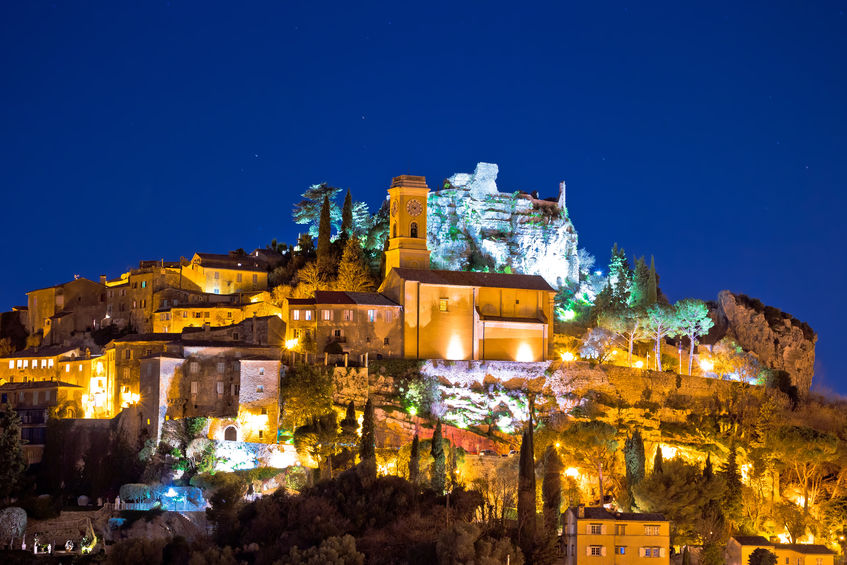
“You are the light of the world. A city that is set on a hill cannot be hidden. Nor do they light a lamp and put it under a basket, but on a lampstand, and it gives light to all who are in the house. Let your light so shine before men, that they may see your good works and glorify your Father in heaven.” (Matt 5: 14-16)

There is much in the New Testament about building. Jesus said He would build his church and the gates of hell will not prevail against it. The New Testament writers encourage us repeatedly to build. Jude wrote: “But you, dear friends, must build each other up in your most holy faith” (Jude 1:20), Peter says that we “as living stones, are built up a spiritual house, a holy priesthood, to offer up spiritual sacrifices, acceptable to God by Jesus Christ,” (1 Pe 2:5), and Paul picks up the same theme when he writes to the Ephesians  “in whom (Jesus)  the whole building, being fitted together, grows into a holy temple in the Lord, in whom you also are being built together for a dwelling place of God in the Spirit.” The Greek word used for building up and edifying are the same: oikodome. Speaking of our church gatherings, Paul writes Let all things be done for edification. (1 Cor 14:26) but this doesn’t just apply to our church meetings: it applies to everything that we say to one another: “Let no corrupt word proceed out of your mouth, but what is good for necessary edification, that it may impart grace to the hearers.” (Eph 4:29) Every time we open our mouths, we are to release the Grace of God. In fact the whole of the Christian life has a single purpose, which is to “grow up in all things into Him who is the head—Christ— from whom the whole body, joined and knit together by what every joint supplies, according to the effective working by which every part does its share, causes growth of the body for the edifying of itself in love.”

So the Big Question is, how do we actually build this city set on a hill? What does it mean to actually be builders in God’s kingdom, to be a body that edifies itself (builds itself up) in love? I think the key is simple enough: we don’t build for ourselves, but for others. Jesus is clear about this: “Do not lay up for yourselves treasures on earth, where moth and rust destroy and where thieves break in and steal, but lay up for yourselves treasures in heaven, where neither moth nor rust destroys and where thieves do not break in and steal. For where your treasure is, there your heart will be also.” Whatever we build for someone else is never going to be lost or spoilt through our own carnal failings, but remains our treasure forever – whatever happens to it in the recipient’s hands. Agape love has no vested interest in what it has given. It’s building a house for someone else to live in and walking away without being paid.

When Paul exhorts us to us to “let no corrupt word proceed from our mouth, only what is the necessary edification“ – in other words, only speak words that build other people up – he continues with these words: “And do not grieve the Holy Spirit of God, by whom you were sealed for the day of redemption. Let all bitterness, wrath, anger, clamour, and evil speaking be put away from you, with all malice.” (Eph 4: 29-30). I think many of us read this and just take it that Paul has moved onto another subject. But I don’t think he has. I think what grieves the Holy Spirit is not our negative emotions in themselves, but the fact that their presence among us stops Him releasing the pure love of Jesus Christ that is expressed through the Holy Spirit’s ministry and which will build the City on the Hill. He is grieved because He loves us so much and yet we ourselves prevent Him from fully expressing His love within the very body whose purpose it is to reveal it. Nobody longs for revival more than Jesus.

So just as moth and rust corrupt any treasure that we lay up for ourselves on Earth, corrupt words will spoil God’s spiritual house and prevent it from being built through us.  When Paul writes “let all bitterness and wrath and anger and clamour and evil speaking be put away from you, along with all malice” he pretty well covers the whole gamut of the rubbish that we can carry in our uncleansed hearts. But what is so encouraging here is the word that is often translated as “put away.” The Greek word literally means to be lifted up. He doesn’t say that we must somehow rid ourselves of everything that can corrupt our words. He isn’t standing over us with a pointing finger: he says that they have to be lifted off us, because we can’t just put them away by ourselves.

And this isn’t just in church meetings: it is all the time. If our words are corrupted by piqued egos, unsatisfied longings and  unforgiven bitterness during the week, we will not speak words that will edify others on a Sunday morning or whenever we meet. We might even say all the right things, but we can’t really impart grace if we aren’t full of grace ourselves; if we are just putting on a show. But in the grace of God all this rubbish can be lifted off us. As I said, we may not be able to get rid of it ourselves, but Jesus can lift it off us. Indeed, unless we do take it to the cross the Holy Spirit will continue to be grieved, because we are preventing Him from letting His love flow among us as much as He would like.  

The little church  at Azuza street where the Pentecostal movement was birthed  was characterised not so much by the amazing miracles and the gifts of the Holy Spirit that took place there, but by the selfless love that filled the church and struck everybody who came in. The place was, metaphorically, full of houses that had been built for others. It was the home of Psalm 133 vs 1; “Behold how good and how pleasant it is for brethren to dwell in unity,” and because of this, the anointing flowed “like precious oil poured on the head, running down on the beard.” (Ps 133: 1 cont.) Where the Holy Spirit isn’t grieved, He builds. It is this Love that builds the church, and  that will shine the light out of the city on the Hill.