Tag Archives: bible

Redeeming the Time: The Biblical Call to Action

“See you then that you walk circumspectly, not as fools but as wise, redeeming the time, because the days are evil.” (Ephesians 5:15)

The Greek word translated as “circumspectly” is Akribos. It means diligently, accurately, perfectly, not deviating in any way from the set path.  Akribos is how we have to drive a car: “with due care and attention.” It describes doing something in manner that doesn’t ignore some aspects of the situation, checking that everything is in order, that all requirements are met, and nothing is left out. Luke uses Akribos  to describe how he wrote his “orderly account” of Jesus’s life and ministry (Luke 1:3). Paul uses it when he writes to the Thessalonians to remind the them that they know perfectly well (akribos) that “the day of the Lord comes as a thief in the night.” (1Thess 5:2) To walk circumspectly is to pay full attention to every step we take. The scripture tells us it’s how we “redeem the time:” we don’t just skip along n the light; we watch our every step. The question is, what does redeeming the time actually mean?

It’s one of those phrases that I think I have glossed over until now, when I started studying Ephesians. What’s opened it up for me is that word translated here as “time“ is kairos, which is a definite and fixed measure of time, (it could be a moment or a longer period, even an epoch. It is sometimes used today in the term “Kairos moment” to describe a moment of special significance when God‘s kingdom purposes intersect our lives.) Redeeming the time seems to mean bringing God’s purposes into our current situation; in other words seeing God‘s will done on earth as it is in heaven.

The days are evil
The temporal context is also relevant. Paul exhorts us to redeem the time “because the days are evil.” Does he mean the particular days that he is writing in, or does he mean that all days are evil outside of God’s Kingdom rule? I think it must be the latter. The Holy Spirit was addressing the body of Christ through the ages, not just Paul’s contemporaries, therefore the text must mean that all the days are evil. Evil is the default setting until and unless we redeem the time. Microsoft has a default setting called oneDrive where it will save your work unless you choose another folder. You can’t change the setting, but you can override it. I never use oneDrive, so I always choose my own folder. When we redeem the time, we choose to override the default setting and save the kairos into God’s folder and not the devil’s.

In the previous verses, Paul has already shown us that we “find out what is acceptable to the Lord“ when we walk as Children of light (see my previous article, “Walking as Children of Light: Discovering God’s Will”), but he’s reminding us here that we also need to watch our steps as we walk. It is when we are diligent in our walk as Children of light that we redeem the time, and that in doing so we walk in wisdom because we have an understanding of God‘s will. The instruction “walk circumspectly, not as fools but as wise“  suggests that we are not being wise when we are not walking circumspectly. If we are not diligent in how we walk, we are actually being fools.

Paul continues his letter to the Ephesians by giving specific examples of applying this godly wisdom to how we conduct ourselves  in the world and in our relationships, and then he returns to the theme to close the letter. I think we tend to separate the famous passage on the armour of God from the rest of the text, but I don’t think this is what Paul intended. “The days are evil” (Eph 5:16) because they are ruled by the powers of evil whenever God‘s kingdom rule is not established. Evil is the fallen world’s default setting. We put on the armour of God in order to “withstand in the evil day.” When is the evil day? It’s today, tomorrow, the next day, and every day that the time is not redeemed.

Putting on Christ
Putting on the armour of God is the same as putting on Christ: He is our armour. To put on God‘s armour is to put on Christ, and to put on Christ is to put on the new man. (Again, see “Walking as Children of Light: Discovering God’s Will.”) The analogy is a practical step-by-step illustration of how to be diligent when we do so. We must put on all the armour, and we must wear it all the time. The picture tells us exactly what we are wearing and why. Unless we are circumspect and make sure we are wearing it all, the new man is incomplete and won’t walk very far before the enemy has tripped him up. But when we wear it, we are walking as Children of light and are in full understanding of God’s will, redeeming the time because the powers of darkness flee before the light.

The conclusion of Paul’s letter to the Ephesians is not an additional section dealing with spiritual warfare for those who have the mettle to take it on, but is a summary of what has gone before. It’s worth repeating his introduction to the armour here:

Finally, my brethren, be strong in the Lord and in the power of His might. Put on the whole armour of God, that you may be able to stand against the wiles of the devil. For we do not wrestle against flesh and blood, but against principalities, against powers, against the rulers of the darkness of this age,  against spiritual hosts of wickedness in the heavenly places. Therefore take up the whole armour of God, that you may be able to withstand in the evil day, and having done all, to stand.” (Eph 10-13)

The days are evil because the prince of this world has been given dominion by fallen man, and his wiles are carried out by the “the rulers of the darkness of this age,” and the “spiritual hosts of wickedness in the heavenly placeswho administer his evil rule. (Eph 6:12) Our calling as the army of God is to seize back that dominion and to place it under the feet of our heavenly Captain, or, has He himself said, to take the kingdom by force. (Matt 11:12) This is what it means to redeem the time. Every day is an evil day unless we redeem the time by walking circumspectly, which means paying careful attention to our Captain, seeing that we are fully equipped as Children of light to carry out His commands, and being careful to watch our every step as we advance through the battlefield.

Walking as Children of Light: Discovering God’s Will

Walk as Children of light, finding out what is acceptable to the Lord.” (Ephesians 5:10)

I spent my working life in the world of education and dyslexia, and went to countless conferences where the title revolved round the notion of “putting theory into practice.“ Whether it is learning how to drive and doing our theory test first, or learning how to teach children with learning difficulties, our model is that: first we learn the principles, then we have an examination to get our qualification, then we apply them.

Not so the biblical model of Christian discipleship. We don’t need to get a qualification, because Jesus got it for us at the cross:  we start with the practice straight away, and as we go, we discover the enduring reality of the principles that God has given us.

Paul wrote letters to 6 different churches. They all had specific issues that he wanted to cover, but behind his instruction there was only one body of truth, and one passion for all of the churches (2 Cor 11:28), which was that they grow to maturity in Christ. So sometimes we find him saying the same thing to different churches but using different words. Our English translations of his words can sometimes obscure the meaning rather than clarify it. For example, Ephesians 5:10 in the translation I use (NKJV) says that we “find out” what is acceptable to the Lord by walking as Children of light, whereas in his letter to the Romans he tells him that they will “prove” God’s will if they renew their minds. The word translated as both “find out” and “prove” is Dokimazo, which means to test, to prove, to examine, to scrutinise to see if something is genuine. Here are both passages:

 “For you were once darkness, but now you are light in the Lord. Walk as children of light (for the fruit of the Spirit  is in all goodness, righteousness, and truth)  finding out what is acceptable to the Lord. (Ephesians 5: 8-10)

“And do not be conformed to this world, but be transformed by the renewing of your mind, that you may prove what is that good and acceptable and perfect will of God.” (Romans 12:2)

Because of how we tend to read the Bible, we will probably approach these scriptures independently and come to different conclusions about what they mean. But actually, they mean the same thing. We Dokimazo the Will of God by walking as Children of light, and we Dokimazo the good and perfect Will of God by renewing our minds,. How do we renew our minds? Not by studying for the qualification, but by walking as children of light, step by step.

Paul instructs the Ephesians as well as the Romans on the theme of renewing the mind, in chapter 4 21-24:

“…  the truth is in Jesus: that you put off, concerning your former conduct, the old man which grows corrupt according to the deceitful lusts, and be renewed in the spirit of your mind, and that you put on the new man which was created according to God, in true righteousness and holiness.

He explains here that we are “renewed in the spirit of our minds“ when we put on the new man, which he also tells us was “created according to God in all true righteousness and holiness.” The new man seeks the Kingdom and not the self, and so thinks differently. The use of the word “spirit” here refers to the motivating power; what drives our thinking. He expresses the idea in Romans 8:5: “Those who live according to the flesh set their minds on the things of the flesh, but those who live according to the Spirit set their minds on the things of the Spirit.” Being renewed in the spirit of our minds is what we do whenever we fix our eyes on Jesus. When we walk as children of light and find out what is acceptable to the Lord, we can’t produce anything except the fruit of the Spirit, which Paul says is in “all goodness, righteousness, and truth.” If we are children of light we are born of the light, what is in us is light, we walk in the light, what we emanate is light, and also that light can bring revelation, because “whatever makes manifest is light.” (Eph 5:13) Light, as the parenthesis in verse 9 explains, is “all goodness, righteousness and truth.” These are the elements of our new nature, which as we have already seen was “created according to God, in true righteousness and holiness.” (Eph 4:24) Light is what comes out of us; it’s the fruit that we bear. We are all familiar with the different attributes of the fruit of the spirit that are listed in detail in Galatians 5:22-23: the verse in Ephesians summarises them well.

Aaron’s Rod
Numbers 17 gives us the story of Aaron’s rod, which budded, blossomed and fruited overnight to confirm Aaron’s appointment as high priest. We are a royal priesthood ourselves (1 Pe 2:9); “Kings and priests unto God” (Rev 1:6), so what applies to Aaron applies to us. So I think that the biblical model for the fruit of the Spirit is actually the supernatural fruiting of Aaron’s rod, rather than the natural development of earthly fruit that matures over time, which is how we tend to see it. If the Spirit is not confined to time, nor is His fruit; and to claim that self-control, for example, is taking its time to develop in my character is like anchoring the work of the Holy Spirit, who makes all things new, to the old man of flesh in the body of sin and death. If I am struggling with self-control it is because I am not seeking the Kingdom of God and I haven’t put on the new man in that situation. The same applies to love, peace, joy and the rest of the Galatians 5 list. To think otherwise seems like natural thinking; a good excuse for bad behaviour.

So we learn from Ephesians 5:9 that we manifest the fruit of the spirit by taking steps as Children of light, and in doing so we discover God‘s will for us. Our new nature is complete from the start: we “put it on“ just like we put on our clothes in the morning. It doesn’t develop gradually, any more than we start the day just wearing one sock and walking around naked until we’re ready to put on another one. Our new nature is “God‘s workmanship, created in Christ Jesus for good works, that we should walk in them.“ (Ephesians 2:10) It is raised with Christ and seated in heavenly places, Aaron’s rod waiting to blossom, ready for us to put on at every moment of the day, every day. Walking in the spirit isn’t just about encountering God in supernatural manifestations and impossible adventures of Faith, although it can be both of those; it is about choosing the new creation’s priestly garments in our daily life and our dealings with other people instead of the old man’s rags of selfishness and sin. Paul sums up the immediacy of this fruitfulness in Ephesians 5:14

“Therefore He says:

“Awake, you who sleep,
Arise from the dead,
And Christ will give you light.”

We will obviously fail, a lot, and mess up our new clothes; but when we do we repent, we receive forgiveness, we get up, and we start walking again. Because of God’s amazing grace, our new creation is as spotless again as it was the day it was born, and we will have been renewing our minds, putting on the new man, walking in the spirit, and bearing the fruit of righteousness at every step. “If we walk in the light as He is in the light, we have fellowship with one another, and the blood of Jesus Christ His Son cleanses us from all sin.” (1 John 1:7)  I don’t think the process of sanctification is about letting this fruit grow in us over time, because according to Ephesians 4:24 it’s all there from the start: I think it’s all about learning to walk for longer in the Light without falling over, as Jesus “sanctifies and cleanses us with the washing of water by the word.”  (Eoh 5:26) And as we walk into those works prepared beforehand we experience the divine appointments, supernatural moments and miraculous provision that we long for.

We often quote Jeremiah 29:11, that tells us that God knows the plans that he has for us. If we want to know what those plans are, we make up our minds to keep walking as children of light, and we will step into them.

The Call of the Dove

“Your gentleness has made me great.“ (Psalm 18:35)

The aspiration to greatness is probably hidden somewhere (and at times not so hidden) in every unredeemed heart, whereas personal greatness is no longer an attribute that a Christian disciple would want to appear in his spiritual CV. However, seated as we are in Christ with the unlimited power of His Spirit in our hearts, we are all have that greatness, however weak and foolish our actions in the flesh may be. His gentleness has made us great. But if I am great because of His gentleness, it is also true that I am only great in His gentleness, because gentleness is in His very character, as He describes it himself: “take my yoke upon you and learn from me, for I am gentle and humble of heart, my yoke is easy and my burden is light.”  (Matt 11:29) Gentleness is a characteristic of the fruit of the Spirit that Jesus is looking for in the life of every believer.

Ephesians 2:10 tells me that I was “created in Christ of Jesus for Works prepared beforehand , that I may walk in them,” so if I am not walking in His gentleness, I am not walking in Him, and I’m not fulfilling my destiny in the works that He has prepared for me to walk in. And if I am not walking in His works, I must be walking in my own, and therefore I am walking after the flesh and not after the Spirit.

Gentleness is not weakness, it is enabling power. Gentleness does not push; it leads, because it knows where to go. Gentleness does not argue, but speaks the truth in love or does not speak at all. It does not react to situations and people out of fear, but out of knowledge of the truth. There is no uncertainty in gentleness: Jesus knew where he had come from where he was going, and so do we. We have come from above and will be returning there.

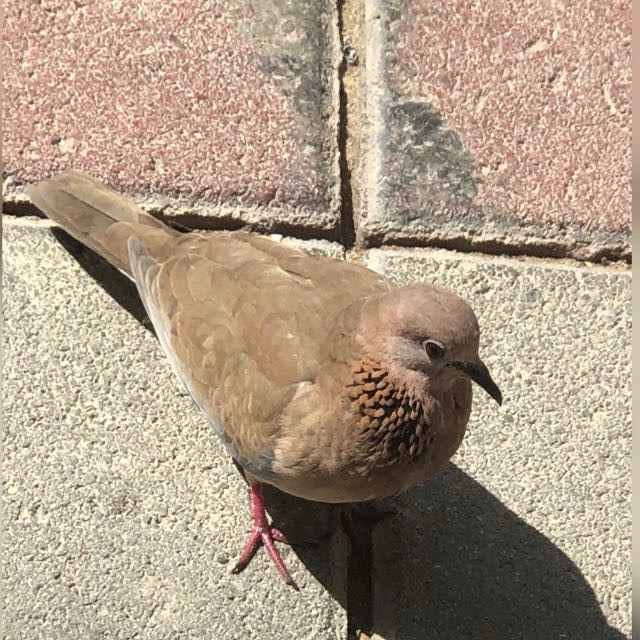
Gentleness is like the wavelets in a sheltered, cove: buoyant and supportive, never overwhelming and never crashing on the beach, yet moving with all the power of the tide.  Those wavelets are seasoned with salt: it’s the salt that is supportive, and so should it be with our speech. (Col 4:6) Gentleness is the dove who baptised Jesus in the power of the Holy Spirit, and characterises the advance of the kingdom of God. Gentleness is the dove who brought the olive branch to Noah, and is a species of bird that can be seen and whose call can be recognised everywhere in the world. 

Whatever may flood our circumstances and our emotions, it is gentleness who brings the promise of landfall in the kingdom of God. It is always at hand. Let us always be ready to hear and respond to the call of the dove.

(A note on the image: I took the picture of the dove in the Middle East. Traditionally we portray the biblical dove as white, but it’s quite likely to have looked more like this one.)

Built Together in Christ

“In whom the whole building, being fitted together, grows into a holy temple in the Lord, in whom you also are being built together for a dwelling place of God in the Spirit.“ (Ephesians 2:21–22).”

To love another person we must let them into our lives. We cannot love on our own agenda: we can only love by embracing the agenda of the other. This is why the gospel consistently requires us to lay down our lives. This is why walking “worthy of calling with which we are called“ (Ephesians 4:2) involves lowliness, gentleness, longsuffering, and bearing with one another in love.” And of course we have the great model for our walk at Calvary, the demonstration of heavenly submission magnificently expounded for us by Paul in Philippians 2 : 6-10.

However we understand or experience it, an essential principle of Christian life is that “the love of God is poured out into our hearts by the Holy Spirit who is given to us.” (Rom 5:5) But what we don’t talk or read about very much is how Christ’s love for us is demonstrated by the very fact that He laid down His life in order to let us in. If He let us into His life, how much do we let each other into ours?

We are being built together in Him in order for him to dwell in us. What an incredible reciprocation. We love Him because He first loved us. And if He is building us together for the honour and privilege of being in Him we also need to love one another first, letting each other into our own lives with no personal agenda or demand. Our flesh cannot achieve this, because the ultimate goal of the flesh is always self preservation. But when His love for us is expressed through us, and as we allow others into our lives as He has allowed us into His, we can truly “walk worthy of calling with which we are called.“

When we have learnt this, much more will follow; because the dwelling place for His Spirit that He is building in us will have grown.

Walking in Newness of Life

The God  who is Love created man in His image, so we were made in the image of Love. Satan marred that image with sin, so the foundation of God’s design for society was ruined, and love was replaced by the Law. God’s perfection and beauty could be found in His Law (See all of Psalm 119), but for men, even the priesthood and the Levites, the dedicated servants of God, it was impossible for that Godliness to be reflected in their behaviour. As we learn from Romans 7, “The Law is holy, and the commandment holy and just and good … but sin, that it might appear sin, was producing death in me through what is good.” (Romans 7:12) Instead of living in the freedom and safety of Love – the fulfilment of the Law – human beings outside of Christ are now only free and safe to the extent that sinful behaviour is held in check by law. The law is like the sign that says “don’t step on the grass:” Since by its nature sin always looks for ways to bypass the law and step on the grass, law is always multiplying to keep pace with sin.

Recently I saw a village primary school with a tree in the grounds. It was the beginning of the school day. Children were climbing the tree and swinging on the branches. There was no visible supervision, although various parents were around, dropping their children off. It was a happy, joyful scene. I thought: “Goodness, this is wonderful. Children climbing the tree, doing what God designed them to do, with no health and safety police wagging their fingers? I must take a photo!” Then a second thought came hard on its heels. “No, you can’t take a picture. The safeguarding police say No.”

In the world, the law of sin and death proliferates, both in fact driven by fear: fear of death (in this case, health and safety) and fear of sin (safeguarding.) But in the Kingdom of God there is a different order, because peace has come to Earth:

“For He himself is our Peace, who has made both one, having broken down the middle wall of separation, having abolished in his flesh the enmity, that is the law of Commandments contained in ordinances, so as to create in himself one new man from the two, thus making peace, and that he might reconcile them both to himself in one body through the cross, thereby putting to death the enmity.”  (Ephesians 2:14–16).

On one level, Paul is writing in this scripture about the enmity between “those who are near and those who are afar off,“ (Eph 2:17) that is the Jews and the Gentiles. The Jews are “near“ because they were chosen by God to manifest Him to the world through their obedience to his law; the Gentiles are “far off“ because they are lost in carnality and enslaved to the world’s thinking. But there is a deeper level, another war, a level of reality in the spirit that is represented by the two people groups. The enmity between Jew and Gentile represents the war between flesh and spirit that Paul refers to in the epistles to the Galatians and the Romans:

“The flesh lusts against the spirit and the spirit against the flesh, and these are contrary to one another, so that you do not do the things that you wish.“ (Galatians 5:17) 

When Paul writes to the Romans he says: “I delight in the law of God according to the inward man.” (Romans 7:22), and in verse 23 he calls it “the law of my mind:” “But,” he says, “I see another law in my members, warring against the law of my mind, and bringing me into captivity to the law of sin which is in my members.” (Romans 7:23) The “war” between the law of God and the law of sin that Paul describes here is the same as the battle between flesh and Spirit that he writes about to the Galatians. His terminology has evolved (His epistle to the Galatians was the first one written) but the conflict is the same – whether it’s called flesh against Spirit; the law of sin against the law of God, Gentile against Jew.

We (or at least I) tend to polarise our thinking, with the result that our drive is to be “more spiritual” at the expense of the flesh which, as we know, has to die. But the key is not to strive to crucify the flesh, but to recognise that Jesus Himself is our peace because, as Ephesians 2:14 makes clear, “He has broken down the middle wall of separation.” He has put to death the enmity by creating in himself “one new man from the two.” When we step back into Jesus, the Word made flesh, we step into the peace that He has created, where the flesh is no longer captive to sin but merges with the spirit in one new creation, and we are no longer striving against the law of God, but seeking to fulfil it in faith and love.

I was in the Spirit one day; it was sunny outside, and the thought came to me: “I fancy going birdwatching this morning, instead of sitting here having a quiet time.” I said: “Lord, I fancy going birding now. What should I do” He said, “Do what you like.” So I thought about that, and decided that what I liked doing just then, rather than going out looking for birds to photograph, was sitting with Jesus and studying is word with Him. So that’s what I did, and in the few minutes that followed received a revelation that I will share in another post. And I learnt an important truth: whatever we do when we walk in newness of live is going to be in His will.

Paul first explores the idea of the wall of separation in the letter to the Galatians, when he says “In Christ Jesus neither circumcision nor uncircumcision avail anything, but a new creation.” (Gal 6:15). We often say/hear/read statements like this; “I keep putting my flesh on the altar, but it keeps climbing off again!” I wonder if this is because we haven’t grasped the reality of who we are as new creations in Christ, where flesh and Spirit have become one in Him? In His Kingdom, religion and carnality are both equally irrelevant, as they play no part in the new creation. If we overlay Galatians 6: 15 with Galatians 5:6, which is “in Christ Jesus neither circumcision nor uncircumcision avail anything, but faith working through love,” we find an equation that states “a new creation is faith working through love.”

If this is true, and scripture confirms it is – because “without faith it is impossible to please God,” and “unless one is born again, he cannot see the kingdom of God,” – our actions must always be not only carried out in a spirit of love, but in a place of faith, if we are to be walking “in newness of life”, living as new creations. Does this mean our actions “avail nothing” in the Kingdom of God unless we are in some way walking on the water and trusting God for the miraculous? I don’t think so. Since “faith comes from hearing,” I think we are walking in faith whenever we hear God directing our steps and do – or don’t do – whatever it is He says. We are in faith whenever we allow Him to guide us with His eye (Psalm 32:8). Our faith is in the person of Jesus: not just because the righteousness of God that is ours by faith is going to clothe us in white and give us a place at the wedding banquet, but because in Him, clothed in Him, we live our lives as new creations in a world that is passing away, “in the midst of a crooked and perverse generation.” (Phil 2:15) And when, by faith, we are in Christ, then our deeds will be directed by love, because God is Love.

One of the leaders at a recent Alpha that we ran at our church bought a little toy bus for a child who loved busses, and left it on the table at the Alpha meeting. A young man on the course noticed the bus, and asked about it. “There’s a kid I often see at work who has got a thing about busses. I saw this and bought it for him.” The young man was so touched that someone would go out of their way to buy a toy bus for a child that he had no real relationship with, just because “the kid loves busses,” that he realised in that moment that the love of Jesus was actually a reality that directed people’s lives, and gave his life to Christ. Buying the bus didn’t require miraculous provision; it just required responding to a prompting from the Lord and doing a small act of kindness. Faith working through love, at the heart of the new creation, availing much for the Kingdom of God.

The scriptures give us many analogies for living out our lives as new creations, as children of the Kingdom and not of the world. Paul likes the image of putting on clothes: “clothe yourselves with the Lord Jesus Christ, and do not think about how to gratify the desires of the flesh.” (Romans 13:14), or “put on the new man which was created according to God, in true righteousness and holiness.” (Eph 4:24) We “put on the armour of God,” and we “put on” Christ’s own character (Col 3:12-17). But to put on clothes we need to go to the wardrobe, and this wardrobe only exists in one place, and that is heaven. We may call it spiritual realms, or heavenly places, or, as both Jesus and Paul do, just “above;” but it’s the place where Christ is seated. “Seek the things that are above, where Christ is, seated at the right hand of God. Set your minds on things above, not on earthly things.” (Col 3:1-2) And just like the atmosphere of places on earth are unmistakeable and tell us clearly where we are – be it beach, forest, desert, mountain or city – heaven too has its own atmosphere. It’s the atmosphere of rest.

Rest (katapausis) is a state of the environment. When the Father finished the work of creation He rested. “Rest“ refers to the state of Tranquility, literally a “calming of the winds.” It is the atmosphere of heaven, the atmosphere of the Spirit. God instituted the Sabbath day for men to keep holy, so that His creation could share something of the atmosphere of rest in which He dwells. Peace (eirēnē), however, is a state of the soul. It’s an experience. Jesus gives us His peace. He’s the prince of peace, He made peace when He broke the wall of division between Jew and Gentile, and all they represent, at the cross. Peace is what we experience when we are at rest, when the winds have stopped.

The Prince of Peace is also Lord of the Sabbath. Jesus is lord of our circumstances and Lord of our souls. The writer to the Hebrews exhorts us to “diligently enter into that rest,” (Hebrews 4:11), and affirms that “we who have believed“ have done so (Hebrews 4:3); while Peter, quoting the psalmist, exhorts us to “seek peace and pursue it.” The peace that Jesus gives us, “not as the world gives,“ is our experience of the spiritual atmosphere of heaven.

And here’s the thing: we cannot put on Christ unless we go to the wardrobe, the place of God’s rest, and if we’re not experiencing peace we haven’t entered it, and so we’re in the wrong place. We will either be operating out of our carnality or out of the religion that tries to control it (and religion has many spiritual disguises), but we won’t be where the wall of division has been broken down. To “seek peace and pursue it” is more than just trying to calm down, and more even than trying to seek the face of Jesus: it is to ensure that we are walking in newness of life, because nothing else avails anything for the Kingdom of God.

Rooted and grounded in love

The great grey shrike on Cannock Chase

“That you, being rooted and grounded in love, may be able to comprehend with all the saints what is the width and length and depth and height— to know the love of Christ which passes knowledge; that you may be filled with all the fullness of God.” (Eph 3: 17-18)

Love is the ground where the word of God takes root.  It’s the foundation where the house is built. It brings stability and strength. Love characterises the “good and noble heart” of Luke 8:15 that keeps the word of the kingdom and bears fruit with patience. The Greek word translated as “Noble” is Agathos. It’s the same word used in Mark 10:18, when Jesus says only God is good. Similarly, the Strong’s definition of Kalos (“good”) relates to every manner of perfection; flawlessness, in a word. A good and noble heart Is one that is flawless and perfect, not one that is corrupted by sin.

By contrast, Jeremiah 17 :9 tells us “the heart of man is deceitful above all things, and desperately wicked. Who can know it?” The Hebrew word “anas,” translated as “desperately wicked,“ has the sense of weakness and frailty associated with an incurable illness. If ever there was a word to describe our sinful nature, this is it. It is definitely not good ground, and never will be. The only “good and noble” heart that Scripture shows us is the heart of God Himself. And the wonderful thing is, that when we are born again of the Father and He has given us a new heart, this is the very “heart of flesh” that we receive. It seems to me that the seed of the word of God can only be sown in the heart of flesh that we receive by the Spirit at the new birth. This is the ground of love with the word takes root and bears fruit.

This is not just theology and spiritual ideas: it works. When we choose to build on the ground of love we experience God‘s blessing. “Give, and it shall be given to you“ does not just refer to money or resources: when we choose to give love to others, God gives back to us, even in the small things. In fact, He often teaches us through the small things so we can apply his teaching to the bigger ones. If you know me, or have read some of my other articles, (eg “Between the Chapel and the Damned”) you will know that I am a bird watcher. A hobbyist bird photographer, to be precise. The picture above is of a distant great grey strike. They are very rare winter visitors to the UK, and there has been one this Winter on Cannock Chase, just a few miles from my house. There are apps that pinpoint the location of these rarities, so people in the birding community know roughly where they are. Yesterday morning I went out to try and find the great grey shrike. I only had a couple of hours, because I needed to meet with Anne by 10.30 so we could be on the same page about what to say at the retirement party that was being given in our honour (we have just retired from our business) at 12.00 o’clock. In other words, I had a relational commitment, a commitment to prioritize love.

I spent about an hour walking around and waiting in the area where the shrike had last been seen, but to no avail. My time was running out, and I was going to check one more likely place, but then I felt quite strongly that the Lord said: “No. It’s time you headed back now.“ On this occasion I did what I was told (on many occasions I don’t!) and started back down the path towards the car park. After a couple of hundred yards I turned the corner, and there was a little group of birders with their  cameras and telescopes all pointing in one direction. Yes: it was the great grey shrike. It was a good distance away, but happily I was able to see it and take some pictures. Five minutes after I arrived it flew off. If I had gone to check that other area before turning back, I would have missed it. God wants to bless us, even in our hobbies.

The word from Jeremiah about the heart of man goes on to say: “I, the Lord, search the heart, I test the mind, even to give every man according to his ways, according to the fruit of his doings.“ (Jer. 17:10) He blessed me by allowing me to see that bird, of which there are at the time of writing only three records currently in the UK. But, and more importantly, it blessed Him that I listened to what He said and did what I was told, and put my love for other people before my personal interests.

The point is this. I know full well that my natural heart, my heart of stone, would have gone to check that other place before heading home. I would have said to myself, “It will only take five minutes, and that won’t make any difference to the circumstances of the rest of the day.” And indeed it wouldn’t have: when I got home events had actually been delayed by half an hour or so, so I would have had plenty of time. But my new heart, my heart of flesh, was open to hear the word to prioritise Love, and because I was able to respond to it I walked into the blessing that God had planned. “Seek ye first the Kingdom of God and His righteousness, and all these things shall be given unto you.”  (Matt 6:33)

Even, in this case, a great grey shrike.

Ears to Hear

Paul wrote to the Galatians: “Foolish Galatians, who has bewitched you? He who supplies the Spirit and works miracles among you, does He do so by the works of the law, or by the hearing of faith?”  (Gal 3:1)

When we read this our initial, instinctive, impression of the Galatian church is probably something like “Bad Galatians! Paul is telling you off!” But actually if we look at our own church and compare the active presence of God at work among us, “supplying the Spirit and working miracles,” how do we compare with Galatia, where the text suggests that the miraculous is the norm? And alongside that expectation of seeing the miraculous power of God at work through the “supply” of the Spirit is also the assumption that the believers there are exercising the “hearing of faith” as a norm. Again, is this true of us today?

Paul is addressing a serious issue in the letter to the Galatians, specifically the heresy creeping into the church at Galatia that believers needed to be circumcised and to put themselves under Jewish law to attain salvation, but the context – the “lump” where the enemy is trying to insert his false “leaven” (Gal 5:9)- is that of a church of Spirit-filled believers who had “begun in the Spirit” (Gal 3:3), who hear God and walk by faith, and who experience the presence of God among them in power. The Galatians were a new church, and this level of life in Christ was where Paul feared they would fall away from. Many of us are in churches that have been in existence for decades, or even centuries, and we still haven’t attained to it. Maybe the same leaven is at work today.

Jesus talks about having “ears to hear.” Isaiah says: “Behold, a king will reign in righteousness,… The eyes of those who see will not be dim, And the ears of those who hear will listen.” (Isaiah 32: 1,3) We  can hear the Word with our eardrums and process it with our natural brains, but it doesn’t mean that we are hearing with our spiritual ears, and if we don’t have those “ears to hear,” we won’t be listening. It’s when the King reigns in righteousness in our lives that our hearing ears start to listen. We don’t just listen to Him when we want a miracle; we listen to him all the time and let his word direct our steps. We listen because He is the King.

Maybe this is why we so often don’t often see the miraculous: Maybe we don’t walk in it when we don’t need it. But when we walk in obedience and seek His direction in our lives at every step, we walk in the dimension of the miraculous, so we can expect the miraculous to be part of the landscape. Just as in the natural world we can turn a corner and see a flower by the path or a bird on the branch, so we can expect to see a gift of the Holy Spirit in front of us whenever He has chosen to put it there. As the prophet wrote, “The eyes of those who see will not be dim.”

Paul said he was “exceedingly zealous for the traditions of my fathers.“ (Gal 1:14) As God is preparing the Church for the upheavals of the last days and ultimately the return of the Bridegroom for His bride, we need to be vigilant that we too aren’t in thrall to the traditions of our own “fathers,” slavishly ‘doing church’ the way we always have done or the way it’s done in our particular denomination of network, rather than doing today what He wants today, which may be different from what He wanted yesterday, or last week, or last year. If this is the case we may not be walking in obedience to the King, and it could be that we are being even more foolish than the Galatians.

The desert and the camel

A couple of months ago the Lord gave me the following word, but I think now is the time to release it:

“I am the God of the universe. I put the stars in the sky. I put every vein on every leaf on every tree. Not a sparrow falls to the ground without my knowing. When those kairos moments, those “god- incidences,” happen in your life where you see my hand at work, arranging and organising your situations, it is because I have knitted the universe together to meet you in that moment and to open up my path for you.

You look ahead and you see an expense of barren desert. A rocky plane, stretching into the distance, with no path turning to the right or to the left. You say “I do not know which way to go. In every direction it looks the same, and the distance seems so great wherever I look.”

But I say I am calling you to walk by faith and not by sight. You cannot see a path because if I were to reveal it, you would be walking by sight and not by Faith. But I will guide you with my eye, even though your eye cannot see where to go. And you will hear a voice behind you, saying: “this is the way, walk in it,“ and you will step forward, one step at a time on my word. Because my word in you is living and active, and as you step on my word I will create that path for your feet and I will build structures that you can’t see through the active power of my word, even the structures of my kingdom. Will you trust me to knit the universe together anew at every step of obedience that you take? Will you trust my word, by which the worlds were made? Will you walk with me? Will you trust the power of my Spirit in your life?”

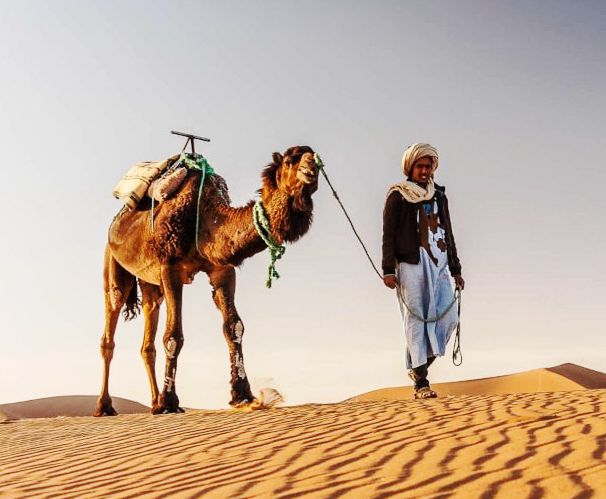
At around the same time the Lord also showed me a camel. It was, again, in the desert. Someone was trying to lead it with a rope, but it was resisting. I think the Lord was – is – saying that the camel knows that it’s got everything it needs to cross the desert: water stored in its hump; big flat feet to help it to walk across the soft sand without its feet sinking in, but we can be like camels who don’t know what they are carrying in their humps, and are resisting the person who is trying to lead them out across the desert. He says: “You have everything you need. You have my Spirit, and you have my word. I am holding the rope and I know the way you should go. You won’t wander off and get lost, so trust me and come with me across the desert. You may think it’s forbidding and barren, but it is also beautiful, and I will show you things, hidden things, that you have never seen before, because you have never been this way until now. Come, because now is the time.”

The Season of the Lowly

There is a word that the Holy Spirit is bringing to the church in this season, and which many prophetic ministers are catching and releasing in different ways, and which can be summarised like this: ”I am bringing revival in unprecedented ways to show my glory and my power in these last days before the King returns. And it will be now as it was at the beginning of the gospel: I will choose and use the unknowns, the unqualified, and the unrecognised; the fisherman, the labourers and the tax collectors, because they are the ones who will show for my glory and not desire to keep it for themselves. I will demolish ministry platforms and pull down the strongholds of pride and selfish ambition that have divided my church; the church, the Father and the Son will be one in the Spirit, and the glory of the Lord will cover the Earth as the waters cover the sea.”

We have heard this word in many ways, and we acknowledge its truth. But I believe the Holy Spirit is grieved by those who would build a platform for themselves to pronounce it against others; who lift themselves up in order to declare that this is the season of the lowly.

The book of Obadiah is a prophecy against the Edomites, the house of Esau, whom God judges for their arrogance and “violence against your brother Jacob.“

The prophet writes:

“The pride of your heart has deceived you,
You who dwell in the clefts of the rock,
Whose habitation is high;
You who say in your heart,
‘Who will bring me down to the ground?’

Though you ascend as high as the eagle,
And though you set your nest among the stars,
From there I will bring you down,” says the LORD”
(Obadiah 1: 4-5)

Galatians 6:5 says “each one should carry his own load.“ In other words each one of us is responsible for his own faults and shortcomings . Revival has to begin in our own hearts. Peter writes “for the time is come the judgement must begin at the house of God: and if it first begin at us, what will be the end of them that have been not the gospel of God?“ (1 Peter 4:17).

I believe the Holy Spirit is saying, “Do not judge your brother as Esau did, for the pride of your heart has deceived you, and I will bring you down from the place where you exalt yourself.”

If we want to be part of the wave of God’s mercy that is going to flood this earth, let us beware of judging those who we think might be standing in its way, because in doing so we come under the judgement of the One who is “meek and humble of heart” whom we claim to be exalting.

The house of Jacob shall be a fire,
And the house of Joseph a flame;
But the house of Esau shall be stubble;
They shall kindle them and devour them,
And no survivor shall remain of the house of Esau,”
For the LORD has spoken.”
(Obadiah 1:18)

The God of David’s deliverance.

One of David’s great psalms of faith is Psalm 18, which he wrote, according to 2 Sam 22: 1, “on the day that the Lord delivered him from his enemies and Saul.” Many of the truths expressed both in Psalm 18 and in the book of Psalms as a whole – not to mention the rest of the Bible – are encapsulated in the section from verses 28-34. I wrote last week about the walk of faith. If we can allow the Holy Spirit to write the following promises on our hearts, as He did for David, I believe our walk will be strengthened. Here is the whole passage, followed by a few thoughts on each verse.

For You will light my lamp;
The LORD my God will enlighten my darkness.

For by You I can run against a troop,
By my God I can leap over a wall.

As for God, His way is perfect;
The word of the LORD is proven;
He is a shield to all who trust in Him.

For who is God, except the LORD?
And who is a rock, except our God?

It is God who arms me with strength,
And makes my way perfect.

He makes my feet like the feet of deer,
And sets me on my high places. (Psalm 18: 28-34)

He teaches my hands to make war,
So that my arms can bend a bow of bronze.

(Psalm 18: 28-34)

For You will light my lamp;
The LORD my God will enlighten my darkness
.

This is a promise. Sometimes we find darkness has descended on us like a cloud. It seems like the Lord is enthroned in another universe – if He even exists at all – and all we have is the experience of our flesh and our immediate circumstances. But the Lord promises that He will light our lamp. The light shines in the darkness, and the darkness has not overcome it. If we can keep this word in our hearts, believe it, speak it out, and ask the Lord to manifest its reality, it will strike the match that lights the lamp.

In addition, He promises to give us direction when we are lost or confused. His word is a lamp unto our feet and a light unto our path: he will show us not only where to put our feet next, but – although sometimes we have to wait for this – He will shine a light on the direction of our path ahead.

And finally, this is a promise of revelation. We can, and do, read the word diligently; we can quote promises of healing and provision, or whatever else we need, but our lamp can remain unlit. If the Word of God is the  sword of the Spirit, we need the Spirit to wield it; it’s not enough to quote it mechanically. And if it is a lamp unto our feet we need the Spirit to light it: a memory verse that is not breathed into us by the One who wrote it is not likely to guide our feet anywhere. We need the Word, and we need the Spirit. This applies as much to our personal devotions as it does to our church services.

For by You I can run against a troop,
By my God I can leap over a wall

Jeremiah 12:5 says “If you have run with the footmen, and they have wearied you, Then how can you contend with horses?”  As deep darkness spreads across the nations (Isaiah 60:2) we will need to be moving in the opposite direction to the troop of the world. Temptation, persecution, hardship, financial pressure are all “horses” that we could face. But God promises that He will be with us in our trials, and if we do not allow ourselves to be swept along by “the troop” but trust in His faithfulness and the power of His Spirit, we will see the glory of the Lord appear over us as He promises in Isaiah 60:2.

We can apply the second part of this verse to many metaphorical “walls,” but one wall that the enemy is always trying to fortify is that of division within the body of Christ. Jesus wants us united so that the blessing can be commanded (Psalm 133); Satan will do all he can to prevent this from happening. The flesh will always seek to protect its own interests, so it is only by the Spirit, in the love of Christ, that we can be one with our brothers and sisters in Christ and attain to “the unity of the Spirit in the bond of peace.” (Eph 4:3)

As for God, His way is perfect;
The word of the LORD is proven;
He is a shield to all who trust in Him.

God says: “I will instruct you and teach you in the way you should go; I will guide you with my eye.“ (Psalm 32:8) As I have written elsewhere, if someone is going to guide us with their eye we need to be looking at them in order to see what they are looking at. In general terms His way will always be the way of Love, and because love fulfils the whole of the law it will always be perfect, but in the specific context of our own daily need for direction, His way will always be our perfect option when we follow his guidance. Man’s wisdom at best is relative and incomplete, whereas God’s word contains no impurities: the Hebrew word translated as “proven” has the connotation of smolten metal that has had all the dross removed. So His proven word can always be relied upon to give us perfect direction: our part is to trust Him. It is not the words themselves that are our shield, like some sort of spell or mantra; it is the God who speaks them. When we look to Him and trust Him to be our shield, it is not so difficult to follow in the direction that He gives us.

For who is God, except the LORD?
And who is a rock, except our God?

There is one God, Father, Son and Holy Spirit, world without end. Salvation, deliverance, Life itself, an only be found in Him. Is God the rock on which we build our lives, or is it our career, our family, our wealth, our status, our marriage, our ministry? This verse needs very little comment, except the concluding words of the first epistle of John: “Little children, keep yourselves from idols.” (1 John 5:21) An idol is anything that takes the place of God in our hearts. Only He can have the place of lordship.

It is God who arms me with strength,
And makes my way perfect.

The word translated here as “arms” actually means “clothes,” or “girds,” as in being girded with armour. The verse actually speaks of the strength provided by the armour of God. Another meaning of the word translated here as “perfect” is “complete.” When we have put on the Ephesians 6 armour of God we are complete in Christ. Putting on the armour is the same as putting on Christ.  Psalm 93:1 says, “The Lord is clothed, He has girded Himself with strength.”  The armour that He is wearing is the strength that He arms us with. “Putting on the armour” isn’t a ritual to go through in our morning devotions: what we need to do regularly is to check that we have never taken any of it off. When we are “armed with” faith, salvation, righteousness, truth, and peace, wielding the Word of God, our way is perfect and we stand clothed in Christ. If any of them are missing we are less than complete.

He makes my feet like the feet of deer,
And sets me on my high places.

Have you ever seen a deer slip on a mountain path? Exactly: they don’t.  Ephesians 2: 6 tells us that we are seated with Christ in heavenly places; and Zechariah 3:9 tells us that, in Christ, we will  have “places to walk among those who stand here” (in the courts of Heaven). We are called to walk after the Spirit and not after the flesh (Romans 8:4), and to walk after the Spirit is to walk in the high places where God has set us. He wants us to be sure-footed, not taking a couple of spiritual steps then falling into carnality. He gives us those deer’s feet, and He lifts us to our high places: the truth of these words only manifest in our lives when we are yielded to His Spirit. And it is “my high places” where He sets me; not someone else’s. Each of us has a place of authority, the place of our call, where His anointing will flow. If you don’t know yet what your “high places” are, ask the Lord to show you.

He teaches my hands to make war,
So that my arms can bend a bow of bronze.

Finally, we are called to battle, whether we want to recognise it or not. A bow of bronze would have been a formidable weapon in David’s time, but you couldn’t use one effectively without training. And this isn’t all theory and interesting ideas: after we had studied this passage in School of Prophesy recently, Anne and I went for a walk on Cannock Chase (an area of wooded heathland near our home). While we were there we saw a small group of people – four or five – join hands round a tree and appear to pray, but they looked, and felt in our spirits, shifty and dark. If they were praying, they were not praying to Jesus. When they had gone, we went to the tree to investigate, and found a couple of memorials there to people who, presumably, had died. We prayed, for light to come into the darkness there, and for curses to be broken. God was teaching our hands to make war.

He will lead us into victory, and His glory will rise over His church as the times get darker; but we will need to fight for it.