All posts by Bob Hext

I am an author and bible teacher, and lead the prophetic ministry at Wildwood Church (A New Frontiers church) in Stafford, UK. I founded Crossbow Education Ltd, an educational supplies company for supporting people with dyslexia, in 1993, and retired as CEO on March 28th 2025. I married Anne in 1980: we have three children and 7 grandchildren. As a disciple of Jesus, my motivation is to see the Kingdom of God advance in every walk of life: workplace and business as well as marriage, family and church, and I write to fulfil Ephesians 4:12 - "for the equipping of the saints for the work of ministry, for the edifying of the body of Christ." Because the work of ministry is for all of us, all of the time. I don't spend all my time doing "spiritual" stuff though: I like to spend time with friends, to travel, and - my main hobby - to watch and photograph birds.

You’ll Never Walk Alone

If you know me you will know that Anne and I are supporters of Liverpool Football Club. On 4th September we drove up to Anfield Stadium to watch a match. As you can imagine, parking is an issue. There is quite a lot of match day parking – official and unofficial (people open up an area of private land for the night and charge about £10) – about a mile ( 1.5 kms, ish) from the stadium, and after that the parking thins out considerably. I wanted to head for one particular car park just under a mile away, which I had entered into google maps and was quite prepared to accept the walk; Anne didn’t want to walk more than half a mile. That’s the background: this is where the story begins.

First, I agreed to look for somewhere nearer. We drove past one car park, then another. The satnav said we were ¾ mile from the stadium. Any time now, I thought, and watched carefully for handwritten “Match Day Parking” notices. Anne was asleep – she was very tired, hence the lack of desire for anything more than the minimal walk. Not a car park in sight. Half a mile; still nothing. Fans were streaming towards the stadium along the paths and pavements, but we must have been on a different road from our usual approach because all the match Day Parking that I was familiar with around Anfield seemed to have vaporized, and needless to say every roadside parking spot was occupied. Soon the stadium itself was in sight at the end of the road. I kept driving, Anne kept sleeping, we came to the “Road closed” signs that are all around the stadium on match nights, and Anfield reached up over the rooftops in front of me. “LORD!”  I said as I turned away from the road block, “Where’s our parking??”

Then there it was. On a side street just in front of me ending less 100 yards from the stadium concourse was one parking spot – probably the only one within a mile radius of Anfield. (I’m not exaggerating – you just don’t see them on match nights). I swung right and parked the car, and Anne woke up with the stadium not a mile away, but just a couple of hundred yards.

I’m not just writing this to demonstrate that God really does sometimes give parking spots to His children, but to show how much it illustrates some well-known scriptures. The first is 1 Cor 16:14 – “Let everything you do be done in love.” I like the security of knowing where I am going to park, I don’t like uncertainties mixed with deadlines (in this case, getting into the stadium before the beginning of the match and enjoying the pre-match atmosphere which is part of the fun of the trip.), and I was quite happy to pay the price of a one mile walk to gain that security. However Anne was very  tired and didn’t feel like walking, so I laid down my own preference for her sake, and trusted God  (point 2) to ‘supply my every need according to His riches in glory by Christ Jesus’ (Phil 4:19)

Point 3 is this: not only did God supply that need, but it was according to Eph 3:20 – more than I could ask or think: “Now to Him who is able to do exceedingly abundantly above all that we ask or think, according to the power that works in us, to Him be glory in the church by Christ Jesus to all generations, forever and ever. Amen.” I was thinking that I might find a parking space somewhere in the vicinity of the stadium if I just kept driving around, and I was hoping that it would be near enough to walk to before it closed after the match, as well as near enough not to miss too much of the pre-match build-up; but 2 minutes walk from the iconic entrance gate was not in my wildest dreams. And free as well: no £10.00 parking charge. Which is point 4: “you who have no money comebuy grain and eat. (Isaiah 55:1)

I could go on and talk about faith in the context of thanking God for His provision before we can see it – Therefore I say to you, whatever things you ask when you pray, believe that you receive them, and you will have them.” (Mark 11:24), and of our loving Father’s willingness to bless His children out of the bounty of His goodness: “If you then, being evil, know how to give good gifts to your children, how much more will your Father who is in heaven give good things to those who ask Him!” (Matt 7:11), but I’d like to land on John 14: 2-3 “In My Father’s house are many mansions; if it were not so, I would have told you. I go to prepare a place for you. And if I go and prepare a place for you, I will come again and receive you to Myself; that where I am, there you may be also.”

Jesus has gone and prepared a place for us in Heaven: we have this and other precious promises that it is so. But I think we can see another truth in these verses as well. The word “mansions” here is the Greek monē, meaning “dwelling place;” the same word that Jesus uses later in the same conversation with his disciples when He says If anyone loves Me, he will keep My word; and My Father will love him, and We will come to him and make Our home (monē) with him.” (John 14: 23). God in Christ went to the cross so that He could prepare a place for us to be with Him where He is in Heaven, and He came to the church at Pentecost and comes again whenever we ask Him (Luke 11:13, Eph 5:18) so that we can also be where He is on Earth.

A friend of mine in the prophetic ministry tells a story of a meeting where he had been invited to speak, when he became aware that the anointing of the Holy Spirit was on the woman with a flag and not on himself at the podium. Instead of delivering his message he called people forward to stand under the flag. Visions, healings and deliverance followed. Scores of people had powerful encounters with God that evening.    Jesus only ever did what He saw the Father doing (John 5:10), and since He sends us just as He was sent (John 20:21:As the Father has sent Me, I also send you“) we can only do what He is doing if we want our ministries to be fruitful. We need Him to receive us where He is if we want to do what He is doing.

The free parking place that He had prepared for us was just a couple of minutes’ walk from the Anfield gate, where the words (from the Broadway musical “carousel” and sung by millions of Liverpool fans all over the world) of the Liverpool anthem are written: “You’ll never walk alone.” When we obey His words, walking in love and trusting in His provision, He will always give us a parking spot in the place where He is working, however unlikely it seems and however removed it is from what we had planned, because we never walk alone.

(We won the match, incidentally!)

Mizpah – Separation and Discernment

There are some parts of the Bible that I can’t make sense of logically, and one of them is this passage in Genesis 30:

“Now Jacob took for himself rods of green poplar and of the almond and chestnut trees, peeled white strips in them, and exposed the white which was in the rods. And the rods which he had peeled, he set before the flocks in the gutters, in the watering troughs where the flocks came to drink, so that they should conceive when they came to drink. So the flocks conceived before the rods, and the flocks brought forth streaked, speckled, and spotted. Then Jacob separated the lambs, and made the flocks face toward the streaked and all the brown in the flock of Laban; but he put his own flocks by themselves and did not put them with Laban’s flock. And it came to pass, whenever the stronger livestock conceived, that Jacob placed the rods before the eyes of the livestock in the gutters, that they might conceive among the rods. But when the flocks were feeble, he did not put them in; so the feebler were Laban’s and the stronger Jacob’s. Thus the man became exceedingly prosperous, and had large flocks, female and male servants, and camels and donkeys.” (Gen 30: 37-43)

How??

There is a lot of “How?” in the Bible that is difficult to explain, but fortunately the Bible was not given to us for our natural minds to make sense of, so much as a lens through which we can see the eternal truths of the spiritual realm. 1 Cor 2:14 tells us that “But the natural man does not receive the things of the Spirit of God, for they are foolishness to him; nor can he know them, because they are spiritually discerned.” So how peeled bits of wood can govern the fertility of a flock of sheep is surely beyond anyone’s natural thinking, but what we can see is that God gave Jacob an instruction (I don’t believe he could have made that one up himself!), Jacob did what he was told, and God did what only He can do, putting His life into Jacob’s portion and bringing about both the present material dimension of the blessing that He had promised through Abraham, and a separation between God’s people and the world.

As the narrative unfolds we see this separation becoming more evident as Jacob takes his family and sets off to return to his father Isaac in the land of Canaan. Jacob had already met with God at Bethel, where he dreamt of the ladder reaching to heaven; and he had already made his own relationship with the Lord:

“Then Jacob made a vow, saying, “If God will be with me, and keep me in this way that I am going, and give me bread to eat and clothing to put on, so that I come back to my father’s house in peace, then the LORD shall be my God. And this stone which I have set as a pillar shall be God’s house, and of all that You give me I will surely give a tenth to You.” (Gen 28: 20-22)

Jacob tends to be type-cast as a schemer, but behind all his apparent scheming is not only the blessing of Abraham that has been handed down to him, but his own relationship with God, and the sure knowledge that God is with him in all that he does. When Jacob first asked Laban for all the streaked and spotted animals as his wages, the first thing Laban did was take everything streaked and spotted in his flocks, give them to his sons, and put three days between them and Jacob. (Gen 30: 35-36) If we are discerning anything spiritual in this story, it is that Laban represents the world system that God wants His people to be separate from: his actions throughout the story – until God appears to him and intervenes (Gen 31:24) – are dishonest, deceitful and self-seeking.

Laban eventually catches up with Jacob and they confront each other. Jacob rebukes Laban for how he treated him over twenty years – “Unless the God of my father, the God of Abraham and the Fear of Isaac, had been with me, surely now you would have sent me away empty-handed. God has seen my affliction and the labour of my hands, and rebuked you last night.” (Gen 31:42) However Laban justifies himself  and says “These daughters are my daughters, and these children are my children, and this flock is my flock; all that you see is mine.” (Gen 31:43)

 Laban’s words look forward to Satan’s temptation of Christ in Luke 4:6: “I will give you all their authority and splendor; it has been given to me, and I can give it to anyone I want to.” They bring us to what I think is a key point in this story. The world, its kingdoms and its systems have been relinquished to Satan through sin, and they can always justify their claims to our allegiance. Or to bring it right down to Earth, if we want to do something self-centred, we can always find a good reason to justify it. However “The kingdoms  of this world have become the kingdoms of our Lord and of His Christ, and He shall reign forever and ever!” (Rev 11:15). Who owned Jacob’s possessions: the kingdoms of this world, or the Lord and His Christ? How often do we face situations where we have two choices, and although we may not see it, one will lead us into darkness and one into the light? We can either listen to the justifications of the world, or we can listen to the Lord. Who do we belong to? 

The story closes with Jacob and Laban making a covenant to keep within their own borders and not to harm each other, and they sealed the covenant with a pillar and a heap of stones that was named Mizpah. Mizpah means “Watch-tower:” Laban said “May the LORD watch between you and me when we are absent one from another.” The Lord had appeared to Laban in a dream and warned him not to harm Jacob: had it not been for His intervention Laban’s words and actions would no doubt have been different, and he would have reclaimed all that he deemed his own. When the enemy’s claims want to take us back into his territory we too have a mizpah where we can discern the source of the enemy’s arguments, and it stands there because God has intervened on our behalf at Calvary. It is only here that we can separate the two dominions: on one side is self  – “all that you see is mine” – and on the other side self is dead, and it is Love that reigns.

When there is conflict in our souls we need to go to Mizpah to see again the borders of the two dominions: Laban’s, the way of the world, and Jacob’s, the Way of God’s people who, like Jacob, have separated themselves from it. It’s the place of discernment, and it’s where we can discern the way of Love and walk in it.

God’s supply: “Come to the Waters!”

“Ho! Everyone who thirsts,
Come to the waters;
And you who have no money,
Come, buy and eat.
Yes, come, buy wine and milk
Without money and without price.
Why do you spend money for what is not bread,
And your wages for what does not satisfy?
Listen carefully to Me, and eat what is good,
And let your soul delight itself in abundance.”
(Isaiah 55:1-2)

With every passing day the world’s news seems to bring more insecurity and less stability, whether in the political, the economic or the moral realm. So in these days more than ever we need to remember God’s promise to Abraham, and so, through faith, to us: “I am your shield and your very great reward.” (Gen 15:1) We find our protection, and our provision, in the presence of God and the experience of the Holy Spirit in our lives. Unless we do “come to the waters” I don’t believe we can fully appreciate what it means to “buy and eat” without money.

Before the Holy Spirit was sent, the twelve had given up everything to follow Jesus and spent every day in His company, yet they certainly had not grasped that He was Jehovah Jireh and that they could trust Him entirely for their needs. We see this clearly in Mark 8:14-21:

“Now the disciples had forgotten to take bread, and they did not have more than one loaf with them in the boat. Then He charged them, saying, ‘Take heed, beware of the leaven of the Pharisees and the leaven of Herod.’ And they reasoned among themselves, saying, ‘It is because we have no bread.’ But Jesus, being aware of it, said to them, ‘Why do you reason because you have no bread? Do you not yet perceive nor understand? Is your heart still hardened? Having eyes, do you not see? And having ears, do you not hear? And do you not remember? When I broke the five loaves for the five thousand, how many baskets full of fragments did you take up?’ They said to Him, ‘Twelve.’ ‘Also, when I broke the seven for the four thousand, how many large baskets full of fragments did you take up?’ And they said, ‘Seven.’ So He said to them, ‘How is it you do not understand?’”

We are not given any discussion of what they hadn’t understood, because the account moves straight onto the healing of a blind man. But we can read the context clearly enough. Jesus wanted to feed the spirits of His disciples, but they were too worried about their stomachs to receive what He was saying. Yet they had just witnessed Him miraculously providing a good couple of tons of bread (enough for 9,000 men, plus women and children), maybe more, for the needy crowds, with enough left over to feed the disciples for weeks. “Don’t you get it?” He was saying. “You’re sitting in the boat with Jehovah Jireh and you’re worried about food? Why do you think I told you back on the Mount of Olives not to worry about what to eat, or what to wear? You should know by now that I’ve got all that under control, so you can pay attention to the important stuff! ‘Listen carefully to Me, and eat what is good, and let your soul delight itself in abundance.’”

The Baskets Full

There is yet another layer to this story that concerns God’s supply for us. Take either of these two miracles: the sequence is exactly the same. Someone gives a tiny amount to the Lord; He multiplies it and involves His disciples in the miraculous distribution of the food, then there is an abundance left over for the disciples to enjoy. The first priority for the disciples was to give out what God had provided, and after the distribution they received their baskets full. In the world’s economy we receive first – income, wages, salary, etc. – then we give out of whatever spare is left in the baskets at the end. If we’re feeling generous there might be as much as half a loaf left out of our original five. In the economy of heaven there is a different dynamic: first we give what God tells us to give (if He is telling us, of course), then what is left in the basket afterwards is ours. But there is an additional element in the heavenly model: the loaves and fishes have passed through the hands of the Saviour, so what had been earth’s ration becomes heaven’s abundance. God wants us to give out of heaven’s abundance so He can multiply our portion accordingly: “Give, and it will be given to you: good measure, pressed down, shaken together, and running over will be put into your bosom. For with the same measure that you use, it will be measured back to you” (Luke 6:38).

The important lesson for us is that God’s provision is in His very presence. What He wants from us is our hearts: a willingness to trust Him with what is ours, and to place it in His hands. We catch a glimpse, literally, of God’s perspective on our economy when we see Jesus sitting outside the Temple watching people putting their gifts into the treasury. We know the story: the poor widow, whose two mites represented all she had, had put in far more than the wealthy who gave leftovers from their abundance. We don’t see that widow again, but we can be sure that God gave back to her in the same measure that she had given to the Temple. Wealth and poverty have traded places. Our God is a creator, and loves to create, and we can so easily forget that when we look at our bank statements. But if our hearts are rich towards Him, we will see Him create in our material circumstances and fill our baskets, whereas if our hearts are bound by our bank accounts we remain in poverty, and will only ever see the loaves and fishes that we can provide for ourselves.

Jacob and the Cube

And He said, “Your name shall no longer be called Jacob, but Israel;  for you have struggled with God and with men, and have prevailed. Then Jacob asked, saying, “Tell me Your name, I pray.” And He said, “Why is it that you ask about My name?” And He blessed him there. So Jacob called the name of the place Peniel:  “For I have seen God face to face, and my life is preserved.” (Gen 32: 28-30)

Jacob had a problem. His brother, Esau, whom he had tricked out of his inheritance, was advancing in his direction with 400 men: threats to him, his family, his flocks, and his possessions. True to his nature, Jacob devised a cunning plan to appease his brother by sending delegations ahead of him with gifts, until eventually he was left alone with his family. Finally, he sent his family ahead, and was left alone for the night.

That night, the story tells of how a “man“ – whom we take to be God – came and wrestled with him until the morning, when Jacob famously says “I will not let you go until you bless me!” Bless Jacob He did, giving him a limp in the process that would always remind him of the encounter..

For many of us, it often seems as if the night is dark, and Esau is approaching. We might feel that we have prayed many prayers, just like Jacob sending his gift ahead, but we don’t know if they are making any difference. We are left on our own with God, which of course is exactly where He wants us. Jacob knew the promises that God had made, but now it wasn’t enough for them just to be in his head: he needed them to become a reality; he needed to get hold of God until the words became flesh for him personally.

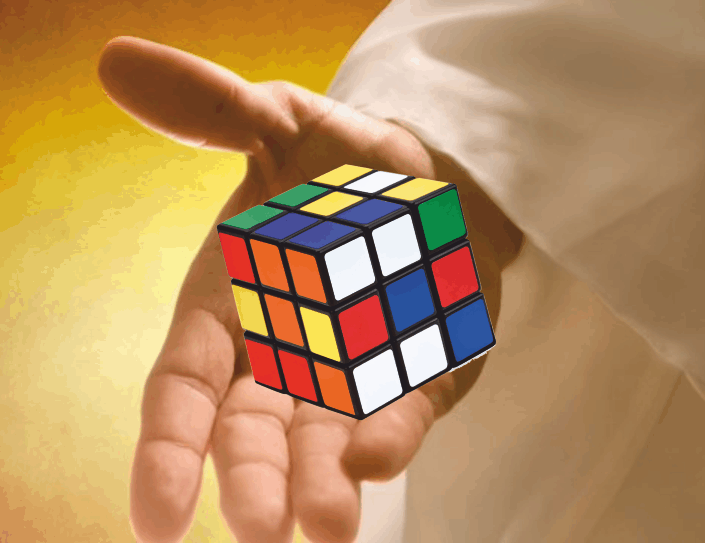
This is where the Rubik’s cube comes in. Sometimes the things we are desperate for just don’t seem to happen, and no matter how hard we try, how much we pray, how many gifts we have sent in advance, Esau keeps coming and the cube just doesn’t line up. God wants us to know that He can see what we can’t see, and that only He has the solution to the cube. The promises that He’s made us are real but only He can bring them about. It is He who hold the cube, not us: all things really do work together for the good of those who love the Lord, and are called according to His purpose (Romans 8:28), but we need to hold onto God until He blesses us, not try to grab the cube to make it line up.

Whether it’s the nations or our own lives, God has got the cube in His hands. Jacob wrestled until he prevailed: not only did he remember God’s promises, but he held onto the promise keeper until they became part of his life. And here is the great encouragement for us: Jacob named the place of this encounter Peniel, “For I have seen God face to face, and my life is preserved.” (Gen 32:30) Peniel means “Facing God.” God wants us to hold onto Him because He wants us to seek His face, and when we do we know His life and we see His promise fulfilled in the outpouring of that life. The eventual meeting with Esau was a time of reconciliation, not enmity. Jacob was born in the flesh as a human baby, but spiritual Israel was born when he clung to God and would not let him go until he received the blessing of fruitfulness.  When we meet with Esau as Israel, we find that the victory has been won, and the Rubik’s cube has lined up.

The Joy Set Before Us

Last week Anne and I went to the South of England with our friend Michael for a short holiday. Like me, Michael enjoys watching and photographing birds. The purpose of the holiday was for all of us to have a break in some beautiful countryside, for Anne to see some of the rare butterflies that can be found in certain places down there, and for Michael and me to do some birding in the bird “hotspots“ that are unique to that part of the UK. We decided to spend the last day of the holiday with Anne‘s sister and her family, who live down there, and with them to visit a large area call Knepp Estate, which has become a major centre (not only in the UK but internationally) for rewilding – the process of allowing an area of land to be restored to its original ecosystem and habitat.

Knepp was beautiful. It is a special experience to walk through a large area of land that has been rescued from the ravages of artificial over-cultivation and allowed to become at least something closer to what nature, and therefore God, intended. There are a number of paths marked out on the estate: one of them went down to the lake, another went through some woodland to an observation point, and yet others went round to different areas. We chose the yellow path, (marked out by yellow paint at every junction,) which was the one to the observation point, because that was the one the family wanted. I would’ve preferred to go to the lake because it has a bird hide and looked more interesting from a birding point of view, (that was the red path) but yellow it was. Initially.

However, after about quarter of an hour, Michael and I were getting increasingly frustrated by the fact that there was very little to point our cameras at on the yellow path, and the walk was just taking us through more of the same scenery, beautiful though it was. So at my instigation we decided to separate from the family, head for the bird hide on the red path, and to meet up with the others at the café at lunchtime.

So off we went with our cameras and their big long lenses, like two little boys running out to play. Unfortunately, by the time we had retraced our steps to the car park we realised that we would not have time to walk down the red route to the lake, let alone spend some time in the hide down there, and still be back at the restaurant in time to meet the family for lunch. So we decided to just stay in the restaurant, put down our cameras, sit and have a coffee, and wait for the family to arrive.

It wasn’t long before they came back, smiling and chatting about their lovely walk. My niece, who loves the Lord, told me all about the observation point, which is set quite high in a big tree, and which you reach by a series of steps up through the branches. From the observation point you have a panoramic view over a large area of the estate. As we heard all about it, I realised what a mistake I had made in leading Michael along the red path: not only had we failed dismally in any birding objectives, but we had missed out on one of the highlights of the Knepp experience, which is to climb up to that observation platform and see the panorama of nature spread out before us.

So what is this story about? I had a choice. It was to walk with my family on the yellow path, or to go and take pictures for myself on the red path. Although I covered the decision with the justification that Michael would also prefer the red path, really it was about me and what I wanted. Hebrews 12 1-2 says this: “And let us run with perseverance the race marked out for us, fixing our eyes on Jesus, the pioneer and perfecter of faith. For the joy set before him he endured the cross, scorning its shame, and sat down at the right hand of the throne of God.”

God has put us into His family, and Jesus has told us very clearly that His desire is for us to love one another. If our eyes are fixed on Him we will have His desire in our hearts and His example before us. Do we choose the yellow path or the red path? Which is the one marked out for us? Surely it is to walk with our family and not to run after our desires: that is basic new testament faith, after all. But there’s more to my story than the call that is upon us to make the choice to love, which clearly I hadn’t followed. Because if I had made that choice, I would’ve actually gone up into the real place of observation, the place where we have the high perspective, God’s perspective. I will never know what He wanted to show me there – maybe I would’ve come away with a wonderful picture of a bird of prey winging over the treetops, or maybe I would’ve simply come away with the same glow that I saw on the faces of the others, emanating from their shared common experience of beauty from the treetop. But whatever God did have for me at Knepp, it was to be shared with the people that He has given me to love, not to be grasped with the apparatus of my pleasure: standing with family in the presence of God in His creation, not hiding from them, and Him, like Adam in the Garden of Eden, on the path that was not marked out for me.

If you are like me, you will love the high places of spiritual experience in the presence of God. The quest for the presence of God is, after all, the theme of this website. But also, if, like me, you are someone who likes to get away from it all, and hide from the noises and voices of all the people who want to take your attention off whatever it is you are looking for, we need to remember that the highest revelation will come in the place of love; and if we are going to attain it, we need to put down our cameras at the cross, because that is where the joy is set before us.

Lambs and Wolves

I am sending you out like lambs among wolves” (Luke 10:3)

I re-read passages from ”Two Seconds to Midnight” sometimes, to remind myself of the things that I wrote so that I keep walking in them. I read this passage on God’s protection this morning: I think it’s a timely reminder in uncertain times that the best way to know God protection is simply to stay in His presence

God provides for us because He is our Father, and also to ensure that we have the means to accomplish the purposes to which we are called and appointed. And to accomplish these purposes, He sends us out as “lambs among wolves” (Luke 10:3). It would seem strange if our loving Shepherd set the prey loose amongst the hunters to fend for themselves, so I think it’s worth reminding ourselves why He has done it this way, and what He has put in place to keep us from being torn apart. Because if His yoke is easy we are going to live in the truth of Psalm 23, walking by quiet streams, feasting at God’s table while the wolves look on and slaver, and walking fearlessly through the valley of the shadow of death.

In 1978 a book appeared called The Upside Down Kingdom by Donald Kraybill. I’ll say now that I haven’t read it, but I heard of it years ago and the title has stuck with me ever since because it seems so true of the King who wins by apparently losing and leads by serving. The kingdom of God certainly turns the world’s wisdom upside down, and it has continued to turn the world upside down for the last 2,000 years. I used to be reminded of it often when I had a plain leather Bible cover with no marking to show the front or the back, and it seemed that every time I opened my Bible I opened it upside down. Maybe I needed a lot of reminding.

Going as lambs into the wolf-pack to take their land is definitely an upside-down idea, but it’s no more upside down than the “grasshoppers” going into Canaan to defeat the giants. Because it’s not the lambs who overcome the wolves any more than it was to be the puny Israelites who would overcome the giants: in both cases, the battle is the Lord’s. And if the battle is to be His, because “flesh and blood cannot inherit the kingdom of God” (1 Corinthians 15:50) it is imperative that we do not attempt it any other way: it is only as lambs that we will see the wolves defeated.

The key to our protection is of course the fact that God does not ask His lambs to go out alone. He is with us, and He is the only protection we need. Our first stop for a “protection” scripture has to be Psalm 91, and indeed we need look no further if we want to discover exactly how the Shepherd has established protection for His lambs. The psalm is full of wonderful promises for protection, but they are summed up well in verses 9-10:

Because you have made the Lord, who is my refuge,
Even the Most High, your dwelling place,
No evil shall befall you,
Nor shall any plague come near your dwelling.”

No evil. No plague. Thank you, Lord; I’ll take that! But there is a condition; a “because”. The condition is that we make the Most High our “dwelling place”. Our dwelling place is where we live; it’s our habitation, our home. It’s the place where we dwell intimately with our spouse and family. It’s the word used most frequently in the Old Testament for the Lord’s “holy habitation”, whether on earth, in His sanctuary, or in heaven where He has His eternal home. The opening verse of the psalm says: “He who dwells in the secret place of the Most High shall abide under the shadow of the Almighty.” These verses don’t mean that when we are threatened we run to Him from wherever we have gone and remind Him of His promise by quoting verses of Scripture in His face; they mean that if we dwell with Him and He is our home, we dwell under His protection, we abide in His shadow. As parents we might play shadow games with our children: we walk around outside in the sunshine, and they have to stay in our shadow as we move. To stay in our shadow, they will have to stay close. To stay in God’s shadow, His Word says that we must dwell with Him. We stay close. We don’t go running to Him from the other end of the garden when next door’s big dog suddenly barks close by.

Jesus will have it no other way. Our protection is nothing other than our yoke to Him. Moses said to the Lord, “Unless You go with us, I’m not going anywhere!” (see Exodus 33:15). Jesus turns this round, and says, “Unless you go with Me, you’re not going anywhere!” This isn’t just for our benefit, because our souls are fragile; it’s for the purpose of the kingdom, in our lives and in the lives of those to whom we are sent, because under His yoke not only do we find protection but we are also able to walk in His ways, “not returning evil for evil or reviling for reviling, but on the contrary blessing, knowing that you were called to this, that you may inherit a blessing” (1 Peter 3:9).

Do not get stuck in the mud

“His winnowing fork is in his hand, and he will clear his threshing floor and gather his wheat into the barn, but the chaff he will burn with unquenchable fire” (Matt 3:12)

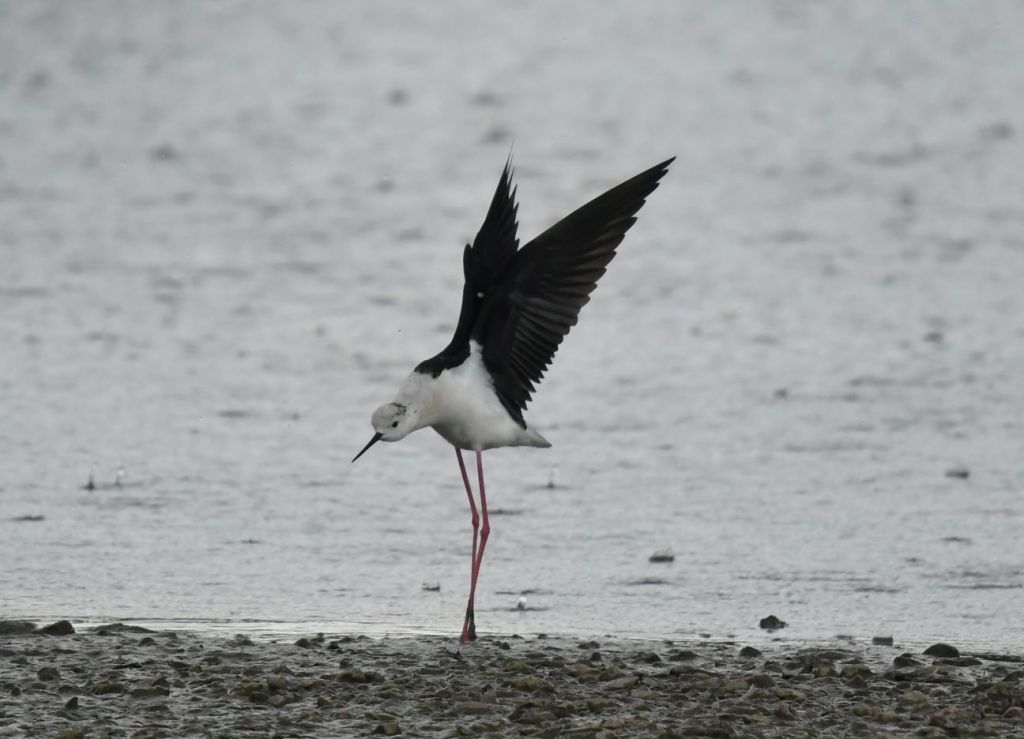
This is a black wind stilt. It is a bird of the wetlands of southern Europe, Africa, Asia and Australia, but it is rare in the UK. Now, however, a small but increasing number of black wing stills are starting to make their home here. The reason? Because their wetland habitats in some places are drying up, and where there used to be thousands of black winged stilts there are now none. They are moving North because of climate change. Those that are arriving here, and in other parts of northern Europe are having to cross major natural obstacles of mountain ranges and/or water.

I was thinking about these birds, and I felt that the Lord Began to speak to me. I believe he’s saying this:

“As there is climate change in the world, so there is climate change in the heavens. The spiritual climate is changing. Some places that used to be a sanctuary for thousands are drying out. Do not get stuck in the mud because it has always been your home, but go where there is food and water. I am bringing a baptism of fire to the Earth, and my winnowing fork is in my hand. I am gathering my people into my barns, but the chaff will burn with unquenchable fire.

So do not get stuck in the mud. You feel even now that the water is drying up, but you are too comfortable to move. It’s still okay here, you say. You feel that you can still move your long legs and fly away when you are ready, but its OK here for now. But I say to you that the mud will start to dry out very quickly as the heat of my fire increases, and when it does, it will clamp round your legs like cement, so you will not be able to move even if you want to.

So do not get stuck in the mud, but fly away to where there is food and water; the food of My word, and the water of My Spirit. Do not say I can’t move because there’s a mountain range that is closing me in, and a sea that I cannot cross, because I will make the mountains a highway, and when you pass through the waters, I will be there. Do not get stuck in the mud: spread your wings and fly.

Spirit of Truth

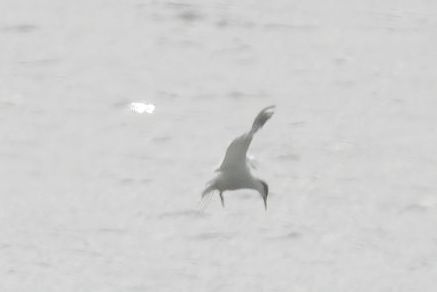
I took some photographs recently of a bird flying over a lake. It was a long way off, but I could see that it was a tern, as occasionally it hovered over the water then dived in to catch a fish. When I got home and looked at the pictures on my computer, I got very excited, because I saw that it had mostly black plumage. A black tern! We don’t see many of these in the UK, and they are a species to get excited about if you are a birder over here. But when I looked at it more closely, I realised that the colouring wasn’t quite right: there was too much white underneath even though the rest of it looked right. So I boosted up the brightness and reduced the shadows on my computer, and this is what I found: it wasn’t a black tern at all that I had seen fishing by the lake, but one of the more widespread species, a common tern. My “black tern” just been created by the shadows on its plumage  cast by the morning sun.

Thinking about that, it made me realise how easily shadows can occur in what we look at, so that what we see is not the truth, but just a creation of our own self. In the afternoon Anne and I went to a local nature reserve with a friend. There are three ways of getting there that are roughly equidistant: it’s about 25 minutes away. In the car we took the route I usually take, down a country lane, and I said to Anne that I found this way slightly quicker. Michael agreed, adding that it could depend on the traffic as well. On the way back we found ourselves behind a tractor, so at the roundabout I chose the motorway route instead because I didn’t want to be behind a tractor – even though I would have quickly overtaken it on the dual carriageway. I said: “actually this way is probably just as quick.” Anne said: “That’s interesting, because on the way here, you said the lane was the quickest, and now this way is just as quick. They can’t both be true!“ She was right. They couldn’t both be true. My words were not about the truth, but about what I was trying to prove. This wasn’t even an emotionally charged situation: they were both just throwaway comments about driving choices. But that’s the point: I was justifying my choices, not expressing truth. My focus wasn’t the driving distance at all, but my decisions. In other words, my shadows were colouring what I was looking at. I was seeing a black tern.

As even many atheists know, Jesus said: “I am the way, the truth, and the life.” Truth is found in Jesus. When He first introduced the notion of the coming Holy Spirit to His disciples,  Jesus said this: “And I will pray the Father, and He will give you another Helper, that He may abide with you forever— the Spirit of truth, whom the world cannot receive, because it neither sees Him nor knows Him; but you know Him, for He dwells with you and will be in you.” (John 14: 16-17) The Holy Spirit is the Spirit of Truth. We call Him Holy Spirit; Jesus calls Him, emphatically, “Spirit of Truth.” (John 14:17, John 15:26, John 16:23.) Without the Holy Spirit, whom the world doesn’t know, reality will always be obscured. Just like I had to boost the brightness on my computer to see the real bird, it is only when the brightness of the Light of the world is turned up that we see the reality of life.  “Whoever lives by the truth comes into the light, so that it may be seen plainly that what they have done has been done in the sight of God.” (John 3:19)

James said: “All good and perfect gifts come down from above from the Father of lights, in whom there is no shadow of turning.” (James 1:17) God doesn’t change. He is the Father of lights: He created the lights in the universe, and by His word – “Let there be light” – He created material light itself. In His light, we can see the truth; without His light, we only see our own shadows. The Light of the world never changes: He is totally faithful to His word, He is always love, He is always truth. Every turn in our emotions and our agendas casts a shadow: only in Jesus, by the light of the Holy Spirit, are there no black terns, no shadow of terning.

The Dance

The other morning I switched on the car radio and a piece of music came on that is a favourite of mine:  it was waltz no 2, from Jazz suite no, 2, written by the Russia composer Dimitri Shostakovitch in 1938. I felt the Lord say “Pay attention to this,” so I listened more thoughtfully than usual. It’s a lilting, melodious piece, with the melody repeated on different instruments. It was written in a harsh and chaotic time, when Russia was in the grip of Stalin’s harsh and brutal regime, yet it is peaceful and melodious. It leads the listener in a dance, even though the world around it was running and cowering in fear and deprivation when it was composed. The orchestra are in a building apart, intent on working together and following the cues of the conductor, while outside the building purpose and direction are either held in the iron grip of the dictator, or are the disassociated hopes and dreams of people trying to escape that grip.

Today the grip of another dictator is tightening around society. Subtly and deceitfully, Satan is taking control of life, in different ways and in different parts of the world, but all with the aim of strengthening his position against his hated enemy, Jesus Christ, and the army of His followers, before whom he knows he will one day fall. But separated from the screaming and the pounding of feet is a building, the Church of Jesus Christ, where those within are working together in peace and harmony as they follow the cues of their conductor, the King Himself, who leads them by His Spirit as they play His tune. I felt that the Lord spoke to me through this piece of music, saying something like this:

“You play my tune on your instrument. Now you, over there, play my tune on your different instrument. Now altogether, now in twos and threes, now individually, my tune on the different instruments you have been given. And the result is joy, and peace and harmony. Whatever is going on outside the door, there is peace and harmony as you stay in my presence. But you must concentrate on me, and as the noise around you gets louder, and it will, you  will need to concentrate harder. While you pay attention to me there is harmony, but if you start getting distracted by what you perceive the others in the orchestra to be doing you will lose the beat, you will play out of tune, there will be discord, and you will not only get left behind yourself, but you will cause others to fall out of step as well. So listen to me and follow me, your conductor, and I will lead you in my dance. Do not get left behind because you are listening to others and not to me. And as you dance those outside will see and wonder, and many will come and join in, because it is the victory dance that my Spirit is conducting in preparation for my return.

So watch out for my baton: I am not just in your churches, but in your market halls, your workplaces, your railway stations. There are many more who will come: watch out for them. When you obey me and play your instrument when and how I say, sometimes on your own, sometimes with others, the souls that I am calling will stop and listen, and they will come and join in the dance.”

But thanks be to God, who always leads us in triumphal procession in Christ, and manifests through us the aroma of the knowledge of Him in every place.” (2 Cor 2:14)

The City on a Hill

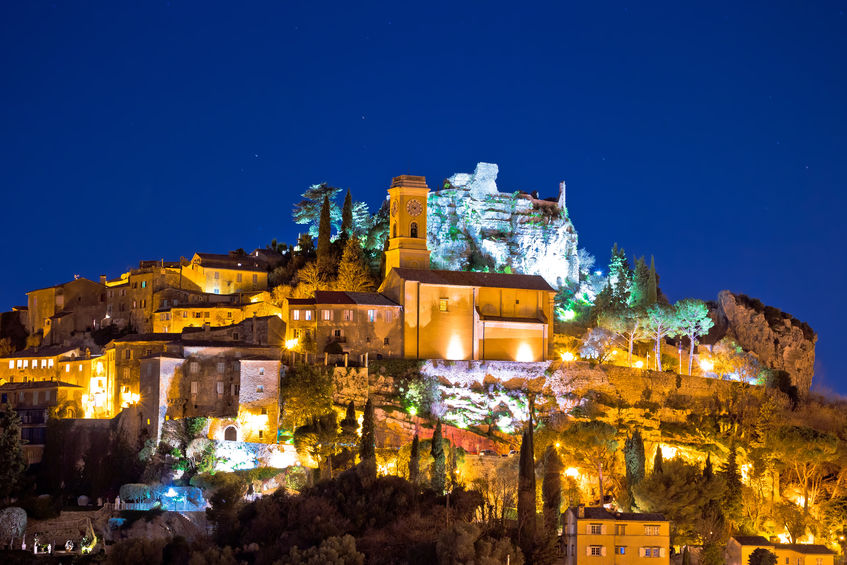
“You are the light of the world. A city that is set on a hill cannot be hidden. Nor do they light a lamp and put it under a basket, but on a lampstand, and it gives light to all who are in the house. Let your light so shine before men, that they may see your good works and glorify your Father in heaven.” (Matt 5: 14-16)

There is much in the New Testament about building. Jesus said He would build his church and the gates of hell will not prevail against it. The New Testament writers encourage us repeatedly to build. Jude wrote: “But you, dear friends, must build each other up in your most holy faith” (Jude 1:20), Peter says that we “as living stones, are built up a spiritual house, a holy priesthood, to offer up spiritual sacrifices, acceptable to God by Jesus Christ,” (1 Pe 2:5), and Paul picks up the same theme when he writes to the Ephesians  “in whom (Jesus)  the whole building, being fitted together, grows into a holy temple in the Lord, in whom you also are being built together for a dwelling place of God in the Spirit.” The Greek word used for building up and edifying are the same: oikodome. Speaking of our church gatherings, Paul writes Let all things be done for edification. (1 Cor 14:26) but this doesn’t just apply to our church meetings: it applies to everything that we say to one another: “Let no corrupt word proceed out of your mouth, but what is good for necessary edification, that it may impart grace to the hearers.” (Eph 4:29) Every time we open our mouths, we are to release the Grace of God. In fact the whole of the Christian life has a single purpose, which is to “grow up in all things into Him who is the head—Christ— from whom the whole body, joined and knit together by what every joint supplies, according to the effective working by which every part does its share, causes growth of the body for the edifying of itself in love.”

So the Big Question is, how do we actually build this city set on a hill? What does it mean to actually be builders in God’s kingdom, to be a body that edifies itself (builds itself up) in love? I think the key is simple enough: we don’t build for ourselves, but for others. Jesus is clear about this: “Do not lay up for yourselves treasures on earth, where moth and rust destroy and where thieves break in and steal, but lay up for yourselves treasures in heaven, where neither moth nor rust destroys and where thieves do not break in and steal. For where your treasure is, there your heart will be also.” Whatever we build for someone else is never going to be lost or spoilt through our own carnal failings, but remains our treasure forever – whatever happens to it in the recipient’s hands. Agape love has no vested interest in what it has given. It’s building a house for someone else to live in and walking away without being paid.

When Paul exhorts us to us to “let no corrupt word proceed from our mouth, only what is the necessary edification“ – in other words, only speak words that build other people up – he continues with these words: “And do not grieve the Holy Spirit of God, by whom you were sealed for the day of redemption. Let all bitterness, wrath, anger, clamour, and evil speaking be put away from you, with all malice.” (Eph 4: 29-30). I think many of us read this and just take it that Paul has moved onto another subject. But I don’t think he has. I think what grieves the Holy Spirit is not our negative emotions in themselves, but the fact that their presence among us stops Him releasing the pure love of Jesus Christ that is expressed through the Holy Spirit’s ministry and which will build the City on the Hill. He is grieved because He loves us so much and yet we ourselves prevent Him from fully expressing His love within the very body whose purpose it is to reveal it. Nobody longs for revival more than Jesus.

So just as moth and rust corrupt any treasure that we lay up for ourselves on Earth, corrupt words will spoil God’s spiritual house and prevent it from being built through us.  When Paul writes “let all bitterness and wrath and anger and clamour and evil speaking be put away from you, along with all malice” he pretty well covers the whole gamut of the rubbish that we can carry in our uncleansed hearts. But what is so encouraging here is the word that is often translated as “put away.” The Greek word literally means to be lifted up. He doesn’t say that we must somehow rid ourselves of everything that can corrupt our words. He isn’t standing over us with a pointing finger: he says that they have to be lifted off us, because we can’t just put them away by ourselves.

And this isn’t just in church meetings: it is all the time. If our words are corrupted by piqued egos, unsatisfied longings and  unforgiven bitterness during the week, we will not speak words that will edify others on a Sunday morning or whenever we meet. We might even say all the right things, but we can’t really impart grace if we aren’t full of grace ourselves; if we are just putting on a show. But in the grace of God all this rubbish can be lifted off us. As I said, we may not be able to get rid of it ourselves, but Jesus can lift it off us. Indeed, unless we do take it to the cross the Holy Spirit will continue to be grieved, because we are preventing Him from letting His love flow among us as much as He would like.  

The little church  at Azuza street where the Pentecostal movement was birthed  was characterised not so much by the amazing miracles and the gifts of the Holy Spirit that took place there, but by the selfless love that filled the church and struck everybody who came in. The place was, metaphorically, full of houses that had been built for others. It was the home of Psalm 133 vs 1; “Behold how good and how pleasant it is for brethren to dwell in unity,” and because of this, the anointing flowed “like precious oil poured on the head, running down on the beard.” (Ps 133: 1 cont.) Where the Holy Spirit isn’t grieved, He builds. It is this Love that builds the church, and  that will shine the light out of the city on the Hill.