Category Archives: Christian Life

Seeking God’s presence and walking in His ways as a Spirit-filled believer.

The Pool of Bethesda (2): the paralysis of religion

After this there was a feast of the Jews, and Jesus went up to Jerusalem. Now there is in Jerusalem by the Sheep Gate a pool, which is called in Hebrew, Bethesda,  having five porches. In these lay a great multitude of sick people, blind, lame, paralyzed, waiting for the moving of the water. For an angel went down at a certain time into the pool and stirred up the water; then whoever stepped in first, after the stirring of the water, was made well of whatever disease he had. Now a certain man was there who had an infirmity thirty-eight years. When Jesus saw him lying there, and knew that he already had been in that condition a long time, He said to him, “Do you want to be made well?” he sick man answered Him, “Sir, I have no man to put me into the pool when the water is stirred up; but while I am coming, another steps down before me.” Jesus said to him, “Rise, take up your bed and walk.” And immediately the man was made well, took up his bed, and walked. And that day was the Sabbath. (John 5: 2-9)

God’s house of mercy
The healing at the pool took place on the Sabbath. In the sequence of signs as John recorded them, this was the first time that Jesus challenged the religious order by “working” on the designated day of rest, and John records it as the opening skirmish of His battle with the pharisees that ended at Calvary. “For this reason the Jews persecuted Jesus, and sought to kill Him, because He had done these things on the Sabbath.” (John 5:16) “Bethesda” means “house of mercy,” or “flowing water,” and it was by the Sheep Gate. This is not just a place in Jerusalem: it is a picture of the church. The healing at Bethesda was certainly a sign pointing to our need for an encounter with the living Christ, but it also tells us that there are many sheep in God’s house of mercy and flowing water who are immobile on their beds by the pool, and that one of the main types of paralysis is the paralysis of religion.

Paralysed by religion
The dictionary definition of religion refers to worship of a God or gods and the activities surrounding that worship, and in a broader sense to “enthusiastic and repeated engagement” in a particular pursuit. Avid sports fans are often referred to as making a religion of their sport, for example. However, I worship the Christian God, enthusiastically and repeatedly, yet if someone asks me the question “are you religious?“ I say, “No I’m not religious; I have a living faith.“ So in the church many of us now see the term religion as not so much describing our worship of the living God, but the practice of those who, in the words of Paul to Timothy, have “a form of godliness but deny its power.” (2 Timothy 3: 5–7). The question for those of us who say we have a living faith is this: is it possible for us also to be paralysed by religion?

We tend to Pillory the Pharisees today as archetypal examples of everything we want to avoid in our worship of Christ. And so we should: they lived by the law and missed Jesus. There is no need to quote here any of the many things that Jesus said against them: the important point is that we don’t follow their example and find ourselves as paralysed and lifeless as they were. They too were lying by the pool on their bed, the bed of the law, waiting for the waters to be stirred by the Messiah – who was standing right in front of them.

Flowing in the spirit?
The Bible tells us, “Whatever was written in the past was written for our instruction so that we could have hope through endurance and through the encouragement of the scriptures.”  (Romans 15:4) The Holy Spirit hasn’t just made it clear how tragically fruitless the religion of the Pharisees was so that we could feel superior in our relationship with Him: those scriptures are also there for our instruction so that we can take care not to follow any of their practices. How much of this instruction are we actually taking on board? For example – and I know I’m far from being the first person to say this – I was born again In 1984, when the charismatic movement was surging through the established church. We used to think of ourselves as “flowing in the spirit,“ and (I’m ashamed to say) how superior we were to the church down the road whom we saw as ossified in their “hymn– prayer sandwich“ format. I now belong to one of the larger modern evangelical Charismatic/Pentecostal networks. We consider ourselves to be free in the spirit, and to be hosts of the presence of God during our meetings. But before I go to church on a Sunday, I know that we will start with a couple of fairly lively praise songs, the host for the day will do the notices, the children and teenagers will go out to their respective groups, we will continue with worship for about another half an hour, then there will be a preach (we used to call them sermons, but that was  too religious) for about 30 minutes, and then a closing song and an appeal for ministry at the end. We will start at 10:30 and finish around 12:15; gather for refreshments after the meeting, and will be out of the building by about 12:45. We do make room for the gifts of the Spirit during the worship time, so three or four people might bring a word of encouragement, a prophecy or a word of knowledge; maybe a tongue and an interpretation – but how different is this really from the “hymn-prayer sandwich?“ The fillings might be a bit different, but it is no less predictable, and I suspect that we are not very different from many modern evangelical churches.

The Spirit of God does graciously meet with us in the little box that we give him, and we rejoice in the fact that we have been in his presence, even though it may have just been the hint of a reflection of a glimmer. We say, and pray, that we want more of him; we long to see healings and deliverance; yet how much more of ourselves will we give? Would we know more of His presence and His power if we gave him more of our time? Or even if we took the compartments out of the box and, for example, allowed the allocated time for worship to eat into the allocated time for the sermon? Or even – shock horror – not have a sermon (sorry, a preach) at all?


The mountain and the chocolate box
I think we can be very easily satisfied with the experience that we describe as “entering the presence of God.“ When the presence of God came into Solomon’s temple at the time of its dedication, the priests were unable to stand. When the Roman soldiers came to Gethsemane to arrest Jesus, they fell to the ground when He identified himself with the words “I am He.” (John 18:6) In our own church we had a half night of prayer a couple of months ago (we should have them more often…), from 8 pm to 2 am. People came and went as they pleased; not many stayed for the whole six hours. But it wasn’t until about 1:30 that the presence of God really came, so powerfully that most of the few of us who were there had to fall to our knees; and then someone gave a prophetic word that brought a long awaited breakthrough in the life of one of those present. When the presence of God came to Toronto, He changed lives and impacted people like Heidi Baker, (Iris Global) Che Ann (Harvest International Ministries) Bill Johnson (Bethel Church) and Nicky Gumbel (the Alpha Course) whose ministries have brought the Kingdom of God into millions of lives. A hallmark of Toronto Airport Vineyard meetings in the 1990s, as well as of other revivals, was daily meetings that went by the clock in heaven and not the clock in the kitchen. I think we can package the presence of God in a chocolate box when He wants to take us up a mountain. God has a much bigger space to move in than we often allow Him. If the dimensions of our box are so far away from His, it’s because our religion keeps it small and keeps us too easily satisfied.

The dynamic of Life
Jesus said , “For as the Father has life in himself, so he has granted the Son also to have life in himself,” (John 2:26) and that He had come to “give life, and that in abundance.” (John 10:10) I love to go out and take photographs of birds. One of the great difficulties in bird photography is the fact that the subjects rarely keep still. Life is always on the move. When the cells in a body become motionless, that body is dead. When Jesus told the paralytic to pick up his bed and walk on the Sabbath day, He was giving him life: He was asserting the dynamic of Life over the inertia of religion.

So how much are we really free from the constraints of religion that we see in the Pharisees of Jesus‘s day? Anne and I lead one of the small groups in our church (we call them “life groups.“ What do you call yours?) This Summer each life group is  leading an evening midweek meeting for the whole church. Everyone in our life group comes to the school of prophecy that we host at our house, and our vision is to encourage the other groups to pursue the presence of God more actively in their gatherings. I had planned how I felt our meeting should flow, and who should contribute what. Anne was most dismissive. “And where exactly is the Holy Spirit in control of all of this??“ she asked. And she was right. How easy it is to operate in the flesh when we think we are being spiritual. When man controls he brings religion. When the Holy Spirit controls, he brings liberty.

A living, breathing bride
Jesus comes to give life. His words are words of life. Walking is not doing the same things the same way, but doing what He says, when He says it. Life is movement. When He speaks, the life He speaks brings into us movement. We can be walking in the Spirit while we have a meal out with friends because we can be responding to His promptings between mouthfuls in the conversation, and we can be walking in the flesh every Sunday at our Church meetings because we are following our prepared format and not His dynamic instructions. When He returns, He will coming back for a living,  breathing bride that He has perfected and made beautiful in His presence, and He is longing for us to run to meet Him, however our theological lens views that moment. We may not fully understand how we will be caught up in the air (1 Thessalonians 4:17), but one thing we do understand is this: He will not be pleased with a bride who sits in her pew and recites the litany of the wedding service without even looking into His face.

The Great Deception

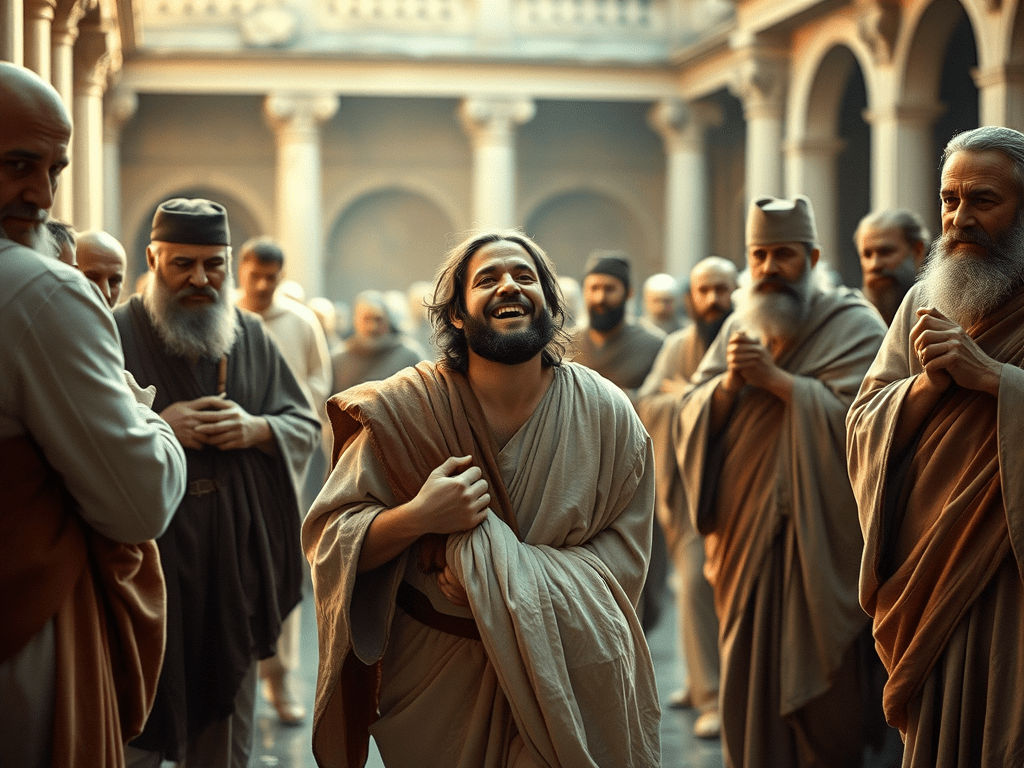
(Image generated by AI from its “reading” of my text…)

Every time I ask Google a question read the detailed AI overview of its answer, I think about the Great Deception that Paul writes about in 2 Thessalonians 2 1-12. Is artificial intelligence part of it? Recently I stumbled on a blog on the subject of the great deception and how to be sure not to fall away, and I read it with interest. It was all Bible based and made a lot of sense: basically it was telling us that if we keep our eyes on Jesus and remain grounded in faith and the word of God we won’t be led astray by Satan’s lies. All good stuff, followed by lots of practical applications for family life, similar to material we find across a broad swathe of Christian writings.

I scrolled down the article, and came to other material written by the same guy. But I stopped short when I saw an article that claimed to be “a detailed study of the biblical proof for a flat and motionless earth.“

Is someone who is exhorting Christians to believe the word of God, hold fast to Jesus, and be guided through the complexities of life and the snares of satanic deception by discernment of the truth, suggesting that I believe that the world is flat and that I can find evidence of this in the Bible? I really hope not, yet I believe it’s probably true.

I know the Earth is not flat: I’ve travelled a lot of the way round it, I’ve seen the curved horizon, and I’ve seen photographs from space. I know that none of Magellan’s ships fell off the edge between 1519 and 1522. I’ve got enough experience to tell me that science has got this right.  But it made me think:  what do I do in the areas where the Bible tells me that science is wrong and I don’t have the experience to align with my acceptance of its authority? Did God really create the earth in six days, less than 7000 years ago? Did Methuselah really live to be 969? What about the other end of the Bible: Is there really going to be a rapture? How can the new Jerusalem come down from heaven, for example? And then of course we come to the basics of Christian Faith. Virgin birth? Resurrection? Ascension? Science tells us that none of this is possible, but our faith says it’s true. It’s totally understandable that many people who genuinely ask the question “is there a God?” dismiss faith because it doesn’t make sense. Faith is a “a gift of God, that none may boast,” (Eph 2:9), but it also has to be a gift of God because the human brain simply can’t comprehend it.

I do believe that God is in and through all things, and that he has progressively guided the man that He created through an understanding of the world that He put him in. I think that this is sometimes has been by revelation, and sometimes by exploration. God has given us science. But He has also given us His son, and He has given us the Holy Spirit. He has given us brains, but we also have the mind of Christ. The universe is material and it is spiritual. Spiritual things are spiritually discerned: we can no more understand the mind of Christ with our human reason than we can prove whether or not Christ will return to the Earth in the manner that He ascended, if there really was a worldwide flood and Noah’s Ark, or if we will all be raised up at the last day, and more importantly which eternal existence we will be raised up to – the resurrection of Life or of condemnation. (John 5:29).

Ultimately, truth is neither science nor the printed pages of the Bible, which can be taken at face value to prove almost anything – even, it appears, that the Earth is flat. Truth is a person. Jesus said “I am the way, the truth, and the life.“ We are called to follow His way, walk in His truth, and to share in His life. The truth can’t be separated from the way and the life any more than one can separate the heart from the brain and the nervous system and expect them to carry on functioning. Whatever the great deception ultimately is, its main purpose will be to lead us away from the person who is the way the truth and the life.

I do happen to think that AI will play its part in this, and I think it is part of the fulfilment of Daniel‘s end time prophecy that “there will be a increase in knowledge; (Daniel 12:4) however Paul writes “knowledge puffs up, but Love builds up.“ (1 Cor 8:1)  Knowledge alone, whether we gain it from Google’s AI overviews or from our own intellectual understanding of the Bible, is not the truth. The truth is only in Jesus, the fulfilment and the flesh of the word, and we live in the truth when we walk in Him. And since God seeks worshippers who worship “in spirit and in truth,“ we cannot walk in the truth unless we also walk in the spirit, and none of the fruit of the spirit even marginally hints at the supremacy of the intellect. In fact the Holy Spirit tells us in Proverbs 12:15 that “the way of a fool is right in his own eyes.” One of the most brilliant people the world has ever known, Leonardo Da Vinci, said “The greatest deception that men suffer from is from their own opinions.”

Our understanding of the truth as it is in Jesus will always find its expression in God-given faith and love, and our first rule in gaining this understanding will be to learn from Him and be yoked to His gentleness and humility of heart. (Matthew 11:29) This means that if any of us thinks he is a “better” Christian than anyone who doesn’t share our theology they have missed the point entirely. God’s goodness, revealed to us in Christ, is as far above ours as the heavens are from the earth, so the differences between us are as insignificant as the differing widths of two grass stems in the face of the sun. Paul wrote to the Thessalonians that the Lawless one was already at work in their time, and I believe that a part of the great deception that Satan had been working on since the birth of the church is to convince us that one person’s idea of how to follow Jesus might make them “a better christian” than someone with different ideas.

As for me, I choose to believe the Apostles’ creed over the atheistic writings of Richard Dawkins or the algorithmic manipulations of AI, however convincing their deceptions may be. And whether a brother or sister in Christ chooses to believe that the Earth is 6000 or 6 billion years old, or even that it is flat, there is nothing in the Apostles’ Creed or in what I know of scripture that tells me that I should correct their beliefs. If we build each other up in love we will all come “to the unity of the faith, and of the knowledge of the Son of God, to the perfect man,” (Eph 4:13) whatever views we hold about science or prehistory, or about Great Deception itself; and when we do that we will really know the truth, because we will be seeing Him face to face.

Sealed with the Holy Spirit of promise

“In Him you also trusted, after you heard the word of truth, the gospel of your salvation; in whom also, having believed, you were sealed with the Holy Spirit of promise, who is the guarantee of our inheritance until the redemption of the purchased possession, to the praise of His glory.”

If you drop a container of liquid on the floor from a height of about five feet, what will happen to the liquid? Stupid question. It’s going to part company with the container and make a mess on the floor. Unless of course it’s got a lid on, or something else that is sealing it in. Or unless there is something unseen going on…

A friend of mine regularly takes communion at home as part of her morning prayer time. A few weeks ago she had got her little communion glass balanced on the back of her phone (don’t ask – I didn’t) and dropped it on the floor. The photograph shows how it landed.

It made a bit of a splash, then landed upside down, with the rest of the wine inside the glass on the floor. Not only that, but it didn’t leak around the rim: it was sealed inside. Is this even possible? If you want to do a lot of mopping up try it yourself. I just can’t see it happening – except that it did.

The only explanation we can give is that God was involved. Or an angel maybe, but it had to be a supernatural force of some sort. The Lord was giving us a supernatural sign that He wanted to speak through, both to my friend and to everyone else who sees the photo. So what is He saying? I passed the picture round a group that meets at my house, and people had different interpretations. Bearing in mind that it was the cup of the new covenant upside down on the floor, what it says to me is this:

I have made my covenant with you, and it is sealed with the Holy Spirit of Promise. Even when you mess up and let go of me, I will never let go of you. Even when everything is upside down, it will never leak or spill because my seal is eternal and the blood that I shed for you will always be enough to keep you in me, even though you feel as though you have fallen onto the floor. I have loved you with an everlasting love, and will never leave you nor forsake you. Your inheritance in my Kingdom is guaranteed. This promise is sealed forever by my Spirit which I have given to you.”

What does it say to you?

And if you aren’t sure if the covenant of Calvary is for you, give your life to Jesus now and you will be sealed in His forever.

Four rules for walking in the works God has prepared for us.

Ephesians 2:10 says that we are “God’s workmanship, created in Christ Jesus for Works prepared beforehand, we might walk in them.“ God’s word doesn’t say that we should do the works or complete them or carry them out, or any such similar term: he says that we should walk in them. So what does that mean? How do we walk in what God is prepared?

God has given us parameters for walking. We are to walk by faith and not by sight, we are to walk in Love, and we are to walk in the Spirit. There are other specifics too, like walking in newness of life,  walking circumspectly, and more; but these three enough to go on with. If we are to be walking in God‘s works – His works and not our own – we need to pay attention to them.

Rule One: “Walk by faith and not by sight.” ( 2 Cor:7)
To walk in God‘s works, we need to walk by faith. Among all the other things that can be said about what it is to walk by faith, one top level definitive is that it is contrary to walking by sight. We know this because scripture says so. A first requirement for any of God‘s works is that we cannot see everything that we need in order to carry it out, but that we trust God to provide it. If He has prepared the works beforehand, He has also prepared the resources. We cannot see them because we’re walking by faith, but we trust him to provide. We don’t wait to see his provision before we take a step: we start walking beforehand, knowing that He is El Shaddai, and will provide. Rule one stands alongside rule two:

Rule Two: “So likewise you, when you have done all those things which you are commanded, say, ‘We are unprofitable servants. We have done what was our duty to do.’  (Luke 17:10)

When the disciples asked Jesus to increase their faith, he gave them the model of the unprofitable Servant. The walk of faith has to be a walk of obedience: we do what we are told to do, no more, no less. So what has He told us to do? I think  there are two levels of command. There are scriptural commands which are for everyone, and there are specific directives which are unique to each of us. Jesus told us to love God with all our being, and to love our neighbour as ourselves. His “new commandment” was that we love one another. Without love, we are nothing (1 Cor 13:2), and as the whole of 1 Corinthians 13 makes clear, our works are worthless.

I think we find another “level 1” directive in Micah 6:8, where we find these famous words:  “And what does the Lord require of you But to do justly, To love mercy, And to walk humbly with your God?” If we are walking humbly before our God we are more likely to hear the specific directives at level two – whether we are Heidi Baker being told to go to Mozambique, or A N Other being told to give $100 into a specific ministry, or to pray for someone’s healing in the street. If we are looking for power encounters and adventures of faith without paying attention to level one, the chances are that we will be operating out of personal ambition and spiritual pride and not humility and love, and it’s unlikely that the Lord is going to give us any of the John 14:12 “greater things“  to do. But when our hearts are set on obeying the Lord at level one, “you will hear a voice behind you saying this is the way; walk in it” (Isaiah 30:21), and that word will be confirmed in such a way that we will not doubt the instruction. This leads us to rule three:

Rule Three: “A new commandment I give to you, that you love one another; as I have loved you, that you also love one another. By this all will know that you are My disciples, if you have love for one another.  (John 13:34-35)

Rule three is to walk in love. Not only is nothing we do of any value if we don’t walk in love, but Jesus tells us that we will glorify Him if we do – because all will know that we are His disciples. The love Jesus is talking about is His sacrificial “agape” love. Somebody I know well in our church has been given a vision for a project in Liberia, where there is 85% unemployment. This project, when completed, will provide income and employment and bring a little bit of God‘s kingdom to earth. Her dream is to do something that will lift a community out of poverty, and she thinks about it night and day. She said once that she wasn’t sure if it was from the Lord. I said I’m sure it is. Why? Because, apart from other confirmations she has received, she gets absolutely nothing out of it for herself, yet is prepared to invest a significant amount of time and money into the work. It is an expression of agape love with no self interest. Where does God’s Love point us? Because that is where His works will be prepared.

Rule four: “Pray always with all prayer and supplication in the Spirit (Eph 6:18)
Faith and agape  Love are only ours by the Spirit: “The flesh profits nothing.” (John 6:63)  Faith is “the gift of God, not of works, lest anyone should boast,” (Eph 2:9) and God’s love is “poured into our hearts by the Holy Spirit who was given to us.“ (Romans 5:5) Faith and Love are two of the only three things that “remain“ when all else has passed away (1 Corinthians 13:13) Spiritual projects are carried forward by spiritual prayer. Paul asks the Ephesians to be “praying always with all prayer and supplication in the Spirit, being watchful to this end with all perseverance and supplication for all the saintsPaul’s work as a messenger of Christ was sustained by the prayers of the body of Christ. If Paul needed prayer support to walk in the walks prepared for him, then so do we, and we need to be upholding others with our own prayers.

So to fulfil the purposes that we were created for in Christ Jesus, we receive our instructions from the Lord, and we trust Him to provide us with what we need to carry them out. We are 100% motivated by the blessing that we are expecting others to receive from the work, and we ensure that every step is covered and guided by Spirit-led prayer. If we take our steps according to these principles, I think we will see the works that God has prepared starting to take shape in front of us as we walk.

Redeeming the Time: The Biblical Call to Action

“See you then that you walk circumspectly, not as fools but as wise, redeeming the time, because the days are evil.” (Ephesians 5:15)

The Greek word translated as “circumspectly” is Akribos. It means diligently, accurately, perfectly, not deviating in any way from the set path.  Akribos is how we have to drive a car: “with due care and attention.” It describes doing something in manner that doesn’t ignore some aspects of the situation, checking that everything is in order, that all requirements are met, and nothing is left out. Luke uses Akribos  to describe how he wrote his “orderly account” of Jesus’s life and ministry (Luke 1:3). Paul uses it when he writes to the Thessalonians to remind the them that they know perfectly well (akribos) that “the day of the Lord comes as a thief in the night.” (1Thess 5:2) To walk circumspectly is to pay full attention to every step we take. The scripture tells us it’s how we “redeem the time:” we don’t just skip along n the light; we watch our every step. The question is, what does redeeming the time actually mean?

It’s one of those phrases that I think I have glossed over until now, when I started studying Ephesians. What’s opened it up for me is that word translated here as “time“ is kairos, which is a definite and fixed measure of time, (it could be a moment or a longer period, even an epoch. It is sometimes used today in the term “Kairos moment” to describe a moment of special significance when God‘s kingdom purposes intersect our lives.) Redeeming the time seems to mean bringing God’s purposes into our current situation; in other words seeing God‘s will done on earth as it is in heaven.

The days are evil
The temporal context is also relevant. Paul exhorts us to redeem the time “because the days are evil.” Does he mean the particular days that he is writing in, or does he mean that all days are evil outside of God’s Kingdom rule? I think it must be the latter. The Holy Spirit was addressing the body of Christ through the ages, not just Paul’s contemporaries, therefore the text must mean that all the days are evil. Evil is the default setting until and unless we redeem the time. Microsoft has a default setting called oneDrive where it will save your work unless you choose another folder. You can’t change the setting, but you can override it. I never use oneDrive, so I always choose my own folder. When we redeem the time, we choose to override the default setting and save the kairos into God’s folder and not the devil’s.

In the previous verses, Paul has already shown us that we “find out what is acceptable to the Lord“ when we walk as Children of light (see my previous article, “Walking as Children of Light: Discovering God’s Will”), but he’s reminding us here that we also need to watch our steps as we walk. It is when we are diligent in our walk as Children of light that we redeem the time, and that in doing so we walk in wisdom because we have an understanding of God‘s will. The instruction “walk circumspectly, not as fools but as wise“  suggests that we are not being wise when we are not walking circumspectly. If we are not diligent in how we walk, we are actually being fools.

Paul continues his letter to the Ephesians by giving specific examples of applying this godly wisdom to how we conduct ourselves  in the world and in our relationships, and then he returns to the theme to close the letter. I think we tend to separate the famous passage on the armour of God from the rest of the text, but I don’t think this is what Paul intended. “The days are evil” (Eph 5:16) because they are ruled by the powers of evil whenever God‘s kingdom rule is not established. Evil is the fallen world’s default setting. We put on the armour of God in order to “withstand in the evil day.” When is the evil day? It’s today, tomorrow, the next day, and every day that the time is not redeemed.

Putting on Christ
Putting on the armour of God is the same as putting on Christ: He is our armour. To put on God‘s armour is to put on Christ, and to put on Christ is to put on the new man. (Again, see “Walking as Children of Light: Discovering God’s Will.”) The analogy is a practical step-by-step illustration of how to be diligent when we do so. We must put on all the armour, and we must wear it all the time. The picture tells us exactly what we are wearing and why. Unless we are circumspect and make sure we are wearing it all, the new man is incomplete and won’t walk very far before the enemy has tripped him up. But when we wear it, we are walking as Children of light and are in full understanding of God’s will, redeeming the time because the powers of darkness flee before the light.

The conclusion of Paul’s letter to the Ephesians is not an additional section dealing with spiritual warfare for those who have the mettle to take it on, but is a summary of what has gone before. It’s worth repeating his introduction to the armour here:

Finally, my brethren, be strong in the Lord and in the power of His might. Put on the whole armour of God, that you may be able to stand against the wiles of the devil. For we do not wrestle against flesh and blood, but against principalities, against powers, against the rulers of the darkness of this age,  against spiritual hosts of wickedness in the heavenly places. Therefore take up the whole armour of God, that you may be able to withstand in the evil day, and having done all, to stand.” (Eph 10-13)

The days are evil because the prince of this world has been given dominion by fallen man, and his wiles are carried out by the “the rulers of the darkness of this age,” and the “spiritual hosts of wickedness in the heavenly placeswho administer his evil rule. (Eph 6:12) Our calling as the army of God is to seize back that dominion and to place it under the feet of our heavenly Captain, or, has He himself said, to take the kingdom by force. (Matt 11:12) This is what it means to redeem the time. Every day is an evil day unless we redeem the time by walking circumspectly, which means paying careful attention to our Captain, seeing that we are fully equipped as Children of light to carry out His commands, and being careful to watch our every step as we advance through the battlefield.

Walking as Children of Light: Discovering God’s Will

Walk as Children of light, finding out what is acceptable to the Lord.” (Ephesians 5:10)

I spent my working life in the world of education and dyslexia, and went to countless conferences where the title revolved round the notion of “putting theory into practice.“ Whether it is learning how to drive and doing our theory test first, or learning how to teach children with learning difficulties, our model is that: first we learn the principles, then we have an examination to get our qualification, then we apply them.

Not so the biblical model of Christian discipleship. We don’t need to get a qualification, because Jesus got it for us at the cross:  we start with the practice straight away, and as we go, we discover the enduring reality of the principles that God has given us.

Paul wrote letters to 6 different churches. They all had specific issues that he wanted to cover, but behind his instruction there was only one body of truth, and one passion for all of the churches (2 Cor 11:28), which was that they grow to maturity in Christ. So sometimes we find him saying the same thing to different churches but using different words. Our English translations of his words can sometimes obscure the meaning rather than clarify it. For example, Ephesians 5:10 in the translation I use (NKJV) says that we “find out” what is acceptable to the Lord by walking as Children of light, whereas in his letter to the Romans he tells him that they will “prove” God’s will if they renew their minds. The word translated as both “find out” and “prove” is Dokimazo, which means to test, to prove, to examine, to scrutinise to see if something is genuine. Here are both passages:

 “For you were once darkness, but now you are light in the Lord. Walk as children of light (for the fruit of the Spirit  is in all goodness, righteousness, and truth)  finding out what is acceptable to the Lord. (Ephesians 5: 8-10)

“And do not be conformed to this world, but be transformed by the renewing of your mind, that you may prove what is that good and acceptable and perfect will of God.” (Romans 12:2)

Because of how we tend to read the Bible, we will probably approach these scriptures independently and come to different conclusions about what they mean. But actually, they mean the same thing. We Dokimazo the Will of God by walking as Children of light, and we Dokimazo the good and perfect Will of God by renewing our minds,. How do we renew our minds? Not by studying for the qualification, but by walking as children of light, step by step.

Paul instructs the Ephesians as well as the Romans on the theme of renewing the mind, in chapter 4 21-24:

“…  the truth is in Jesus: that you put off, concerning your former conduct, the old man which grows corrupt according to the deceitful lusts, and be renewed in the spirit of your mind, and that you put on the new man which was created according to God, in true righteousness and holiness.

He explains here that we are “renewed in the spirit of our minds“ when we put on the new man, which he also tells us was “created according to God in all true righteousness and holiness.” The new man seeks the Kingdom and not the self, and so thinks differently. The use of the word “spirit” here refers to the motivating power; what drives our thinking. He expresses the idea in Romans 8:5: “Those who live according to the flesh set their minds on the things of the flesh, but those who live according to the Spirit set their minds on the things of the Spirit.” Being renewed in the spirit of our minds is what we do whenever we fix our eyes on Jesus. When we walk as children of light and find out what is acceptable to the Lord, we can’t produce anything except the fruit of the Spirit, which Paul says is in “all goodness, righteousness, and truth.” If we are children of light we are born of the light, what is in us is light, we walk in the light, what we emanate is light, and also that light can bring revelation, because “whatever makes manifest is light.” (Eph 5:13) Light, as the parenthesis in verse 9 explains, is “all goodness, righteousness and truth.” These are the elements of our new nature, which as we have already seen was “created according to God, in true righteousness and holiness.” (Eph 4:24) Light is what comes out of us; it’s the fruit that we bear. We are all familiar with the different attributes of the fruit of the spirit that are listed in detail in Galatians 5:22-23: the verse in Ephesians summarises them well.

Aaron’s Rod
Numbers 17 gives us the story of Aaron’s rod, which budded, blossomed and fruited overnight to confirm Aaron’s appointment as high priest. We are a royal priesthood ourselves (1 Pe 2:9); “Kings and priests unto God” (Rev 1:6), so what applies to Aaron applies to us. So I think that the biblical model for the fruit of the Spirit is actually the supernatural fruiting of Aaron’s rod, rather than the natural development of earthly fruit that matures over time, which is how we tend to see it. If the Spirit is not confined to time, nor is His fruit; and to claim that self-control, for example, is taking its time to develop in my character is like anchoring the work of the Holy Spirit, who makes all things new, to the old man of flesh in the body of sin and death. If I am struggling with self-control it is because I am not seeking the Kingdom of God and I haven’t put on the new man in that situation. The same applies to love, peace, joy and the rest of the Galatians 5 list. To think otherwise seems like natural thinking; a good excuse for bad behaviour.

So we learn from Ephesians 5:9 that we manifest the fruit of the spirit by taking steps as Children of light, and in doing so we discover God‘s will for us. Our new nature is complete from the start: we “put it on“ just like we put on our clothes in the morning. It doesn’t develop gradually, any more than we start the day just wearing one sock and walking around naked until we’re ready to put on another one. Our new nature is “God‘s workmanship, created in Christ Jesus for good works, that we should walk in them.“ (Ephesians 2:10) It is raised with Christ and seated in heavenly places, Aaron’s rod waiting to blossom, ready for us to put on at every moment of the day, every day. Walking in the spirit isn’t just about encountering God in supernatural manifestations and impossible adventures of Faith, although it can be both of those; it is about choosing the new creation’s priestly garments in our daily life and our dealings with other people instead of the old man’s rags of selfishness and sin. Paul sums up the immediacy of this fruitfulness in Ephesians 5:14

“Therefore He says:

“Awake, you who sleep,
Arise from the dead,
And Christ will give you light.”

We will obviously fail, a lot, and mess up our new clothes; but when we do we repent, we receive forgiveness, we get up, and we start walking again. Because of God’s amazing grace, our new creation is as spotless again as it was the day it was born, and we will have been renewing our minds, putting on the new man, walking in the spirit, and bearing the fruit of righteousness at every step. “If we walk in the light as He is in the light, we have fellowship with one another, and the blood of Jesus Christ His Son cleanses us from all sin.” (1 John 1:7)  I don’t think the process of sanctification is about letting this fruit grow in us over time, because according to Ephesians 4:24 it’s all there from the start: I think it’s all about learning to walk for longer in the Light without falling over, as Jesus “sanctifies and cleanses us with the washing of water by the word.”  (Eoh 5:26) And as we walk into those works prepared beforehand we experience the divine appointments, supernatural moments and miraculous provision that we long for.

We often quote Jeremiah 29:11, that tells us that God knows the plans that he has for us. If we want to know what those plans are, we make up our minds to keep walking as children of light, and we will step into them.

The Diffuser

A poem by Konna Thompson

Father,
You are the diffuser
that I don’t need to switch on
all I need to do
is ask
and receive your aromatherapy

which is not simply a pleasant scent
that merely calms my nervous system
but saturates my soul
your spirit is gentle
yet is a highly concentrated
fragrance of love

please don’t refrain
from pouring your purest oil
on my head
please don’t let my hands
become too soft
please make my feet walk worthy
of the calling I receive

I receive your b r e a t h
of life
I want to inhale your aroma
and for my bloodstream
to be infused by you
every cell carrying your DNA
so that I can leave a scent of Jesus
wherever I go

Anoint me

The Call of the Dove

“Your gentleness has made me great.“ (Psalm 18:35)

The aspiration to greatness is probably hidden somewhere (and at times not so hidden) in every unredeemed heart, whereas personal greatness is no longer an attribute that a Christian disciple would want to appear in his spiritual CV. However, seated as we are in Christ with the unlimited power of His Spirit in our hearts, we are all have that greatness, however weak and foolish our actions in the flesh may be. His gentleness has made us great. But if I am great because of His gentleness, it is also true that I am only great in His gentleness, because gentleness is in His very character, as He describes it himself: “take my yoke upon you and learn from me, for I am gentle and humble of heart, my yoke is easy and my burden is light.”  (Matt 11:29) Gentleness is a characteristic of the fruit of the Spirit that Jesus is looking for in the life of every believer.

Ephesians 2:10 tells me that I was “created in Christ of Jesus for Works prepared beforehand , that I may walk in them,” so if I am not walking in His gentleness, I am not walking in Him, and I’m not fulfilling my destiny in the works that He has prepared for me to walk in. And if I am not walking in His works, I must be walking in my own, and therefore I am walking after the flesh and not after the Spirit.

Gentleness is not weakness, it is enabling power. Gentleness does not push; it leads, because it knows where to go. Gentleness does not argue, but speaks the truth in love or does not speak at all. It does not react to situations and people out of fear, but out of knowledge of the truth. There is no uncertainty in gentleness: Jesus knew where he had come from where he was going, and so do we. We have come from above and will be returning there.

Gentleness is like the wavelets in a sheltered, cove: buoyant and supportive, never overwhelming and never crashing on the beach, yet moving with all the power of the tide.  Those wavelets are seasoned with salt: it’s the salt that is supportive, and so should it be with our speech. (Col 4:6) Gentleness is the dove who baptised Jesus in the power of the Holy Spirit, and characterises the advance of the kingdom of God. Gentleness is the dove who brought the olive branch to Noah, and is a species of bird that can be seen and whose call can be recognised everywhere in the world. 

Whatever may flood our circumstances and our emotions, it is gentleness who brings the promise of landfall in the kingdom of God. It is always at hand. Let us always be ready to hear and respond to the call of the dove.

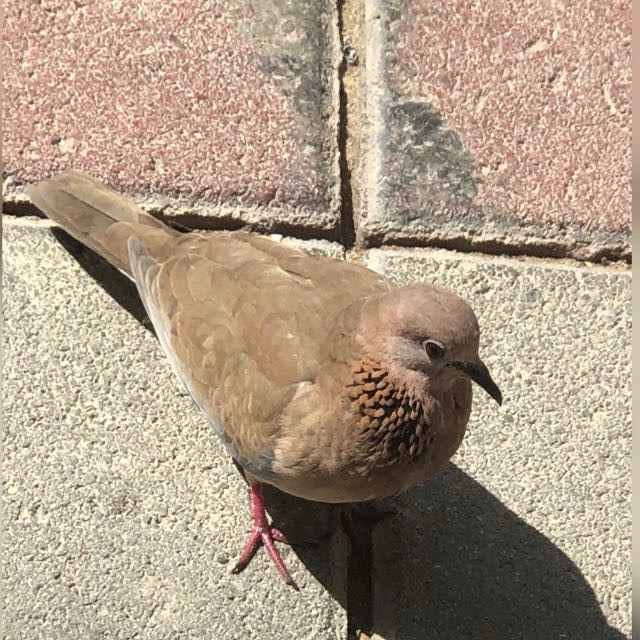
(A note on the image: I took the picture of the dove in the Middle East. Traditionally we portray the biblical dove as white, but it’s quite likely to have looked more like this one.)

The Walk of Faith

We are facing a rapidly changing world this year, and we have to make a choice: do we walk by faith, or do we walk by sight? The story of Abraham gives us the big picture, like an epic film, of the “friend of God” who  “believed God, and it was credited to him as righteousness” (Romans 4:3), but against that backdrop there a chapter in the story that gives us some particularly helpful detail about what it means to follow in Abraham’s footsteps. It is the section in the narrative that covers the parting of the ways between Abraham and Lot after he had left Egypt, and we find it in Genesis 13. Here is the full chapter, from the NIV, and a few thoughts on the main elements as I see them:

“ So Abram went up from Egypt to the Negev, with his wife and everything he had, and Lot went with him. Abram had become very wealthy in livestock and in silver and gold.

From the Negev he went from place to place until he came to Bethel, to the place between Bethel and Ai where his tent had been earlier and where he had first built an altar. There Abram called on the name of the Lord.

Now Lot, who was moving about with Abram, also had flocks and herds and tents. But the land could not support them while they stayed together, for their possessions were so great that they were not able to stay together. And quarreling arose between Abram’s herders and Lot’s. The Canaanites and Perizzites were also living in the land at that time.

So Abram said to Lot, “Let’s not have any quarreling between you and me, or between your herders and mine, for we are close relatives. Is not the whole land before you? Let’s part company. If you go to the left, I’ll go to the right; if you go to the right, I’ll go to the left.”

10 Lot looked around and saw that the whole plain of the Jordan toward Zoar was well watered, like the garden of the Lord, like the land of Egypt. (This was before the Lord destroyed Sodom and Gomorrah.) 11 So Lot chose for himself the whole plain of the Jordan and set out toward the east. The two men parted company: 12 Abram lived in the land of Canaan, while Lot lived among the cities of the plain and pitched his tents near Sodom. 13 Now the people of Sodom were wicked and were sinning greatly against the Lord.

14 The Lord said to Abram after Lot had parted from him, “Look around from where you are, to the north and south, to the east and west. 15 All the land that you see I will give to you and your offspring[a] forever. 16 I will make your offspring like the dust of the earth, so that if anyone could count the dust, then your offspring could be counted. 17 Go, walk through the length and breadth of the land, for I am giving it to you.”

18 So Abram went to live near the great trees of Mamre at Hebron, where he pitched his tents. There he built an altar to the Lord.”

Abraham had been in Egypt. The Egypt of Abraham’s time was a great kingdom, far more extensive than the Egypt of today, and its riches had to be a huge draw – just like today’s big cities – for anyone wandering in the desert. God had just told Abraham at the beginning of his journey to “go to a land that I will show you,” and who knows: maybe he thought, again like so many today, that his promised land in the time of famine lay within Egypt’s land of plenty. But whatever it was that drew him to Egypt and could have ended the marriage that was to produce the seed of his legacy, he returned to the place of his first altar to the Lord and “called on the name of the Lord.” He returned to the place of worship. There he made a pivotal choice:

 “Let’s not have any quarrelling between you and me, or between your herders and mine, for we are close relatives. Is not the whole land before you? Let’s part company. If you go to the left, I’ll go to the right; if you go to the right, I’ll go to the left.”

Abraham didn’t choose to stay within the borders of Canaan; he chose to stay in the place of peace. And in addition, he didn’t claim seniority as he would have been entitled to, but he gave the choice of territory to his nephew. At the very beginning of the Bible’s primary illustration of faith in action, the main protagonist anticipated the teachings of Christ and lay down his life for his friend. “You choose,” he said.

So “Lot looked around and saw that the whole plain of the Jordan toward Zoar was well watered… (and) chose for himself the whole plain of the Jordan and set out toward the east.”

The key words here are “Lot looked around and saw” and “chose for himself.” Lot walked by sight and acted out of self-interest to choose the land that was most appealing to his flesh. Not only was it “like the garden of the Lord,” it was “like the land of Egypt,” where he had just been. Abraham had left his past behind when he journeyed from Haran, and turned his back on the flesh when he watched Lot depart for the cities that were soon to come under God’s judgement. With his spirit set free Abraham faces the future, and it is only now that God begins to spell out the details of His astounding promise:

14 The Lord said to Abram after Lot had parted from him, “Look around from where you are, to the north and south, to the east and west. 15 All the land that you see I will give to you and your offspring[a] forever. 16 I will make your offspring like the dust of the earth, so that if anyone could count the dust, then your offspring could be counted.”

When we stand in the place of worship, when we “seek peace and pursue it,” when we act in love, when we part company with the flesh, and when we are free of our past, God will speak His into our lives the promises that will shape our destiny. But with the promise also comes an instruction:

17 Go, walk through the length and breadth of the land, for I am giving it to you.”

It wasn’t enough for Abraham to stay by the altar and thank God for His kind words: He had to physically walk through the extent of the land he had been given. How do we walk through the length and breadth of our own promised lands? Generally, it is by prayer. There are times when it is appropriate to physically “prayer walk” through territories that we believe God has promised us, but for these “prayer walks” to be fruitful they need to be as the Spirit has guided. And spiritual territories can definitely have geographical boundaries: before I came to Christ I published a local New Age magazine in the area of Stroud, UK. On the cover of the magazine was a map of the area I wanted to cover. Unknown to me, that map coincided exactly with the “territory” of a church in Stroud. They came across my magazine, and began to pray for me – which I only discovered when I met a member of that church years later. Within a year I had met Jesus.  Stroud Christian Fellowship actively walked through the length and breadth of their land, they found me on the way, and some of the fruit of their prayers is the fact that you are reading this some 40 years later.

Paul wrote: “For we through the Spirit eagerly wait for the hope of righteousness by faith” (Gal 5:5) Abraham’s faith was “accredited to him as righteousness.” He “waited for the city which has foundations, whose builder and maker is God.” (Heb 11:10) God will judge Sodom and Gomorrah today just as He did in the time of Abraham, and I personally believe that some of the natural disasters that we are seeing in increasing frequency today are the “beginning of signs” of that judgement. Are we walking by the Spirit in the land of the promises that God has given to us in our place of peace, love and worship, or are our eyes and our flesh drawn to the provision of Egypt that looks promising and safe, but will not last?

Lot finished his journey in a cave; Abraham’s journey continues in us today. As He did through Moses, the Holy Spirit says to us in 2025: “I have set before you life and death, blessings and curses. Now choose life” (Deut. 30:19)

Pure Joy

A few weeks ago a visiting speaker came to our church. Before she started speaking, she said that the Holy Spirit had highlighted a certain gentleman in the second row, three seats along … It was me. She brought a very encouraging word, with enough detail about myself (she had never seen me before) to confirm its accuracy, but the thrust of it was that ‘a door would be opening to me that would draw me closer to Him.’

Don’t we love it when someone brings an encouraging prophesy, underlined by another gift of the Spirit, the word of Knowledge, that speaks into our spiritual life and affirms us in our walk with God? I did not know what door she was referring to, but open doors often speak of opportunities. More time with Him and therefore less time at work? Ministry opportunities? I didn’t know and didn’t try and guess, but I certainly left church feeling good and played the recording of her word to me a few times over.

A couple of weeks after that we were praying for each other at School of Prophesy. One of the guys said that he could see our business going down a waterfall. There would be churning in the pool at the bottom; we would come out afterwards, but the watercourse would be different. That too was accurate: two days later our expected sales for this time of year plummeted, and there is definitely churning going on as I write. I have had to hold on  to the Lord as the water takes us on its course.

Then a few days ago the penny dropped: this was that. The open door that would draw me closer to Jesus is the waterfall that is rocking our business. When God speaks to us of blessing – and to be drawn closer to Him has to be a promise of blessing, because “at His right hand are pleasures for evermore” (Psalm 16:11) – our flesh tends to interpret that, in some way, in terms of advancement and comfort. (Well, mine does anyway…) But God has a different angle:

Consider it pure joy, my brothers and sisters, whenever you face trials of many kinds,  because you know that the testing of your faith produces perseverance.” (James 1: 2-4)

When the Holy Spirit spoke to me of that door that was going to open, did it ever occur to me that it was going to be an opportunity for my faith to be tested in order to produce perseverance? I think not. Did I imagine a trial, or a mountain top experience? Certainly the latter.  But God’s ways are not our ways. How different are the values of His Kingdom to those things our soulish minds hold dear. We value our comfort and advancement, our security and the approval of our peers; God values that we “act justly, … love faithfulness, and … walk humbly with your God.” (Micah 6:8) The Narrow Way has a totally different trajectory to the way of the world. God’s priority for us is that we walk with Him, and that we “Seek first the Kingdom of God.” And it is only by faith that we can take any steps with Him at all, so if trials are the best way to strengthen our faith and bring us into that place of blessing which is increased closeness to Him, there is a good chance that trials are what we are going to get.

My business is a tiny little pool: the world itself is going through a state of churning, and none of us know what the watercourse will look like when it comes out the other side. But one thing is true: we all need to let Jesus draw us closer to Him, because there is no other place that is more secure. One of the worship songs that came out of the charismatic movements starts “This is my desire, to worship you…” We love to lift our hearts and voices, and probably our hands, and tell the Lord how much we want to come close to Him. The Son shares our desire, and expresses it to the Father just before going to the cross: “Father, I desire that they also whom You gave Me may be with Me where I am, that they may behold My glory which You have given Me; for You loved Me before the foundation of the world.” (John17:24) We lift our voices to draw near to God; Jesus lifted His body onto the cross to have us close to Him. His Spirit in us will always be working towards that goal, because that is His desire. This was the joy set before Him.

Probably the best-known “resurrection psalm” is Psalm 16, where, by the Spirit,  Jesus expresses that joy through the words of David:

I have set the LORD always before me;
Because He is at my right hand I shall not be moved.

Therefore my heart is glad, and my glory rejoices;
My flesh also will rest in hope.

For You will not leave my soul in Sheol,
Nor will You allow Your Holy One to see corruption.

You will show me the path of life;
In Your presence is fullness of joy;
At Your right hand are pleasures forevermore
.
(Psalm 16: 8-11)

Jesus faced the greatest trial of all for the joy of seeing our faith bring us into the glory of unity with Him and the Father for ever. So when we are facing trials, let’s remember to “consider it pure joy” as Jesus did: our faith is being tested, to enable us to persevere in the things that really matter.