Category Archives: Living by Faith

Living by Faith is not just the calling of a few “full time” Christians who depend on God for their income: it is the substance of things hoped for, and without it one cannot please God. Only by faith do we have access into the grace in which we stand. And “just in case any should boast,” faith is itself a gift from God.

The Purpose of the Commandment

“And they overcame him by the blood of the Lamb and by the word of their testimony, and they did not love their lives to the death.” (Rev. 12:11)

The task of the Ephesians 4 ministries, of which the ministry of the prophet is one, is to “equip the saints for the work of ministry, for the edifying of the body of Christ, till we all come to the unity of the faith and of the knowledge of the Son of God, to a perfect man, to the measure of the stature of the fullness of Christ.” (Eph 4: 12-13) That is actually quite a big ask. It’s one thing to run around on the walls of the city waving flags that say “Thus saith the Lord,” but it is something else entirely to enable people to respond to what the Lord saith.

In his first epistle to Timothy, Paul wrote “Now the purpose of the commandment is love from a pure heart, from a good conscience, and from sincere faith.” (1 Tim 1: 5) This commandment was the “charge” that Paul had instructed Timothy to lay upon the elders of the church at Ephesus that they should not stray from the “sound doctrine” (1Tim 1:10; Titus 1:9) outlined in verse five above. The purpose of the commandment is love. If I have been out in my car and am driving home, the purpose of everything I do is to get me home. Turn here, brake there, indicate now, stop at these lights – many different actions, but all one purpose: to get me home. I can wave lots of flags – and there are plenty of them on this website – but the ultimate purpose of them all has to be to help and encourage the body of Christ to grow in love “to the measure of the stature of the fullness of Christ.”

So according to 1 Tim 1:5, love comes from three sources: a pure heart, a good conscience, and a sincere faith. Each of these sources is in itself God-given. To start with the first one, I know for a fact that my heart, outside of Christ, is far from pure. It is addled with sin and self-interest. But also “I know Him in whom I have believed” (2 Tim 1: 12), and His heart is not only pure, but it overflows with love for me; so much so that when I am walking in the knowledge (the experience, not just the theory) of that love I can love others with it. It’s only the Cross, and the blood that He shed for me there, that can bring me into the place of relationship with Him where His love is “poured into my heart by the Holy Spirit that is given to us.” To lead others into a love that make sense of all the flags I am waving, I need to lead them into an experience of the Holy Spirit that makes His love an empirical reality. Jesus said: “Freely you have received; freely give.” (Matt. 10:8) We cannot give what we haven’t received.

Love comes from a good conscience. Again in the first letter to Timothy (1 Tim 4:2) Paul writes of those who “speak lies with hypocrisy” whose “consciences are seared with a hot iron.” These are people whose consciences have become totally insensitive to conviction of sin, for whom truth and integrity have no meaning or value. A good conscience is the opposite: open to conviction by the Holy Spirit, a good conscience is the reflection of the heart of someone who runs to Jesus whenever sinful thoughts or actions creep into their lives, whose speech is always in sincerity and truth. 1 John 1:7 says “if we are living in the light, as God is in the light, then we have fellowship with each other, and the blood of Jesus, his Son, cleanses us from all sin.” It is the blood of Jesus that keeps us in the light, so we can love (“have fellowship with”) one another.

When Jesus first saw Nathaniel approaching, he said:  “Behold, an Israelite indeed, in whom is no deceit!” (John 1: 47) In the Spirit Jesus had already seen Nathaniel “under the fig tree” and knew his heart. The Father’s vision for His people was – and still is – that they would represent His ways on Earth, and although we can only guess at what Jesus meant, it would seem logical to assume that the transparency inherent in being without deceit, also translated as “guile,” is a prerequisite to effectively representing and demonstrating the love of God on Earth. The name Nathaniel means “Gift of God.” The transparency of a clear conscience can only be ours through the Cross, as a gift of God’s grace.

Finally, love comes from a sincere faith. Sincere means without hypocrisy; without pretence. Sincere faith is faith that is lived, not just faith that is theorised about.  I have written in The Mind of Christ about Peter stepping out of the boat, but another good example of faith at work can be found in Jeremiah 32 vs 1-23. Jeremiah has been imprisoned by King Zedekiah for prophesying God’s judgement on his sins and the sins of Judah. Jerusalem itself is already under siege: destruction and exile to Babylon are imminent. In this context Jeremiah receives a word from the Lord to buy his cousin’s field at Anathoth, which was a priests’ city about three miles from Jerusalem. He obeys the Lord, signs the deeds for the field in the presence of witnesses, weighs out good silver for it, then buries the deeds in a pottery jar to preserve it as a testimony to God’s faithfulness, in anticipation of the day when his prophesy of Jerusalem’s ultimate and glorious restoration would be fulfilled. Jeremiah didn’t just stand up in the storm of imprisonment and destruction and say “God is going to restore Jerusalem:” he demonstrated his faith that God would do as He said.

Those of us who teach and/or prophesy the word of God have a responsibility to demonstrate in our lives that we believe it. We have to be prepared to buy the field; to start walking impossible steps on the waves. We have to have a testimony: without one, our faith is just a theory.  Paul said to the Corinthians “Imitate me, as I imitate Christ.” (1 Cor 11:1). It’s not enough to say “Step out of the boat!” We have to step out of the boat ourselves and say “Follow me!” In doing so we are also demonstrating that we do not love our lives unto death, because if any sinking is going to happen, we will be the first under the water. However if we stay afloat, we are able to reach out a hand to others in the name of the One that we are standing next to and lift them out of the waves.

In “the Mind of Christ” I also wrote how the “effective working” in Ephesians 4: 16 – “the effective working by which every part does its share, (that) causes growth of the body for the edifying of itself in love” – exclusively means the use of supernatural power. The power that God makes available to us is analysed in detail for us in 1 Corinthians 12 and 14, and is commonly referred to as the Gifts of the Holy Spirit. The growth of the Body which fulfils the vision and purpose of Jesus, the head, happens when all of us are open to, and operate, in the gifts of the Holy Spirit.

If we want to know where to aim for, it’s helpful to remember what Jesus calls effective working. It is what He tells the disciples to do with what they have freely received: “Heal the sick, cleanse the lepers, raise the dead, cast out demons.” (Matthew 10:8) The gifts of the Spirit that He is telling them to use are italicized below: “But the manifestation of the Spirit is given to each one for the profit of all: for to one is given the word of wisdom through the Spirit, to another the word of knowledge through the same Spirit to another faith by the same Spirit, to another gifts of healings by the same Spirit to another the working of miracles, to another prophecy, to another discerning of spirits, to another different kinds of tongues, to another the interpretation of tongues But one and the same Spirit works all these things, distributing to each one individually as He wills.” (1 Cor 12: 7-11) As Paul writes to the Philippians, we may not have already attained, but we press on towards the goal. John Wimber, an icon in the ministry of healing, said that he must have prayed for a thousand people before the first one was actually healed…

Confidence to operate in the supernatural is best achieved in small groups, down to twos and threes. One of our School of Prophesy members suggests that those who are not confident in using the gifts connect with those who are, and who can help that gift to grow. She says “Growth in the use of gifts helps us to hear from the Lord – we connect in like interconnecting wires attached to the main body.” This seems entirely scriptural to me, as it is a practical application of the principle of discipleship and will contribute to “the effective working by which every part does its share.”

Revelation 12:11 says that the saints overcame the enemy “by the blood of the Lamb, and by the word of their testimony; and they loved not their lives unto the death.” We find in this verse the three foundations of sound doctrine that are expressed in I Tim 5: our conscience is cleansed by the blood of the Lamb so that we are transparent to the Truth; the word of our testimony tells of those acts of faith in the name of Jesus where we have walked in the supernatural ourselves, and we love from a pure heart that is void of self-interest. If we want to help others to overcome, we need to be doing it ourselves.
Faith: The Mind of Christ

“For who has known the mind of the Lord that he may instruct Him? But we have the mind of Christ.” (1 Cor 2:16)

Jesus wants His church to be built through works of “faith expressed through love.” (Gal 5:6) James tells us that “faith by itself, if it does not have works, is dead.” And since Hebrews 11:16 tells us that “without faith it is impossible to please God,” we are left with the inescapable conclusion that there is a call on the life of every Christian to demonstrate the love of God through acts of faith. But when storms rock our boat, faith and love can be the last things on our minds: all we want to do is cling, shivering, to the gunwales, like the disciples in the tempest on the Sea of Galilee when they saw Jesus walking towards them on the water. So while the storm is crashing all around we have a choice, as they did: we can either grip the side of the boat in desperation and wonder if Jesus is going to get to us before it sinks, or we can step out of it at His word and walk the impossible in His direction.

Paul writesthe whole body, joined and knit together by what every joint supplies, according to the effective working by which every part does its share, causes growth of the body for the edifying of itself in love.” (Eph 4:16). To put this a bit more simply, the whole of the body of Christ  grows when we all build each other up in love by playing our different parts effectively. The problem, as I have already said, is that we don’t usually feel very effective when it seems like our ship is about to sink. But we can easily miss an important detail of this verse. The word  translated as “effective” is energeia. Energia is a “power word”: it is only used in the New Testament for supernatural power. In other words, the effective working by which every part does its share”- the acts of faith expressed through love by which we build each other up and cause the Body of Christ to grow – have to be supernatural.

Faith is only a theory unless we stand on it. And standing on our faith is like walking on the water: it involves trusting in the supernatural.  We don’t actually live out our Christian lives on the boat; we are only “effective” on the water; either walking on it towards Jesus, or, like Peter, being pulled out of the waves and into His presence. And as Peter found out, even if we do momentarily sink it’s better to be on the water than in the boat.

Great Expectations

Faith isn’t just about trusting in the supernatural; it’s about expecting it. I did a lot of hitch-hiking in the 1970’s, both in the UK where I live, and further afield including parts of Africa where the roads were very different to what they are today. I would set out with a destination in mind, and I knew I would get there eventually. I expected nothing else. Faith is a bit like that: we know where we are going, it’s too far for us to walk, we don’t have any other means to make the trip, so we wait until God shows up and takes us there by a power that is not our own. We expect nothing else.

What expectations do we bring to our journey? The 1949 revival in the Hebrides came about when God answered the persistent prayers of two elderly sisters who drew a circle on the floor and said to the Lord that they were going to kneel there until He poured out His Spirit on their thirsty land. They waited by the road until they got their lift. We have a church intern living with us at the moment. If I say we are going to have some time together at 9.00 pm, there is a knock on my study door at 9.00 pm and a voice saying “Bob, are you ready? It’s nine o’clock!” And if I’m not quite ready I stop what I am doing because I said I would be. Jesus said “knock, and the door will be opened to you.” What has God said He would do, for us and through us? Do we knock on His door and wait until He comes out because He said He would? Because as Smith Wigglesworth famously said: “God is more eager to answer than we are to ask.”

The Heart of the Matter

We talk sometimes about doing something because it is “in our heart,” or conversely not carrying something out because it “isn’t in our heart to do it.” There are many obstacles on the path of faith, but one of them is surely that we have certain promises from God in our heads, but we don’t have them in our hearts. Romans 10: 9 says “if you confess with your mouth the Lord Jesus and believe in your heart that God has raised Him from the dead, you will be saved.” Faith, whether for salvation or for seeing the miracle working power of God, is a matter of the heart, not the head. Mark 11:23 and Matthew 21:21 make this clear: Jesus tells us that we will see the mountains moved if we believe “and do not doubt in our hearts” that God will do what only He can do.

For those of us who sometimes find it difficult to make that shift from head theory to heart faith, help is at hand. Paul wrote: “For who has known the mind of the Lord that he may instruct Him? But we have the mind of Christ.” (1 Cor 2:16). The Greek word nous, translated as mind, means all the faculties of perceiving and understanding as well as those of feeling, judging and determining. When we were born again, God didn’t just give us a new heart, but He also gave us His nous. Jesus didn’t doubt in His heart that He had authority over the waves: for a start, they belonged to Him. Our human minds will never grasp the dominion that we have in the Spirit, in Christ; but we don’t need them to because our Father has given His children the mind of His son. It is a gift to all of us, if we will receive it. It is only by the mind of Christ that we can receive the mustard seed “faith of God” (Mark 11:23) that moves the mountain. If we can take hold of this gift we will really get it into our hearts that nothing is impossible with God. Even walking on water.

How do we do that? We go and knock on His door, ask Him for it, and wait. But I’ve got to stop writing now: it’s nearly nine o’clock.

Walking on the Water

This is the full text of what I felt the Lord gave me for this morning’s meeting (Sunday 18th Oct):

We have just sung “My Lighthouse.” Jesus was the disciples’ peace when they were in a boat on the troubled sea of Galilee. But to find His peace, Peter stepped out of the boat and began to walk towards Him. He put his foot on the waves. God wants to teach us all to put our foot on the waves, because in this troubled sea it will actually be safer than trying to stay in the boat. The Holy Spirit is teaching us all to walk on water because the ship of the world system is sinking. We have his power and his authority to do so, and he gives us the faith by His Spirit to trust that who He is in us is greater than he who is in the world” (1 John 4:4). He says to us this morning: “Learn to listen to my voice so you can hear me calling you to come, step out of the boat and onto the waves; because that is your place of peace, not inside the boat. Do not be afraid, because I am with you, and I will not ask you to step further than I know you are able. Seek My presence in all that you do and be attentive to My voice, because I am going to start giving you opportunities to do by My power what you cannot do in your own strength. The storm is rising and the ship of the world’s system is going to sink, and that is why I am training you now to walk on the water.”

Bob.

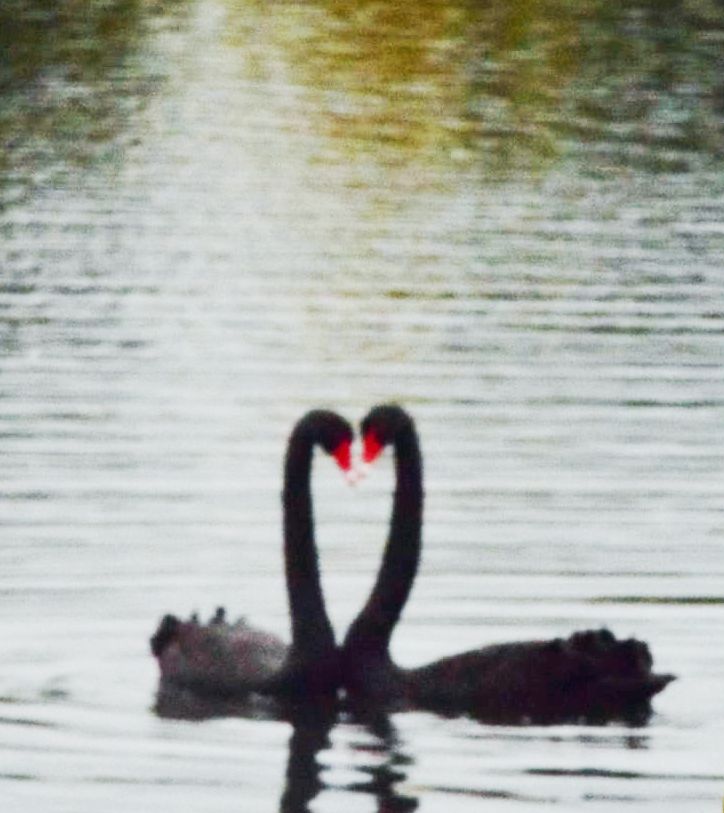
Jake also had a word this morning about being on the water. Although the picture is far from stormy, it echoes the theme of God “calling us out onto the water” (as we sing in the song “oceans”) to do by His spirit what we cannot do on our own. While there is a strong sense in what I felt God gave me that He is calling us deeper into the supernatural for our own survival, the burden of Jake’s word is that we need the supernatural power of the Holy Spirit to effectively minister God’s love to others. The two go together: we cannot minister to those who are caught in the storm if we are stuck in our own boats ourselves. We are the body of Christ: we need to be on the water, calling “Come!” in His name to the lost and the frightened. Here is Jake’s word, and the picture that goes with it that he took at Trentham Gardens.

“Just like these swans, the Lord is saying that He wants us to be in sync with Him. Only through being in sync with the Spirit can we reveal God’s heart, which is Love, to those around us.”

“You call me out upon the waters,
The great unknown, where feet may fail…” (From “Oceans, by Darlen Zscheck)

Whatever the storm may look like, the place of peace is on the water.

The Plough and the Island

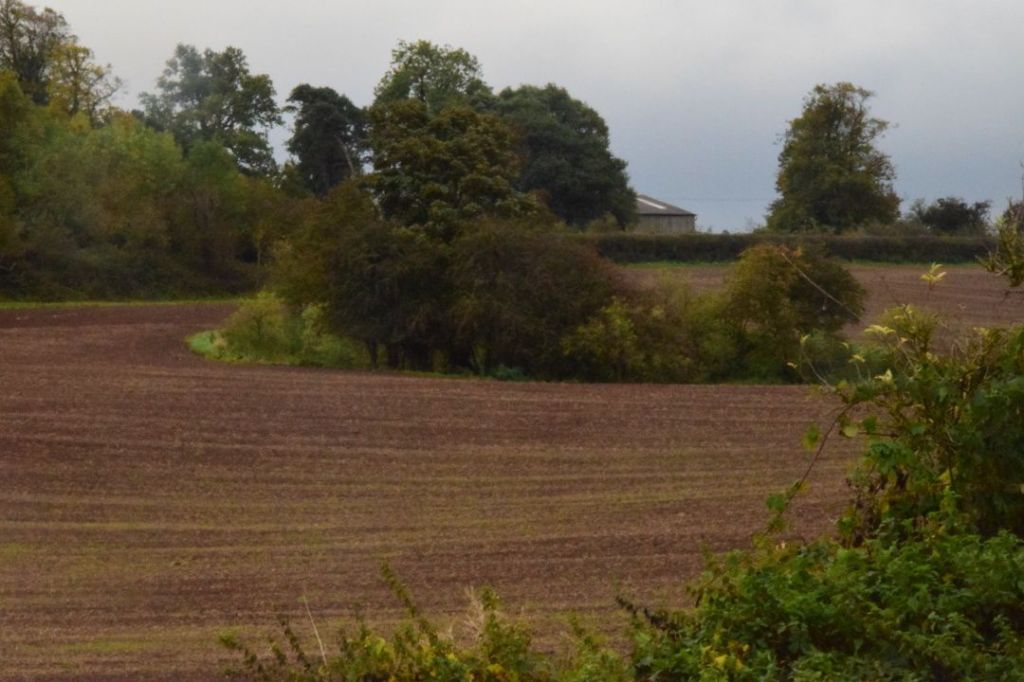
An Island in the ploughing season.

“I am ploughing the soil, cutting off old and unfruitful roots and connections. My church is to be an island in the ploughing season. While turmoil and disruption is going on around My Church, My church will be stable and show My glory when churning and instablity is happening all round. I want My church to stand out be different, not criticizing one another, not criticizing leaders of nations. All this will dim the light of my glory. Instead I want you to be praying for the leaders of the world and publicly praising them for what I am doing through them. For I Have set them in place for such a time as this. For if you do this your ears will be open to My Spirit and to what I am doing. My Glory will shine out to those around you and beyond if you dare to be different and do not conform to what is going on around you.”

Jake saw this “island” in the ploughed field while out on a walk. The Lord spoke to him through it, and he took the photo above. The picture of the church as a place of strength and refuge in the midst of desolation strongly echoes the “tall building” message given through two different people. 2 Corinthians 13:1 tells us that “A matter must be established by the testimony of two or three witnesses.” Here we have one message being confirmed by three witnesses. In other words it’s been underlined three times: we must not ignore what the Holy Spirit is saying to the Church.

“Do not conform to the pattern of this world, but be transformed by the renewing of your mind. Then you will be able to test and approve what God’s will is—his good, pleasing and perfect will” (Romans 12:2)

Following the Light

Adele brought this encouragement for the church on Sunday:

“We have to stand up and say that God is working in our lives; that we can trust our loving God and that He will get us through all the difficult times we have had to go through. He is our light through the darkness.”

While we were singing “Cornerstone,” just before Graham shared this, I had the following from the Lord, which confirms what Adele shared:

“You see clouds in the sky, but I am the light you see them by. You say the clouds block out the sun, but they will bring the rain that this dry land needs.”

Again and again, God is encouraging the church not to look down, but to look up. 1 Thessalonians 5 vs 4-5 says this:

“You are all sons of light and sons of the day. We are not of the night nor of darkness. Therefore let us not sleep, as others do, but let us watch and be sober.”

As the darkness around us thickens, the light will get stronger. The message the Holy Spirit gave to two people through “The Tall Building” encourages us to look out of the window and be aware of what is doing; in other words to “watch and be sober.” If you haven’t read this, I encourage you to do so, particularly as Wildwood Church itself has been spoken of prophetically as a tall building that is a light on a hill.

Like the Pillar of Fire that led the Israelites through the desert, the Light is leading us to new places. As children of Light we need to be alert to what He is doing. I have heard it said that the journey from Egypt was only a twelve day trek: it was the Israelites’ refusal to accept God’s leading that cost them forty years and a lost generation. Let us take this opportunity to trust and respond to the Holy Spirit, who is the Pillar of Fire that is leading us now just as He was back then, and let’s take hold of the Promised Land ourselves: we don’t want the Lord to have to wait another forty years for a church that will follow Him.

Because He will do: He has all the time in the world. And I don’t know about you, but I really don’t want to spend much longer in this wilderness. The way out of the darkness is to follow the Light as closely as possible.

The Tall Building

We sit up and take notice when the unexpected happens. When the same unexpected thing happens twice we should really be doing something about it. God has recently spoken a very similar word through two people, both in unexpected ways, within 24 hours of each other.

One person in our group (Anne) who doesn’t normally receive prophetic dreams, had the following prophetic dream. She was in a tall well-lit building on a hill, with other people. There were different things going on in different parts of the building. Those that she was with were speaking negative words: not a big argument, but bickering and negative small talk about things that were of no importance. Anne decided to leave the building and go for a walk down the hill. As she walked she saw a grey mass at the bottom, that looked like a tidal wave. It was approaching her. As it got nearer she saw that it was not a tidal wave of water, but more like a mudslide. She turned round and started running back towards the building, but the mudslide caught up with her. Nevertheless she managed to keep her head above the water and continue to breathe, and then she was on dry ground because the mudslide could go no further up the hill. She went back inside the building, where people were still bickering and speaking negative words about inconsequential matters. Anne cried out to them: “Stop! You shouldn’t be speaking like this! Just look outside the window at what is going on!“

David, who “never” get spiritual pictures, received the following picture in the spirit: he was seeing an empty expanse of featureless grey, that was moving slightly. It made him think of ashes. He described the movement as the sort of spent activity that you see on a sheet of paper that has burnt to ash but is still moving slightly with the heat. Compare that to the grey expanse of Anne’s mudslide, as it would be after it had stopped advancing. He looked out over this grey expanse of devastation, and a tall building emerged out of it, with lots of windows, and full of light.

The tall building and the tide of destruction, whether it was ashes or mud, clearly represented the same thing: the building was the church, and the devastation represented what is going on in the world. We asked the Lord for clarification of this message in our school of prophecy, and felt that He showed a “before and after” interpretation. In Anne’s dream we see a church where members are looking in at themselves in a negative and worldly fashion, and are not aware and not focused on what God may be doing through the destruction and devastation that is happening in the world. In David’s picture the grey tide had engulfed everything, including the building in Anne’s dream, but then a new building, tall and strong, arose out of it. This is the end time church, strong in the Lord and victorious. Those who are in this building are those who have looked outside themselves and have seen what God is doing; have left the negatives and self-centred bickering behind just as Anne left the building in her dream, and have kept their focus on the Lord and His kingdom purposes. They are the ones who survived the grey sea and who are a light to the nations in the last days.

Finally, it would appear that we aren’t the only ones that the Lord is speaking to on this theme. I received this yesterday:

My Yoke is Easy: the Stairs and the Escalator

I had a picture of a staircase with someone with a very heavy backpack on that was really burdening them and weighing them down. Each step was getting harder and harder to climb. They had nearly reach the top, when they had to go back to the bottom. They were then complaining, saying “Why Lord have  I  got to do it again? You know how hard it’s been for me, how long it’s taken me and how much I’m aching in pain carrying this load up the stairs.”

God gently answered, “I know”.  He pointed to a button at the bottom of the stairs and said, “My child you have carried this burden under your own steam and on your own, now press that button and watch what happens.” The person pressed the button and the stairs weren’t actually stairs, they were an escalator. The Lord then said: “In my power  you can take of the back pack and place it on the escalator beside you, and ascend with ease in my power. For my yoke is easy and my burden is light.”

Jacob Dominy

Jake sent me this picture this morning, but he hadn’t been shown who it was for. I actually thank there are three levels to this. On one level, it is a specific word for certain individuals, – whether you’re at Wildwood church or anywhere else in the world! – and God is speaking to you about a specific situation that at the moment looms large in your life. Receive the word, put down that backpack gratefully, press that button in prayer and feel the escalator start moving. You won’t realise it is happening until you notice that something that you were facing has started to slip behind you, because God has dealt with it. That’s your sign.

Also I think the Holy Spirit has just shown me a detail for someone (a particular person, not everyone) who is reading this, about the backpack: inside it are three fairly large wooden blocks, like the old-fashioned wooden building bricks that were made for small children maybe 40 or 50 years ago. You are hoping to start building something, and you’ve been carrying them for a long time. The Lord says to you “Don’t just put the pack down, but give me the contents as well and let me do the building.” But as I said, this is a word of knowledge for an individual: otherwise the general picture of the heavy weight applies.

The second level, I think, is a much more general teaching point. I am sure most of us find ourselves walking up that escalator at different times. In fact I’ve just had a phone call since writing that last sentence which this picture speaks into. We face situations every day and often think that we’re just walking up stairs, often steep ones, often carrying a heavy load as well. We just say to ourselves, “That’s life!” But it isn’t: the reality is the escalator, not the stairs. The reality is the spiritual dimension. The reality is the power that raised Jesus from the dead who dwells within us. In Him we live and move and have our being. And the button of transformation isn’t miles away at the top or at the bottom of the stairs; it’s right where we are, on our hearts. How often do we forget to press it, and pray?

The final point comes from a devotional I read yesterday on Jacob’s Ladder. Just as the angels ascended and descended Jacob’s ladder, the Lord want us to go up and down the ladder ourselves. We go up the escalator to receive from Heaven, and we come back down to bring to Earth what we have received, so that God’s will is done on Earth as it is in Heaven. If we can take our simple, childish wooden building blocks into heavenly places and leave them there with the Lord, He will transform them into Heaven’s resources to bring back down to Earth.

I’m going to finish by repeating Jake’s picture, as I don’t want what I have written to detract from the original word:

I had a picture of a staircase with someone with a very heavy backpack on that was really burdening them and weighing them down. Each step was getting harder and harder to climb. They had nearly reach the top, when they had to go back to the bottom. They were then complaining, saying “Why Lord have  I  got to do it again? You know how hard it’s been for me, how long it’s taken me and how much I’m aching in pain carrying this load up the stairs.”

God gently answered, “I know”.  He pointed to a button at the bottom of the stairs and said, “My child you have carried this burden under your own steam and on your own, now press that button and watch what happens.” The person pressed the button and the stairs weren’t actually stairs, they were an escalator. The Lord then said: “In my power  you can take of the back pack and place it on the escalator beside you, and ascend with ease in my power. For my yoke is easy and my burden is light.”

Faith: the Frame.

By faith we understand that the worlds were framed by the word of God, so that the things which are seen were not made of things which are visible. (Heb 11:3)

This morning I saw a hearse coming towards me on the road with a long queue of cars behind it. I was glad I was driving in the opposite direction. Then, very briefly, I saw the number-pate: on it were my initials. My first thought – because the flesh tends to butt in before the spirit – was: “That’s you, Bob! Could that be an omen?” But then the Spirit spoke to me with the truth: “You are already dead, Bob. You were crucified with Christ. It is not you who live, but Christ who lives in you!” So by the time the line of cars had passed, I was thinking: “Halleluia! I’m dead to my flesh, and alive in Christ!” This is what the Word of God says; it’s what my experience of the Holy Spirit confirms every day; and it’s what my heart believes even if my head is assailed by doubts. It is the confession of my faith. Faith is the frame that holds the entire bicycle together.

By faith we understand… that the things which are seen were not made of things which are visible. Hebrews 11:1 tell us “Now faith is the substance of things hoped for, the evidence of things not seen.” Faith is a substance. Whether we believe this or not is our choice. But if we can allow the substance of faith to become a reality in our hearts we can look into it and see that which our brains cannot fathom. “The Just shall live by faith” was the revelation given to Martin Luther and is the central plank of the Protestant reformation. The scripture occurs three times in the New Testament (Romans 1:17,Galatians 3:11,Hebrews 10:38), and these in turn refer back to Habakkuk 2: 4: “Behold the proud, His soul is not upright in him; But the just shall live by his faith.” So what do we see when we look into the substance of faith?

Faith is so much an idea that our minds can grasp, as the very substance of a dimension that our spirits walk in. If I go out into my garden I walk on grass. If my spirit enters the Heavenlies I walk in faith.  It is where Truth is defined by the Word of God and not by the word of science, and where Life is defined not by the ageing and wearing out of the body, but by its resurrection. In this dimension, we see the rule of Heaven established on Earth:

“Behold, a king will reign in righteousness,
And princes will rule with justice.
A man will be as a hiding place from the wind,
And a cover from the tempest,
As rivers of water in a dry place,
As the shadow of a great rock in a weary land.
The eyes of those who see will not be dim,
And the ears of those who hear will listen.
Also the heart of the rash will understand knowledge,
And the tongue of the stammerers will be ready to speak plainly.

(Isaiah 32: 1-4)

We see the King of righteousness Himself

The Spirit of the LORD shall rest upon Him,
The Spirit of wisdom and understanding,
The Spirit of counsel and might,
The Spirit of knowledge and of the fear of the LORD.
His delight is in the fear of the LORD,
And He shall not judge by the sight of His eyes,
Nor decide by the hearing of His ears;
But with righteousness He shall judge the poor,
And decide with equity for the meek of the earth;
He shall strike the earth with the rod of His mouth,
And with the breath of His lips He shall slay the wicked.
Righteousness shall be the belt of His loins,
And faithfulness the belt of His waist.
(Isaiah 11: 2-5)

And in this dimension of faith, as “the earnest expectation of the creation eagerly waits for the revealing of the sons of God.” (Romans 8:19), we see the redeemed, sin-free world that creation is earnestly expecting:

The wolf also shall dwell with the lamb,
The leopard shall lie down with the young goat,
The calf and the young lion and the fatling together;
And a little child shall lead them.

The cow and the bear shall graze;
Their young ones shall lie down together;
And the lion shall eat straw like the ox.

The nursing child shall play by the cobra’s hole,
And the weaned child shall put his hand in the viper’s den.

They shall not hurt nor destroy in all My holy mountain,
For the earth shall be full of the knowledge of the LORD
As the waters cover the sea.
  (Isaiah 11: 6-9)

I make no apology for quoting these scriptures at length, as I believe they are among the most beautiful verses in the entire Bible. They describe the society and the landscape of the Mountain of God where our bike ride is taking us. And this place is real: its substance is faith. If we can allow our spirits to walk there we will find that our own judgements won’t be “by the sight of our eyes or by the hearing of our ears” either, but they will come to us by the spirit of the King of the Mountain who dwells within us.

Free of the curse of sin, beyond the reach of the devil, and untrammelled by the limitations of the world and the flesh, the substance of faith determines the abundance of God’s supply, whether this is of provision, healing, spiritual gifts or any other blessing. Ephesians 1:3 says “Blessed be the God and Father of our Lord Jesus Christ, who has blessed us with every spiritual blessing in the heavenly places in Christ.” Every spiritual blessing has already been given to us in heavenly places. They are a reality. Their substance is faith. When we read about them in the Word of God we are reading the Maker’s handbook on all the resources that we have in our personal cupboards of His provision in Heavenly Places.

Jesus tells us “ whatever things you ask when you pray, believe that you receive them, and you will have them.(Mark 11:24) Our English word “receive” has a fairly passive connotation: there is a sense of holding out one’s hands for something to be placed into them. The Greek word, lambanō, that is used here, is far more active. Here are the primary definitions. They are all involve actively taking hold of rather than passively receiving:

  1. to take with the hand, lay hold of, any person or thing in order to use it
    1. to take up a thing to be carried
    1. to take upon one’s self
  2. to take in order to carry away
    1. without the notion of violence, i,e to remove, take away
  3. to take what is one’s own, to take to one’s self, to make one’s own
    1. to claim, procure, for one’s self

Jesus is telling us to take hold of those things that we ask for, believing that they already exist – which they do, made of the substance of faith. He is telling us to reach into our heavenly “provisions cupboard” and take hold of that spiritual blessing which the Father has provided. I remember a healing meeting with Ian Andrews in the late 1980s. If I remember correctly, he said that God had showed him a warehouse full of all the body parts that exist, and when he prayed for healing he just reached into the warehouse and took hold of a new part to replace the one that was malfunctioning. He believed he received, and he had what he prayed for. On Earth as it is in Heaven: what was made of the substance of faith in the heavenly realms became flesh and blood on Earth.

Of course, that is easier to write than to do. If you’re anything like me, most of us blunder around and get hold of something occasionally; but as John Wimber discovered the more we blunder the more chance we have of actually taking hold of what God has provided. I’m sure Ian Andrews did  a lot of blundering, and probably still does some! And of course we are always in a battle: God may have provided; we might be reaching out into the right place, but the devil is standing in front of the cupboard. Sometimes we have to fight for what we’re reaching for, and keep praying until we know in the Spirit that the battle is won.  Proverbs 23: 12 says “Apply your heart to instruction, And your ears to words of knowledge.”  The word of knowledge is really helpful in enabling us to take hold of the substance of faith, so if you are praying for people ask the Holy Spirit for that gift – and take hold of it! I have seen a small number of miraculous healings when I have prayed for people, including a broken toe being instantly mended and a deaf ear being opened; and they have always followed a word of knowledge.

This is one of my pet topics, and I could keep writing – but you might not keep reading. The frame of faith touches every part of the bike – the wheels, the handlebars, the brakes, the saddle, the pedals. If we can understand that faith is a substance and that we do not have to ask God for what He has already given but learn to take hold of it instead of just holding out our hands; and if we can really believe in our hearts that the Word of God is all true and is describing a dimension that our spirits have access to, then I believe we will progress further and faster in our discipleship as we walk – or cycle – after the spirit and not after the flesh.

Bob Hext Sept 2020

Hold on at all times: the handlebars

“Giving all diligence, add to your faith virtue, to virtue knowledge, to knowledge self-control, to self-control perseverance, to perseverance godliness, to godliness brotherly kindness, and to brotherly kindness love.” (2 Peter 1: 5-7)

We have all seen cyclists – usually young men or boys – cycle along without holding the handlebars. I remember when I was a boy and first learnt the skill. I also remember that, as a rule, it was only a skill I employed when I knew other people were watching…  But there are two circumstances that every cyclist riding “no hands” has in common: this particular skill can only be accomplished on as smooth terrain, generally a road or another paved surface; and it is not something that can realistically be attempted when cycling uphill. As Christians, we have left the paved surface of the road, and are heading up the mountain on a dirt track. If there is one thing we need to do, it is to keep hold of the handlebars.

There are many exhortations in the New Testament, whether from Jesus, Paul or any of the other writers, to persevere in our faith. Perhaps the most frequently quoted is from Pauls’ letter to the Philippians:

“Brethren, I do not count myself to have apprehended; but one thing I do, forgetting those things which are behind and reaching forward to those things which are ahead, I press toward the goal for the prize of the upward call of God in Christ Jesus.” (Phil 3: 13-14)

The word translated as “diligence” in the introductory passage is spoude, which means earnestness, eagerness, being full-on, not just in the desire to accomplish something but in the energy and persistence applied to carrying it out. Elsewhere Peter writes be diligent to be found by Him in peace, without spot and blameless.” (2 Pe 3:14) Paul exhorts Timothy to be diligent in pursuing godliness “so that (his) progress may be seen by all,” (1 Tim 4:15), and to the Galatians he writes “And let us not grow weary of doing good, for in due season we will reap, if we do not give up.” (Gal 6:9). References to being committed and wholehearted are set like precious stones throughout Proverbs. The rewards held out by the Lord to the seven churches in the Book of Revelation are all for those who “endure.” And these references only scratch the surface of what is a very deep-veined theme running through the whole of Scripture. Diligence is the name written on our handlebars: if we don’t hold on, we will fall off.

At this point there might appear to be a tension between the fundamental truth that we are saved by Grace (the Cross of Christ) and not by works (staying on the bike) However there isn’t one. The bike itself is a gift from God. The desire to ride it and to stay on is a gift from God, just as faith itself is a gift from God (Eph. 2:8; 2 Peter 1:1). And Psalm 37:24 tells us: “Though he fall, he shall not be utterly cast down: for the Lord upholds him with His hand,” so even our ability to stay on the bike is by the Grace of God. The very words that are given to us by the Holy Spirit encouraging us to be diligent and to endure also give us the desire and the ability to carry them out. I think it can reasonably be said that those who to fall away are the ones who never really got on the bike in the first place – who confessed with their mouths that Jesus Christ is Lord, but never really believed it in their hearts. (Romans 10: 9) So if you, like me, are picking your bike off the ground and getting on again for the fiftieth time this week, don’t beat yourself up over it and call yourself a failure. The good news is, you never were a success in the first place! All of that glory belongs to the Lord. The fact that you are getting on your bike again is proof that you are, by the grace of God, being diligent.

So, holding onto the handlebars, we press on towards the goal of the upward call of God in Christ Jesus. We carry on pedalling along the mountain track. Sometimes there are downhill stretches and easier sections, but the call is upward and the overall direction of the track is always to take us ultimately “further up and further in,” as Aslan says in the final book of the Chronicles of Narnia. And this leads us to the other essential function of the handelbars: they are what gives the bike direction. We don’t just hold on “with all diligence” in order to stay on the bike; we hold on to stay on the path. And we always look forward: looking back brings disaster. With our eyes fixed on Jesus, the Author and Finisher of our faith, we steer along His track to  the top of the mountain.

Being born again isn’t about boarding a train in this life and stepping onto Heaven’s platform in the next one: it’s about the slow process of growing to maturity in Christ as we consistently reveal to the watching world that He is the one who is keeping us on track. The higher up and further in we go, the closer to Him we get and the more like Him we become, so that “Many peoples will come and say, “Come, let us go up to the mountain of the LORD, to the temple of the God of Jacob. He will teach us his ways, so that we may walk in his paths.” (Isaiah 2:3)

The Mountain of God is the Mountain of His presence, where Love rules and His Glory dwells. It’s where He met with Moses and gave the Old Covenant to His people, and it’s where He meets with us to lead us forward by His Spirit today. There is one simple test that will tell us if we are on our bikes or completely off track, and it’s the question I referred to in the chapter on the pedals: are we learning to love? Jesus has individualised lessons for each one of us, and they will all be somewhere along the route that Peter maps out in the scripture that opens this section. But learn them we must if we are to progress up the mountain, because

They shall not hurt nor destroy in all my holy mountain: for the earth shall be full of the knowledge of the LORD, as the waters cover the sea. (Isaiah 11:9)

This is where our direction must be set. We can keep moving, with both wheels on the ground, our feet on the pedals and our hands close to the brakes, gripping the handlebars tightly. But whenever we hurt or destroy we’ve lost our way.

Free Downloads

Apart from my books “Wheat in the Winepress,” and “Two Seconds to Midnight,” everything on this site is free. There are no “donate” buttons anywhere. Thirty-odd years ago I asked the Lord to give me a business that would support my ministry calling, and He has done just that. I would of course love you to buy my books, not because I want your money, but because I think they will bless and encourage you and I believe they are words for these times.

So if you do download anything from here, there will be no follow-up, no pestering, nothing. Just, hopefully, a bit of blessing for you. I’ll be adding to the titles every so often. Just click on the title below and it will take you to another page: click again on the link you find there and it will take you to the pdf for you to download. (There’s probably a better way of doing this, but I don’t know what it is!)

Serving to Soaring (12 pages)

A Beginner’s Guide to Prophesy (3 Pages)

The Prophetic Ministry

Blowing the Trumpet

The Bike Ride: Pictures of Discipleship

Spirit Without Limit

Seated in Heavenly Places

Is everything just chance, or is there a plan?

The Pillars of Evangelism