Tag Archives: Love one another

Without love, we are nothing. We are on this earth to learn how to love. Jesus showed us the way.

The Joy Set Before Us

Last week Anne and I went to the South of England with our friend Michael for a short holiday. Like me, Michael enjoys watching and photographing birds. The purpose of the holiday was for all of us to have a break in some beautiful countryside, for Anne to see some of the rare butterflies that can be found in certain places down there, and for Michael and me to do some birding in the bird “hotspots“ that are unique to that part of the UK. We decided to spend the last day of the holiday with Anne‘s sister and her family, who live down there, and with them to visit a large area call Knepp Estate, which has become a major centre (not only in the UK but internationally) for rewilding – the process of allowing an area of land to be restored to its original ecosystem and habitat.

Knepp was beautiful. It is a special experience to walk through a large area of land that has been rescued from the ravages of artificial over-cultivation and allowed to become at least something closer to what nature, and therefore God, intended. There are a number of paths marked out on the estate: one of them went down to the lake, another went through some woodland to an observation point, and yet others went round to different areas. We chose the yellow path, (marked out by yellow paint at every junction,) which was the one to the observation point, because that was the one the family wanted. I would’ve preferred to go to the lake because it has a bird hide and looked more interesting from a birding point of view, (that was the red path) but yellow it was. Initially.

However, after about quarter of an hour, Michael and I were getting increasingly frustrated by the fact that there was very little to point our cameras at on the yellow path, and the walk was just taking us through more of the same scenery, beautiful though it was. So at my instigation we decided to separate from the family, head for the bird hide on the red path, and to meet up with the others at the café at lunchtime.

So off we went with our cameras and their big long lenses, like two little boys running out to play. Unfortunately, by the time we had retraced our steps to the car park we realised that we would not have time to walk down the red route to the lake, let alone spend some time in the hide down there, and still be back at the restaurant in time to meet the family for lunch. So we decided to just stay in the restaurant, put down our cameras, sit and have a coffee, and wait for the family to arrive.

It wasn’t long before they came back, smiling and chatting about their lovely walk. My niece, who loves the Lord, told me all about the observation point, which is set quite high in a big tree, and which you reach by a series of steps up through the branches. From the observation point you have a panoramic view over a large area of the estate. As we heard all about it, I realised what a mistake I had made in leading Michael along the red path: not only had we failed dismally in any birding objectives, but we had missed out on one of the highlights of the Knepp experience, which is to climb up to that observation platform and see the panorama of nature spread out before us.

So what is this story about? I had a choice. It was to walk with my family on the yellow path, or to go and take pictures for myself on the red path. Although I covered the decision with the justification that Michael would also prefer the red path, really it was about me and what I wanted. Hebrews 12 1-2 says this: “And let us run with perseverance the race marked out for us, fixing our eyes on Jesus, the pioneer and perfecter of faith. For the joy set before him he endured the cross, scorning its shame, and sat down at the right hand of the throne of God.”

God has put us into His family, and Jesus has told us very clearly that His desire is for us to love one another. If our eyes are fixed on Him we will have His desire in our hearts and His example before us. Do we choose the yellow path or the red path? Which is the one marked out for us? Surely it is to walk with our family and not to run after our desires: that is basic new testament faith, after all. But there’s more to my story than the call that is upon us to make the choice to love, which clearly I hadn’t followed. Because if I had made that choice, I would’ve actually gone up into the real place of observation, the place where we have the high perspective, God’s perspective. I will never know what He wanted to show me there – maybe I would’ve come away with a wonderful picture of a bird of prey winging over the treetops, or maybe I would’ve simply come away with the same glow that I saw on the faces of the others, emanating from their shared common experience of beauty from the treetop. But whatever God did have for me at Knepp, it was to be shared with the people that He has given me to love, not to be grasped with the apparatus of my pleasure: standing with family in the presence of God in His creation, not hiding from them, and Him, like Adam in the Garden of Eden, on the path that was not marked out for me.

If you are like me, you will love the high places of spiritual experience in the presence of God. The quest for the presence of God is, after all, the theme of this website. But also, if, like me, you are someone who likes to get away from it all, and hide from the noises and voices of all the people who want to take your attention off whatever it is you are looking for, we need to remember that the highest revelation will come in the place of love; and if we are going to attain it, we need to put down our cameras at the cross, because that is where the joy is set before us.

The City on a Hill

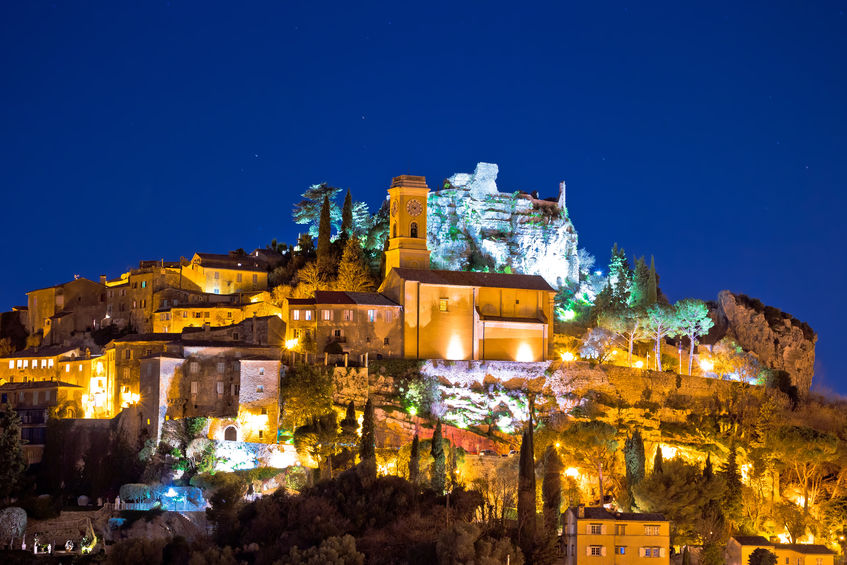
“You are the light of the world. A city that is set on a hill cannot be hidden. Nor do they light a lamp and put it under a basket, but on a lampstand, and it gives light to all who are in the house. Let your light so shine before men, that they may see your good works and glorify your Father in heaven.” (Matt 5: 14-16)

There is much in the New Testament about building. Jesus said He would build his church and the gates of hell will not prevail against it. The New Testament writers encourage us repeatedly to build. Jude wrote: “But you, dear friends, must build each other up in your most holy faith” (Jude 1:20), Peter says that we “as living stones, are built up a spiritual house, a holy priesthood, to offer up spiritual sacrifices, acceptable to God by Jesus Christ,” (1 Pe 2:5), and Paul picks up the same theme when he writes to the Ephesians  “in whom (Jesus)  the whole building, being fitted together, grows into a holy temple in the Lord, in whom you also are being built together for a dwelling place of God in the Spirit.” The Greek word used for building up and edifying are the same: oikodome. Speaking of our church gatherings, Paul writes Let all things be done for edification. (1 Cor 14:26) but this doesn’t just apply to our church meetings: it applies to everything that we say to one another: “Let no corrupt word proceed out of your mouth, but what is good for necessary edification, that it may impart grace to the hearers.” (Eph 4:29) Every time we open our mouths, we are to release the Grace of God. In fact the whole of the Christian life has a single purpose, which is to “grow up in all things into Him who is the head—Christ— from whom the whole body, joined and knit together by what every joint supplies, according to the effective working by which every part does its share, causes growth of the body for the edifying of itself in love.”

So the Big Question is, how do we actually build this city set on a hill? What does it mean to actually be builders in God’s kingdom, to be a body that edifies itself (builds itself up) in love? I think the key is simple enough: we don’t build for ourselves, but for others. Jesus is clear about this: “Do not lay up for yourselves treasures on earth, where moth and rust destroy and where thieves break in and steal, but lay up for yourselves treasures in heaven, where neither moth nor rust destroys and where thieves do not break in and steal. For where your treasure is, there your heart will be also.” Whatever we build for someone else is never going to be lost or spoilt through our own carnal failings, but remains our treasure forever – whatever happens to it in the recipient’s hands. Agape love has no vested interest in what it has given. It’s building a house for someone else to live in and walking away without being paid.

When Paul exhorts us to us to “let no corrupt word proceed from our mouth, only what is the necessary edification“ – in other words, only speak words that build other people up – he continues with these words: “And do not grieve the Holy Spirit of God, by whom you were sealed for the day of redemption. Let all bitterness, wrath, anger, clamour, and evil speaking be put away from you, with all malice.” (Eph 4: 29-30). I think many of us read this and just take it that Paul has moved onto another subject. But I don’t think he has. I think what grieves the Holy Spirit is not our negative emotions in themselves, but the fact that their presence among us stops Him releasing the pure love of Jesus Christ that is expressed through the Holy Spirit’s ministry and which will build the City on the Hill. He is grieved because He loves us so much and yet we ourselves prevent Him from fully expressing His love within the very body whose purpose it is to reveal it. Nobody longs for revival more than Jesus.

So just as moth and rust corrupt any treasure that we lay up for ourselves on Earth, corrupt words will spoil God’s spiritual house and prevent it from being built through us.  When Paul writes “let all bitterness and wrath and anger and clamour and evil speaking be put away from you, along with all malice” he pretty well covers the whole gamut of the rubbish that we can carry in our uncleansed hearts. But what is so encouraging here is the word that is often translated as “put away.” The Greek word literally means to be lifted up. He doesn’t say that we must somehow rid ourselves of everything that can corrupt our words. He isn’t standing over us with a pointing finger: he says that they have to be lifted off us, because we can’t just put them away by ourselves.

And this isn’t just in church meetings: it is all the time. If our words are corrupted by piqued egos, unsatisfied longings and  unforgiven bitterness during the week, we will not speak words that will edify others on a Sunday morning or whenever we meet. We might even say all the right things, but we can’t really impart grace if we aren’t full of grace ourselves; if we are just putting on a show. But in the grace of God all this rubbish can be lifted off us. As I said, we may not be able to get rid of it ourselves, but Jesus can lift it off us. Indeed, unless we do take it to the cross the Holy Spirit will continue to be grieved, because we are preventing Him from letting His love flow among us as much as He would like.  

The little church  at Azuza street where the Pentecostal movement was birthed  was characterised not so much by the amazing miracles and the gifts of the Holy Spirit that took place there, but by the selfless love that filled the church and struck everybody who came in. The place was, metaphorically, full of houses that had been built for others. It was the home of Psalm 133 vs 1; “Behold how good and how pleasant it is for brethren to dwell in unity,” and because of this, the anointing flowed “like precious oil poured on the head, running down on the beard.” (Ps 133: 1 cont.) Where the Holy Spirit isn’t grieved, He builds. It is this Love that builds the church, and  that will shine the light out of the city on the Hill.

Pictures from China: 3) The Narrow Way

Trust in the LORD with all your heart,
And lean not on your own understanding;

In all your ways acknowledge Him,
And He shall direct your paths.
(Prov 3:6)

Along with John 3:16, these are probably two of the best-known verses of the Bible: we all want God to direct our paths- especially if it is along the Psalm 23 route of quiet waters, with the table that He has set before us somewhere along the way. When we visited the Great Wall I knew I would write something about it, as it is such an iconic monument, but I didn’t know what it was going to be. What I’ve got is a few thoughts on the paths that He directs us on.

The paths of righteousness

The verb translated as “direct” our paths is to maintain the straight and right, from the same route as the word used to describe Job, who was an upright and blameless man. This verse doesn’t just mean God will tell us what to do, and where to go; it means that if we acknowledge Him in all our ways, He will lead us in His paths – the paths of righteousness. And not actually for our own benefit, but for His name’s sake, as Psalm 23 (v3) also tells us. The blessings and benefits do come our way of course, but it’s always when we seek His path and not our own…

Lifted up

Before walking along the path you have to reach it. And the way up is by cable car. We have to be lifted up to start the journey. Cue Eph 2:6 “And hath raised us up together, and made us sit together in heavenly places in Christ Jesus.” Or, if you want a more active version, Hab 3:19 “The LORD God is my strength, and he will make my feet like hinds’ feet, and he will make me to walk upon my high places.”

We can try and lift ourselves up of course, and indeed we can achieve a lot: in China and all over the world the testimony to mankind’s efforts to re-create the Tower of Babel is multiplied in taller and taller concrete towers, like these office blocks in Dubai.

Or, we can let God lift us up and build with His stones. We need to be lifted up to walk this path. God’s kingdom doesn’t go up towards Heaven; it comes down from it. What we build in the spirit is always in the higher place, and when the work is complete, the New Jerusalem will come down from Heaven.

The Unprofitable Servant

So what the Great Wall has left me with is a picture of discipleship. The paths that God will direct us in are the paths of righteousness. Righteousness is by faith (Romans 3:21), but living faith is evidenced by works (James 2: 14-24). To walk in the works that God has prepared for us (Eph 2:10) we obviously have to do what He asks us to do, just like the “unprofitable servant” of Luke 17:7-10; and it is this obedience to Jesus (not the words we sing on a Sunday) that is the evidence of our love for Him: “If you love me, you will do as I command.” (John 14:15). And we all know what He has commanded us to do. When we love Jesus, we love one another. Unless we do, there is no walk of faith.

It’s not about you

Faith can be a lot closer to home than the stories in the Bible or the books we read. In fact it needs to be, because without faith in our hearts that recognises that God has a plan that we cannot see but that we nonetheless desire to serve, we do not have the ability in ourselves to lay down our lives and die to self. It is Faith that says “I can’t see the point of this, and I don’t want to do it, but if it will bless somebody else that the Lord loves I won’t think about what it costs me. Instead I will rejoice in the blessing it is bringing to the other person and will trust that God is going to look after me as well.”

To apply faith to our daily life like this is difficult, and the path along the Great Wall is also difficult at times: you don’t go far before you reach a flight of steep steps. But the word that Jesus brought to Nabeel Quereshi (author of “Seeking Allah, finding Jesus”) at his moment of revelation was: “This is not about you.“ It is faith that keeps these words alive in all our hearts, and when we can walk in their truth we are walking the narrow way.

One heart and soul

“Now the multitude of those who believed were of one heart and one soul; neither did anyone say that any of the things he possessed was his own, but they had all things in common. And with great power the apostles gave witness to the resurrection of the Lord Jesus. And great grace was upon them all.” (Acts 4:32-33)

In the edition of the Bible that I use (the Spirit filled life Bible, published by Nelson), there is a thread of annotations called “kingdom dynamics.“ One of the kingdom dynamics themes is the power of unity, and in the commentary on acts 4:32 it says this:

“it is reported that the growing multitude of believers were experiencing a profound dimension of spiritual unity. First, they were “of one heart,“ which is a description in the original Greek meaning “in tune“ or “In sync“ with one another. To put it another way they were all going in the same way, spiritually together. Second they were of “one soul“ (Sometimes translated as “one mind”). This has a wonderfully deep meaning in the original Greek. It literally means “to breathe“  or “to breathe spiritually together.“ The results of this quality of spiritual unity were both powerful and practical. They had all things in common (shared everything they had); they witnessed “with great power“; and “Great Grace was upon them all.“

The backbone
Jesus made it clear – and through many of the New Testament writings the Holy Spirit abundantly reinforced – that the backbone of our life in the Spirit is that we love one another: without this backbone, the church simply does not stand up. When we love one another, the world can see that we are disciples of Christ.  Yet when we think about evangelism we can (and I frequently do) easily head down the exciting track of power evangelism, and all the miraculous works that it implies, and leave behind the main road of love. We can detach the hand that reaches out from the backbone it is connected to. But in these verses, it is clear that the context of revival in the early church was that the multitude of those who believed were are one heart and one soul. In other words, they lived out, in depth, the practicalities of loving one another: the life of Christ that flowed among them was the same Life that reached out to the lost with healing and salvation.

When, Lord?
It is clear that a wave of revival is starting to break on the shores of the nations as God fulfils His declaration of Hebrews 12:26: “Once again I will shake not only the earth but the heavens also.” Those of us who long to see the power of God move in our churches and on our streets follow the news with an expectation that cries out ”When, Lord?” But God will give to us as many as we can keep. If we want to witness with great power, and experience an outpouring of great grace, we need to be of one heart and one soul. We need to demonstrate the rule of God’s Kingdom in our lives if we want others to respond to an invitation to meet our King. So before we see God’s power break out among us I think we are going to see a re-awakening of genuine love in the church, because if we don’t love one another in the grace of God, how can we love the needy who join us? I think it is when we have truly learned to stretch out our hands to each other that God will stretch out His hand, through us, to the world.

Pebbles on the Beach and The Mind of Christ

I’m not the only pebble on the beach. Sometimes I think I am: I see a situation or a person through my eyes, and consider what I see is the truth. I may be standing with someone or even a group of people who are looking at the same situation. What do they see? Do they have the same view and the same perspective as me? Do they bring the same history, the same thought processes and the same perceptions? No. So why and how can I possibly believe that what I think about a situation – or, even worse, a person – is the whole truth? Yet so often this is what I do. And we know what the book of Proverbs says about the man who is wise in his own eyes: “There is more hope for a fool than for him.” (Prov 26:12)

There is only one person who sees the whole truth, and that is the person who is the Truth. There are millions of pebbles on the beach – billions even. Each one of us is different, each one of us is unique, and each one of us sees through a different pair of eyes. Only God can see the real truth. One day we will “know as we are known,“ but until then what He wants us to do is to love one another, serve one another and submit to one another – and look to Him for the truth. If we succeed in this, and at least achieve some degree of unity in whatever little group we belong to – two or three gathered in his name – then we are in a position to look together to see the truth that the Truth reveals to us. If we are not in this place, we are forever in danger of arrogant opinions and warped imaginings that do not reveal the beauty of the Giver of Life.

I was recently discussing with someone how animals and birds “think.” We were considering the behaviour of different animals and birds and how complex their thought processes can be in their specialist areas, and also how alien they must be to our own. How much further beyond ours, then, are the thought processes of the One who says “my thoughts are not your thoughts?“

So how easy it is to think we know the truth, and how far our “truth“ can be from what is in the mind of Christ. Yet as Paul says, we actually have the mind of Christ. I think that we, His body, will be able to access more of  those thoughts that aren’t our thoughts that are flowing through our wonderful mind, when each of us remembers that we are not the only pebble on the beach.

The vine and the brambles

“I am the true vine, and My Father is the vinedresser. Every branch in Me that does not bear fruit He takes away;  and every branch that bears fruit He prunes, that it may bear more fruit” (John 15: 1-2)

How easy it is, when things don’t seem to be happening, to be discouraged. We say, “Lord, should I be doing this? Should I be doing that? It doesn’t seem to be going anywhere.“ And the Lord answers: “Do not be discouraged. Look at the vine, and look at the brambles.“

There is the vine, the true vine, which is Jesus; and there are brambles, which are the things of the world. If we love Jesus, we are in the vine. Brambles grow quickly and spread everywhere; but the vine is tended by the vinedresser and only grows according to the vinedresser’s plan, which is to maximise its fruitfulness. Fruitfulness comes from nurturing selected shoots and pruning others.

And alongside the pruning comes the clearing. In 2 Cor 16-18 Paul writes:

And what agreement has the temple of God with idols? For you are the temple of the living God. As God has said:
I will dwell in them
And walk among them.
I will be their God,
And they shall be My people.”
Therefore “Come out from among them
And be separate, says the Lord.
Do not touch what is unclean,
And I will receive you.”
I will be a Father to you,
And you shall be My sons and daughters,
Says the Lord Almighty.’”

As well as the fact that our Vinedresser is always watching over us with his pruning shears in His hand, some of us in the vine have got brambles filling up the space in our lives: we need to come out from among them. They scratch and tear, we cannot move freely because of their thorns, and they choke our growth, as Jesus reminds us in the parable of the sower. God is looking for holiness, and it’s only in the separated vine, tended in its own uncluttered patch, where the Life of Jesus can flow freely and bring His growth.  Brambles maximise the berries they bear by spreading opportunistically wherever they can. It is not so with the vine: the vine bears clusters of grapes under the vinedressers hand, maximising every branch in the vineyard. When we are being pruned we need to feel the Father’s loving hand in our lives, and not just the sharpness of the blade.

It is so easy to look to the world’s model of growth – the bramble – and to be discouraged because we don’t see that rampant growth in our own lives and ministries. But Father says this: “Don’t be discouraged. Look to where I am pruning. Has there been a little growth there? Yes there has. I am pruning It so that there will be more. And see that branch, that I have just cut away? You won’t miss it, even though you think you will. It was using up your life no purpose.”

Wherever I turn at the moment, it seems that God is clearing and pruning: in my own life, in my business, in church (mine and others), in people I meet. The devil wants us to look at the brambles and feel dissatisfied. But we are not unaware of his schemes (2 Cor 2:11), so but let’s be prepared and let’s be encouraged: if God is pruning, it’s because fruitfulness is coming.

The School of Love

I won’t repeat what I wrote a few days ago: we do not know the day or the hour, but there are abundant signs – in the world, and for those who look upward, in the heavens also – that the return of the King really is at hand. Our mandate is to go into all the world and preach the gospel, preparing the way for that time. Our priority must be to reach the lost. Our light must increase as the darkness deepens. It will do, because Isaiah 60 1-11 says it will: the question that each of us have to face is whether we want to be part of that brilliance or not. To do so we need to grow in three areas: faith, power, and love.

Faith: for ourselves
We will need to grow in faith –we will need it as individuals, to depend increasingly on Jehovah Jireh as the provision of the world fails. If, as Revelation 13:17 says will happen, we are forced to choose between trading in the system of the world and its banking and being true to our King and His Kingdom, we will need to walk day by day in the expectation and experience of God’s supernatural provision. I wrote a couple of years ago about the time at the beginning of lockdown when everyone was panic-buying toilet rolls and there were none in the shops:  God told us not to join the panic but to rely on Him, and when we were down to our last one a delivery van full of them pulled up next to my wife at the local petrol station. God delights to show His little flock that they need not fear. (Luke 12:32) But this is just one example of God’s faithfulness and practical care out of three years of living by our bank cards and not by faith. How prepared are we for this to be a way of life?

The Bible verses abound, beginning a small selection with Hebrews 10:38 : “The just shall live by faith.” Paul reminds us that “We walk by faith and not by sight.” (2 Cor 5:7) “The prayer of faith will heal the sick,” declares James. (James 5:15). Hebrews again: “Without faith it is impossible to please Him, for he who comes to God must believe that He is, and that He is a rewarder of those who diligently seek Him,” (Heb 11:6) and to finish, Paul’s pithy statement to the Romans: “Whatever is not of faith is sin.” However we choose to look at our walk with God in these last days, there is one truth that is paramount: every step we take has to be a step of faith.

Power: for the world
Faith is not just for our daily bread of course: we will need it to grow in power, the second area of need. The world will need to see us move in the power of the Holy Spirit if the multitudes who are in the valley of decision are to see the word of the gospel confirmed in signs and wonders and come to faith. Romans 1:16 tells us that the gospel  “is the power of God unto salvation to everyone who believes…” As I wrote in Rainbows and Chickens,” those who believe that God moves in signs and wonders today need to preach the gospel to see the power of God at work; and those who regularly preach the gospel need to have an expectation of God to confirm that word with signs and wonders. Word and Spirit must work together. Hebrews 4:2 is a key verse:

For indeed the gospel was preached to us as well as to them; but the word which they heard did not profit them,  not being mixed with faith in those who heard it.”

So here is the equation: Faith + the gospel = power to save. Paul wrote this to the Galatians: “For all of you who were baptized into Christ have clothed yourselves with Christ.” (Gal 3:17) This is not theoretical language; this is truth. To be baptized in the Holy Spirit is to be immersed, soaked, in the Spirit of Christ. Being “in Christ” isn’t just theology; it’s the reality of being soaked in Him.  And if we are soaked, we can expect people to get wet when we touch them – wet with the miraculous life of Christ. Jesus told us that the way to increase our faith is to understand that we are just “unprofitable servants; we have only done what we were told to do.” (Luke 17:10.) So if we couple the faith of simple obedience with believing the reality of who we really are – who God says we are – in Christ, we can expect to leave a trail of the soaking wet Life of Christ behind us whenever we “go” and preach the gospel. And when those signs and wonders happen, faith rises in many hearts and mixes with the word that was preached, and souls are born again into eternal life.

Love: for the Church
And finally we will need to grow in love – the church will need it, because it’s the unity that commands the blessing and it’s by our love that the world will know that we are disciples of Christ. Faith and love are the two poles of the magnet that powers the dynamo of Kingdom growth. We have all read 1 Corinthians 13 (I am speaking to Christians here: if you aren’t one yet, now is your time), and we know that even faith that moves mountains is nothing without love. To the Galatians Paul says: “For in Christ Jesus neither circumcision nor uncircumcision avails anything, but faith working through love.” (Gal 5:6) Without love we are nothing, and our faith and our gifting are to no avail. I don’t think Jesus commanded us to love one another just so that we could be a sort of spiritual shop window for His glory (although we are that: see Ephesians 3:10): the teaching of Jesus on Love puts His command to the church in a far more radical context:

You have heard that it was said, ‘Love your neighbour and hate your enemy.’ But I tell you, love your enemies and pray for those who persecute you, that you may be children of your Father in heaven. He causes his sun to rise on the evil and the good, and sends rain on the righteous and the unrighteous.  If you love those who love you, what reward will you get? Are not even the tax collectors doing that?  And if you greet only your own people, what are you doing more than others? Do not even pagans do that? (Matt 5: 43-46 NIV)

School of Love
I think the Church is our school of love: if we cannot learn to love one another in the church, what hope does the world have to receive what Christ has for them? As Peter writes: “For it is time for judgment to begin with God’s household; and if it begins with us, what will the outcome be for those who do not obey the gospel of God?” (1 Pe 4:7) We cannot  grow in faith and power unless we grow in love as well. Revival is messy and demanding. Converts need to become disciples. Just like the 5,000, the poor who have had the gospel preached to them need to be fed. The lonely and isolated need befriending. We will need to have compassion on the hungry crowd, not send them home – or to someone else’s church. So we need faith and power to see revival happen, but we need love to live with the results.

Jesus wants to come back for a loving bride that is on the same page as Him. I’m not sure if I’m ready for Him yet. What about you?

The Body and the Vine

‘”The eye cannot say to the hand, “I have no need of you.”‘

We had an African morning in church today, to celebrate and to feed back on our recent trip to Liberia. As part of the worship, we sang some songs in Zulu with the translations on the screen. One brother comes from South Africa, which isn’t exactly Liberia, but it made the point: we may have different languages and different cultures, but our songs worship the same Lord and have the same meaning. Our churches may be thousands of miles apart, but we are members of the same body and branches of the same Vine. The life of Jesus flows through us all, wherever we are in the world. The verses are familiar:

“The body is not one member but many. If the foot should say, “Because I am not a hand, I am not of the body,” is it therefore not of the body? And if the ear should say, “Because I am not an eye, I am not of the body,” is it therefore not of the body? If the whole body were an eye, where would be the hearing? If the whole were hearing, where would be the smelling? But now God has set the members, each one of them, in the body just as He pleased. And if they were all one member, where would the body be? But now indeed there are many members, yet one body. And the eye cannot say to the hand, “I have no need of you”; nor again the head to the feet, “I have no need of you.” (1 Cor 12: 14-21)

Jesus gave the analogy of the vine to the apostles to express something of the same idea that His Spirit gave to Paul some years later: just as the body has many members, the vine has many branches. Although the description that we have in John’s gospel doesn’t extend to further viticultural details, it is true to say that every branch of the vine is unique, just like every member of the body. But as Jesus said: “If anyone does not abide in Me, he is cast out as a branch and is withered… If you keep My commandments, you will abide in My love, just as I have kept My Father’s commandments and abide in His love.” (John 15: 6,10)

Without love – His Love – the branches wither. As Paul famously wrote to the Corinthians: “Without love, I am nothing.” (1 Cor 13:2)  It all comes down to love. I can pour out my love to Jesus in gratitude for what He has done for me, but unless I can love another branch that is a different shape to me, and maybe has more (or less) fruit, my worship is meaningless. The apostle John makes this clear in his first letter: “For if anyone who does not love his brother, whom he has seen, how can he love God, whom he has not seen?” (1 John 4:20).

Unless we see one another as members of the one body and allow the love of the vine to flow between us, we are nothing. Without love, the eye expects the whole body to be an eye; without love the hand  tells  the foot “I have no need of you.” Criticism and judgementalism come when the eye doesn’t understand what the hand is doing, and so just sees it as a useless eye. But if the eye sees the hand as a member of the Body that is of equal value to itself, although its purpose is entirely different, the love of the Vine can unite the two. Instead of discarding the foot and all that it stands for (excuse the pun!) the hand will seek to understand the connection the foot has to the body, and through that will understand the foot. And to come back to the relevance of this morning’s service, when the hand speaks to the foot it will seek to use the language of the foot. To speak to the hand, the eye needs to understand how the hand sees the world and to speak the language of the hand. Because this too is love.

“But now God has set the members, each one of them, in the body just as He pleased” (verse 18). If you are a hand, and God has set you next to an eye, it was for a reason. Not that you have to learn to see, or even more importantly that you have to teach the eye how to hold a hammer; but that you have to learn to love. Because “If you abide in Me, and My words abide in you, you will  ask what you desire, and it shall be done for you. By this My Father is glorified, that you bear much fruit; so you will be My disciples.” (John 15: 7-8)

Prepare Ye the way the Lord! Make His paths straight.

“And whatever you do in word or deed, do it all in the name of the Lord Jesus, giving thanks to God the Father through him.“ (Colossians 3:17).

I’ve just come back from a mission trip to Liberia in West Africa, a nation destroyed by civil war in the 1990s and more recently ravaged again by Ebola. Our team spent a week preaching the gospel, doing leadership training, working with women,  children and teenagers, and holding medical clinics. There were eight of us in the team, each with different skills and specialisms, which we all used to one purpose, which was to share the love of Jesus wherever we went, in word and deed. We had a full schedule, and our trip was focused and fruitful. We used different ministries effectively. I think we could say, with some confidence that it was a fulfilment of the injunction of Colossians 3:17: “And whatever you do in word or deed, do all in the name of the Lord Jesus, giving thanks to God the Father through Him.”

I have mentioned this, not to draw attention to our ministry, but to use it as a model of what we are called to be doing all the time. We are not our own, but were bought with a price (1 Cor 6:20), commissioned to be on mission all the time wherever we are. We have different gifts and ministries, but they are all devoted to one goal, which is for the body of Christ to become “a perfect man“ (Ephesians 4:13) and for the Kingdom Of God to come on Earth as we live through Him and do everything in His name according to Colossians 3:17.

If someone wants to do something in my name, I would want it to be done as if I were doing it; if not, I would not want my name on it. To do something “in Jesus name,“ not does not mean just to use the phrase like a rubber stamp on all our prayers and proclamations, but to live and speak in such a way that Jesus is happy to have His name on what we say and do.  In his first letter to the Corinthians, Paul writes: “For us there is one God, the father, of whom are all things, and we for Him; and one Lord, Jesus Christ, through whom are all things, and through whom we live.“ (1 Cor 8:6).  If we live through Him, that means He’s touching everything we do, and everything we do can be a path from heaven to earth.  If  He isn’t touching everything we do, we aren’t living through Him.

One of the biggest problems in Liberia is the lack of roads. One of the greatest empires in the history of mankind was the roman empire. The Romans built a civilisation by building the roads first: once the roads were down, people and supplies could travel to build and strengthen communities. Without the roads, communities in Liberia remain weak and isolated.

Jesus is coming back soon: how well are we building His roads?  The gospel is being preached to all nations: the Queens’s evangelistic funeral service was attended by the heads (or their representatives) of all but two of the world’s nations, and now the TV series “The Chosen” is being watched by millions. End time prophecy is being fulfilled, the world is going up in smoke , global warming has already gone past tipping point, and no policy or man can fix it. Our call is to prepare the Way of the Lord and make His paths straight: this is the work of the Holy Spirit through us. Our lives are His paths: every day, every moment, is an opportunity for Him to travel from heaven through us. What are His paths in our lives like: straight, like Roman roads, ready for him to bring his supplies at a moment’s notice; or are they potholed unsurfaced tracks that leave His kingdom unfinished and His people impoverished and incomplete?

As the apostle Francis of Assisi (1181-1226 AD) is often quoted as saying: “Preach the gospel at all times, and use words if necessary.” So many of us are full of knowledge, and consequently full of words; but knowledge puffs up and does nothing to build the roads. Only love edifies. Whatever we do in love will have His name on it, and nothing else will make His paths straight.

Understanding Spiritual Warfare in Christ

I have been hearing a lot about being a warrior lately: spiritual warfare is a term all believers are familiar with. Two of the principals of spiritual warfare that we know from Scripture are that “we do not wrestle against flesh and blood, but against principalities, against powers, against the rulers of the darkness of this age, against spiritual hosts of wickedness in the heavenly places.” (Eph 6:12)  and “Though we walk in the flesh, we do not war according to the flesh. For the weapons of our warfare are not carnal but mighty in God for pulling down strongholds…”(2 Cor 10: 3-4) The text from Ephesians introduces the passage on the armour of God and the need to “stand against the wiles of the devil,” and the passage in the letter to the Corinthians is written in a context of matters pertaining to Church discipline. But I think it’s appropriate that we look beyond these contexts to consider some principles behind the matter of spiritual warfare. In particular, what are “carnal” weapons, and what are the weapons that are “mighty in God?” Or to put it differently, when are we fighting our enemy in the flesh, and when are we fighting in the Spirit?

The place of peace

The most important aspect of any battle is not the clamour of the fight, but the peace that is won. When Christ came as an infant, the angels announced peace on Earth. Jesus promised us “peace, not as the world gives.“ (John 14:27) The psalmist exhorted us “to seek peace and pursue it,“ (Ps 34:14) and Paul urged the Romans “pursue those things that make for peace.” (Romans 14:19) As has often been said, we may well do battle with principalities and powers in the heavenly realms, but Jesus has already won the war at Calvary. So one thing at least is obvious from these scriptures: peace is already ours, and so we carry it into our battles with us. This peace is neither worldly nor carnal,  but is brought to us from Jesus by the Holy Spirit. Our peace is actually one of our main weapons of spiritual warfare, and all the protective items of the Ephesians six armour of God help us to keep it in our hearts. Indeed, if we are not operating out of the place of peace, we are not moving in the victory Jesus has won for us, and we are not going to see our enemies vanquished and our giants fall.

Gentleness

Proverbs 15:1 says “a gentle answer turns away wrath,“ and James writes: “The wrath of man does not produce the righteousness of God “ (James 1:20) I have referred to this scripture elsewhere, and pointed out that the Greek word “orge,” translated as “wrath,“ is not limited to anger but to any uncontrolled outburst of passion. Jesus cast out demons “with a word,“ not by shouting at them. This is how He is described prophetically by Isaiah:

Behold! My Servant whom I uphold,
My Elect One in whom My soul delights!
I have put My Spirit upon Him;
He will bring forth justice to the Gentiles.

He will not cry out, nor raise His voice,
Nor cause His voice to be heard in the street.

A bruised reed He will not break,
And smoking flax He will not quench;
He will bring forth justice for truth.

He will not fail nor be discouraged,
Till He has established justice in the earth;
And the coastlands shall wait for His law.”
(Isaiah 42: 1-4)

He will not cry out, nor raise His voice, nor cause his voice to be heard in the street. Yet I’ve been to a couple of conferences recently where the voices of some of the speakers could definitely “be heard in the street.” I’ve certainly done my share of shouting at demons and generally raising my voice, as if my carnal loudness, or even any display of human emotion, could somehow demolish a spiritual stronghold. We do need to use spiritual gifts to identify the enemies that we are fighting against, but to go on and win the battles we need to fight in the same spirit as the Christ of Isaiah 42, not with raised fists and human “orge”. We cannot fight Goliath with the armour of Saul. It’s not by might, nor by power.

Building the church

Of the increase of His government and peace
There will be no end,
Upon the throne of David and over His kingdom,
To order it and establish it with judgment and justice
From that time forward, even forever.
The zeal of the LORD of hosts will perform this.
” (Isaiah 9:7)

Jesus said that he would build His church, and the gates of hell would not prevail against it. The increase of His government and peace will come as He builds His church. Paul writes “let us pursue the things which make for peace, and by which one may build up another.” (Romans 14:19). So if Jesus is going to build His church through us, the spiritual weapons of our warfare must be the ones Jesus used. He said: “Take my yoke upon you and learn from me, for I am meek and humble of heart.” The last lesson of the Jesus Christ 3-year Discipleship Training Programme was not “How to attain Third Heaven Revelation,” but “How to wash each others’ feet;” not “How to build your ministry,” but “How to build up one another.” These are the weapons of warfare that are mighty in God: the peace and the humility of Jesus, a servant heart, and love for one another. With them we work with the Holy Spirit to build the church in the face of the gates of hell.

The Battle Plan

I could go on. We fight the enemy of lack by giving: “Give, and it shall be given to you; good measure, pressed down, and shaken together, and running over, shall men give into your bosom.” Luke 6:38) We fight the enemy of destructive emotions with kindness and tender hearts: “Let all bitterness, wrath, anger, clamour, and evil speaking be put away from you, with all malice. And be kind to one another, tender-hearted, forgiving one another, even as God in Christ forgave you.” (Eph 4: 31-32) In fact Jesus laid out the battle plan for His warriors when He gave us the Sermon on the Mount, contrasting the light of Heaven against the darkness of the world. And end-time revival will be led by those whose feet stand securely on this Mount and no other, because it is when the Light of Life is seen burning in our hearts that the darkness is pushed back and ground is taken for the Kingdom of God.

The prayer of a fruitful apostle

I’ll end with a prayer. Not mine, but from someone who was one of the greatest apostles of the church age, although he never identified himself by his fivefold ministry title.  Christianity had become a ruin of corruption, and Jesus called a young man from a wealthy family to turn away from the life of luxury he had known and rebuild His church. The young man committed himself to the call and gave his life to preaching the gospel and establishing communities of believers. The weapons of his warfare were not carnal, but mighty in God for pulling down strongholds.  His name was Francis of Assisi.

This was his prayer:

Lord, make me an instrument of your peace:
where there is hatred, let me sow love;
where there is injury, pardon;
where there is doubt, faith;
where there is despair, hope;
where there is darkness, light;
where there is sadness, joy.

O divine Master, grant that I may not so much seek
to be consoled as to console,
to be understood as to understand,
to be loved as to love.
For it is in giving that we receive,
it is in pardoning that we are pardoned,
and it is in dying that we are born to eternal life.
Amen.